New Research
New Study Shows Getting Blood Sugar Back to Normal May Cut Heart Disease Risk in Half
People who brought elevated blood sugar back into the normal range had a dramatically lower risk of dying from cardiovascular disease or being hospitalized for heart failure decades later.


If you've ever been told your blood sugar is "a little high," new research suggests it may be worth taking more seriously than you think.
Researchers recently went back and analyzed data from two major diabetes prevention studies that followed people with prediabetes for decades.
And they found something remarkable.
People who managed to bring their blood sugar back into the normal range had roughly half the long-term risk of cardiovascular death or hospitalization for heart failure compared with those who didn't.
And these weren't benefits researchers noticed six months later.
They showed up 20 and even 30 years down the road.
One Stanford researcher who reviewed the findings called them "incredible," because they suggest that what you do about your blood sugar today may still be affecting your health decades from now.
But buried inside the research was another finding that may be even more important for anyone currently struggling with elevated blood sugar.
Very few people actually managed to get their blood sugar back to normal.
So How Many People Actually Got Their Blood Sugar Back to Normal?
This is where the study gets interesting.
In the U.S. trial, researchers followed 2,402 people with prediabetes.
After one year, just 275 of them had brought their blood sugar back into the normal range.
That's only 11.5%.
The other 88.5% had not.

And remember, these weren't people who were simply told to "eat better" and sent home.
The original study included an intensive lifestyle program specifically designed to help people improve their health through changes in diet, exercise and weight.
Yet nearly 9 out of 10 still didn't reach normal glucose levels after that first year.
Which raises an obvious question:
If getting your blood sugar back to normal can potentially make such a profound difference to your health years from now... why is it so difficult for people to actually get there?
And perhaps more importantly:
How do you know if your own blood sugar is already putting you in the group that should be concerned?
How Do I Know If My Blood Sugar Is Too High?
One of the easiest ways to tell is a number you may have already seen on your bloodwork:
Your A1C.
A1C is a simple blood test that gives you an estimate of your average blood sugar over the past 2–3 months.
And the ranges are surprisingly straightforward:
So if you've ever opened your lab results and seen an A1C of 5.8... 6.2... 6.7... 7.4... or higher...
Your blood sugar is already outside the normal range.
Maybe your doctor told you to "keep an eye on it."
Maybe you were told to lose some weight, exercise more, or clean up your diet.
Or maybe you've already been trying to do exactly that.
But here's where things get frustrating.
Knowing your blood sugar is too high and knowing how to actually get it back down are two completely different things.
Because most people already know they're supposed to eat better. They already know they should exercise. They already know losing some weight would probably help.
The real question is: Why, despite knowing all of that, do so many people still struggle to get their numbers back into the normal range?
Why Is Getting Your Blood Sugar Back to Normal So Difficult?
If you've had high blood sugar for any length of time, you've probably heard the same advice over and over again:
Eat better. Lose some weight. Exercise more. Cut back on sugar and carbs.
And none of that is necessarily bad advice.
The problem is actually doing it every day.
Because "eat better" sounds simple until you're standing in your kitchen wondering what you're supposed to make for dinner.
"Cut carbs" sounds doable until someone puts a basket of warm bread on the table.
"Lose weight" sounds straightforward until you've been good all week, Friday night comes around, and you just want to eat like a normal person.
So you try.
Maybe you cut out bread. Maybe you stop eating after 8. Maybe you download an app and start tracking everything you eat. Maybe you even see your numbers start moving.
But eventually, life happens.
You go out to dinner. You travel. Work gets crazy. You have a bad weekend.
And suddenly the diet that was supposed to help you get your blood sugar under control has become something you have to think about all day long.
What can I eat? How many carbs are in this? Did I screw up today? Can I have this? Should I skip dinner now?
And eventually...
you get tired of thinking about it.
That's why the problem for many people isn't that they don't know they should eat healthier.
It's that they haven't found a way of eating they can actually live with long enough to get the result they want.
And that's important.
Because the research we started with suggests getting your blood sugar back into the normal range may have benefits that show up decades later.
So the goal isn't to find the most extreme diet you can follow for the next 30 days.
It's to find a way of eating you can actually keep doing.
Fortunately, that may be a lot simpler than you think.
So What Can You Actually Do About It?
Here's the good news.
You don't have to eat perfectly to start getting your blood sugar under better control.
You don't have to swear off bread forever. You don't have to bring your own food everywhere you go. And you certainly don't have to spend the rest of your life Googling how many carbs are in everything you eat.
In fact, one of the biggest mistakes people make is assuming that getting their blood sugar under control requires completely changing the way they live.
It doesn't.
You can still go out to dinner. You can still travel. You can still eat with your family. And yes, you can still enjoy some of the foods you love.
The bigger problem is figuring out what actually works — and what doesn't.
Because depending on where you look, you'll hear completely different advice.
Cut all your carbs. Fast longer. Eat smaller meals more often. Take a supplement. Walk after every meal. Stop eating after 8.
And when you've tried three or four of those things without getting the result you wanted, it's easy to start wondering whether anything really works at all.
But some changes matter far more than others.
And once you know where to focus, eating for better blood sugar becomes a lot less complicated.
Instead of trying ten different things at once, you can focus on the few things that actually make the biggest difference — and stop worrying so much about the rest.
And instead of trying to be perfect seven days a week, you can build a way of eating that's healthy enough to move your numbers, but flexible enough to actually live with.
Because ultimately, the best diet isn't the one you can follow perfectly for 30 days.
It's the one you can still see yourself following six months from now.
So what does that actually look like?
Surprisingly, it's not another extreme diabetes diet.
What Does an A1C-Friendly Diet Actually Look Like?
First, let's clear something up.
It's not keto. It's not zero-carb. It's not eating chicken, broccoli and salads for the rest of your life. It's not fasting all day because you had pizza the night before, and it's definitely not trying to eat perfectly 100% of the time.
An A1C-friendly diet is actually much simpler than that.
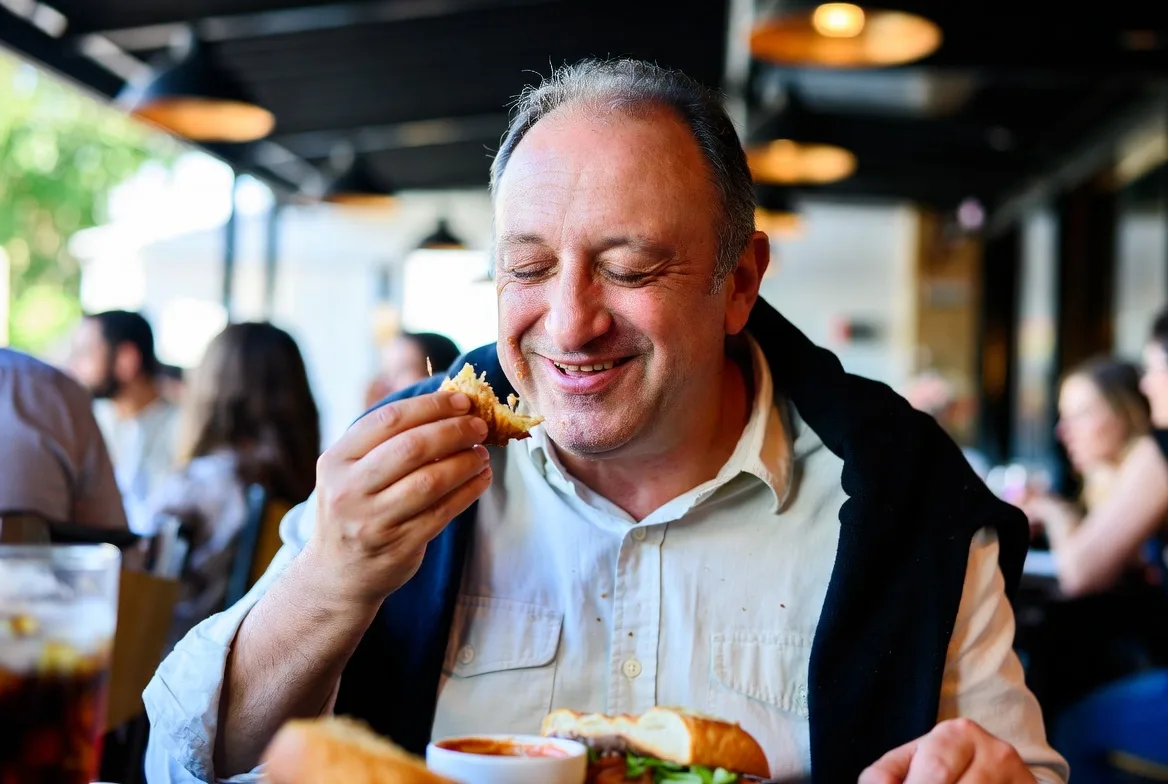
The goal is to build most of your meals around foods that make it easier to keep your blood sugar in a healthier range, while leaving enough flexibility to enjoy the foods you love without feeling like you've ruined everything.
That means you don't have to panic because you ate a potato. You don't have to turn down dinner with friends because the restaurant doesn't have a "diabetic" menu. And you don't have to start over every Monday because you weren't perfect over the weekend.
Most of the time, you eat in a way that supports the result you want. And some of the time, you just eat.
You enjoy the pasta. You have the dessert. You go on vacation and try the food. Then you simply go back to what you normally do at the next meal.
No guilt. No punishment. No starting over.
Because one meal isn't the problem. What you do consistently is what matters most.
And when you stop trying to make every meal perfect, eating this way becomes much easier to keep doing.
That's the part most diets get backwards. They focus so much on creating the "perfect" diet that they create something almost nobody wants to follow for very long.
The goal isn't perfection.
It's to have a simple way of eating that helps move your numbers in the right direction without making your entire life about food.
And once you understand that, you start looking at lowering A1C very differently.
From Research To Real Life
What the studies don't always reveal
We've helped over a thousand people lower their A1C and the more people we worked with, the more I noticed something surprising.
Most of them weren't doing nothing. They were doing too much.
They were cutting carbs, skipping meals, walking after dinner, trying different supplements, watching videos, saving recipes and constantly searching for the next thing that might finally get their numbers moving.
Some had tried keto. Others had tried intermittent fasting. Some were eating tiny portions or avoiding foods they loved because somebody online told them they were "bad for diabetics."
Yet despite all that effort, many still felt like they were guessing.
And whenever their A1C didn't come back the way they'd hoped, the natural conclusion was:
"Nothing works for me."
But after looking closely at what people were actually doing, I started seeing the problem differently.
It wasn't that nothing worked.
It was that they were trying so many different things, they had no idea what was actually making the difference.
So instead of adding another rule, another supplement or another food to avoid, I started simplifying.
What actually has the biggest impact? What can we stop worrying so much about? And how do we make this simple enough that someone can follow it on a busy Tuesday, at a restaurant on Saturday night, or on vacation with their family?
Those questions eventually changed the way I approached eating for better blood sugar.
Because once you strip away all the noise, you don't need 100 rules to start moving your A1C in the right direction.
You need to know which ones actually matter.
So What Actually Matters Most?
When it comes to blood sugar, not every food — or every piece of advice you've heard — matters equally.
Some foods have a much bigger impact on your blood sugar than others. Some changes can make a meaningful difference, while others may barely move the needle.
The trick is knowing where to put your attention.
For most people, that starts with the way they eat.
Instead of obsessing over every ingredient, counting every calorie or trying to eliminate entire food groups, you can focus on building most of your meals around foods that are naturally easier on your blood sugar.
Protein. Vegetables. Healthy fats. Higher-fiber foods. And sensible portions of carbohydrates that fit into the rest of the meal.
Nothing particularly exotic.
And once you have that foundation, you don't need every meal to look like it came out of a diabetes cookbook.
That's where the 80/20 approach comes in.
Most of the time, you eat in a way that supports the numbers you're trying to achieve.
But you deliberately leave room for real life.
A dinner out with your wife. Pizza with the family. A piece of cake at a birthday. Pasta on vacation.
Those meals aren't "cheating." They're part of the plan.
Then, at your next meal, you simply go back to your normal way of eating.
That's it.
No compensating. No starving yourself the next day. No deciding you've blown the week and promising to start again Monday.
This is a very different way of thinking about a diabetes diet.
Instead of asking you to organize your entire life around food, the diet has to fit around the life you're already living.
And for many people, that's when consistency finally starts becoming possible.
Because when you know what matters most — and what you can stop worrying so much about — eating for better blood sugar starts to feel a whole lot simpler.
That's the idea behind what I call the A1C Diet.
What Exactly Is the A1C Diet?
The A1C Diet isn't keto. It's not a cleanse, a fasting protocol, or another restrictive plan that gives you a long list of foods you're never allowed to eat again.
It's a simple way of eating designed to help you focus on the foods and habits that matter most for your blood sugar — while giving you enough flexibility to actually enjoy your life.
There are no special foods to buy. No complicated recipes you have to make every night. And you don't need to prepare a completely different dinner while the rest of your family eats something else.
Most of the time, you simply follow a few basic principles for putting your meals together. You know what to eat more of, what to eat less often, and how to make better choices without having to analyze every bite.
And because perfection isn't required, there's room built into the diet for the foods you don't want to give up.
Want pizza on Friday night? Have some.
Going out for Italian with your wife? Enjoy the pasta.
On vacation and there's something you really want to try? Try it.
Then you move on.
You don't need to "make up for it." You don't need to fast the next day. And you certainly don't need to throw away the entire week because of one meal.
That's what makes this approach different from so many demanding diets.
Instead of giving you more rules to think about, the goal is to give you fewer decisions to make.
You know what matters. You know what to do most of the time. And you know that when life happens, you haven't ruined anything.
For the first time, eating for better blood sugar can start to feel less like a full-time job and more like something you simply know how to do.
Which raises one final question:
Where do you start?
So Where Do You Start?
That's the question I kept hearing.
People understood that they needed to eat differently, but they still wanted to know:
What should I actually focus on?
Which foods should I be eating more often? Which ones are probably making things harder? And how can I put all of this together without turning every meal into another decision I have to make?
That's why I put together a simple 1-minute A1C Diet Quiz.
It asks you a few quick questions about your current A1C, your eating habits and where you're struggling most, then shows you the next step based on your answers.
There's no calorie counting. No complicated food tracking. And you don't need to know anything about nutrition before you take it.
It takes about 60 seconds.
And if you've been bouncing between cutting carbs, fasting, supplements, walking after meals and everything else you've read online, this is a simple place to start.
The research we started with followed people for decades.
And while nobody can tell you exactly what your health will look like 20 years from now, the findings offer an encouraging reminder:
What you do about your blood sugar today may matter for years to come.
You don't have to fix everything overnight.
You just need to know where to start.
Take the Free 1-Minute A1C Diet Quiz
Answer a few quick questions and see what to focus on first.
TAKE THE 1-MINUTE QUIZ →Results may vary from person to person.
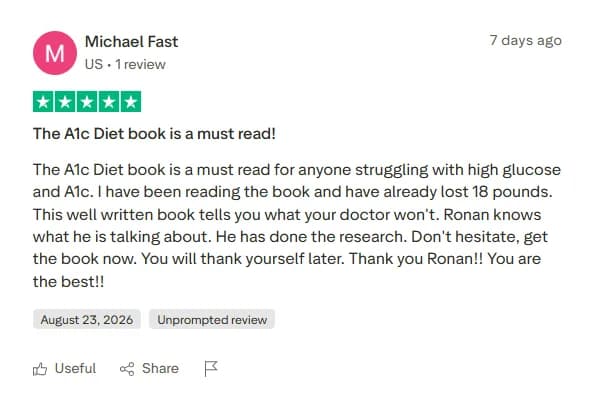
“Essential program for anyone struggling to lower A1C on their own with discipline and consistency alone”

God Send. Changed my life in profound ways! I HIGHLY recommend it. I was on so many meds I don't want to name them all. At least 5 different ones. Through Ronans kind and incredibly factual info I was able to change my eating habits to the point that I got off all meds and drastically lowered my A1C.
“Grateful I found out before it was too late”

I was super stuck and heading for a life of pain if not death. I've lost 55lbs, and I now have a path to better health. I was provided the resources I needed, the guidance and the support. Out of all the bro-health, Ronan set himself apart by being real.. Using real information instead of bro-science. I'm forever thankful to have found Ronan.

- Type 2 Remission Expert
- A1C Reversal Coach
- 1,287 Men Over 50 Trust The A1C Diet System
This article is for general information only and is not medical advice. It is not intended to diagnose, treat, cure or prevent any disease. Always speak with your doctor before making changes to your diet, exercise or medications, and never stop or adjust a prescribed medication without medical supervision.
Results may vary from person to person. Testimonials reflect individual experiences and are not a guarantee that you will achieve the same outcome.