Weight & Body Composition
Can You Lose Fat Without Losing Muscle After 50?
Weight loss usually includes some lean tissue, but resistance training, adequate protein, and a sensible calorie deficit can shift much more of the loss toward fat.
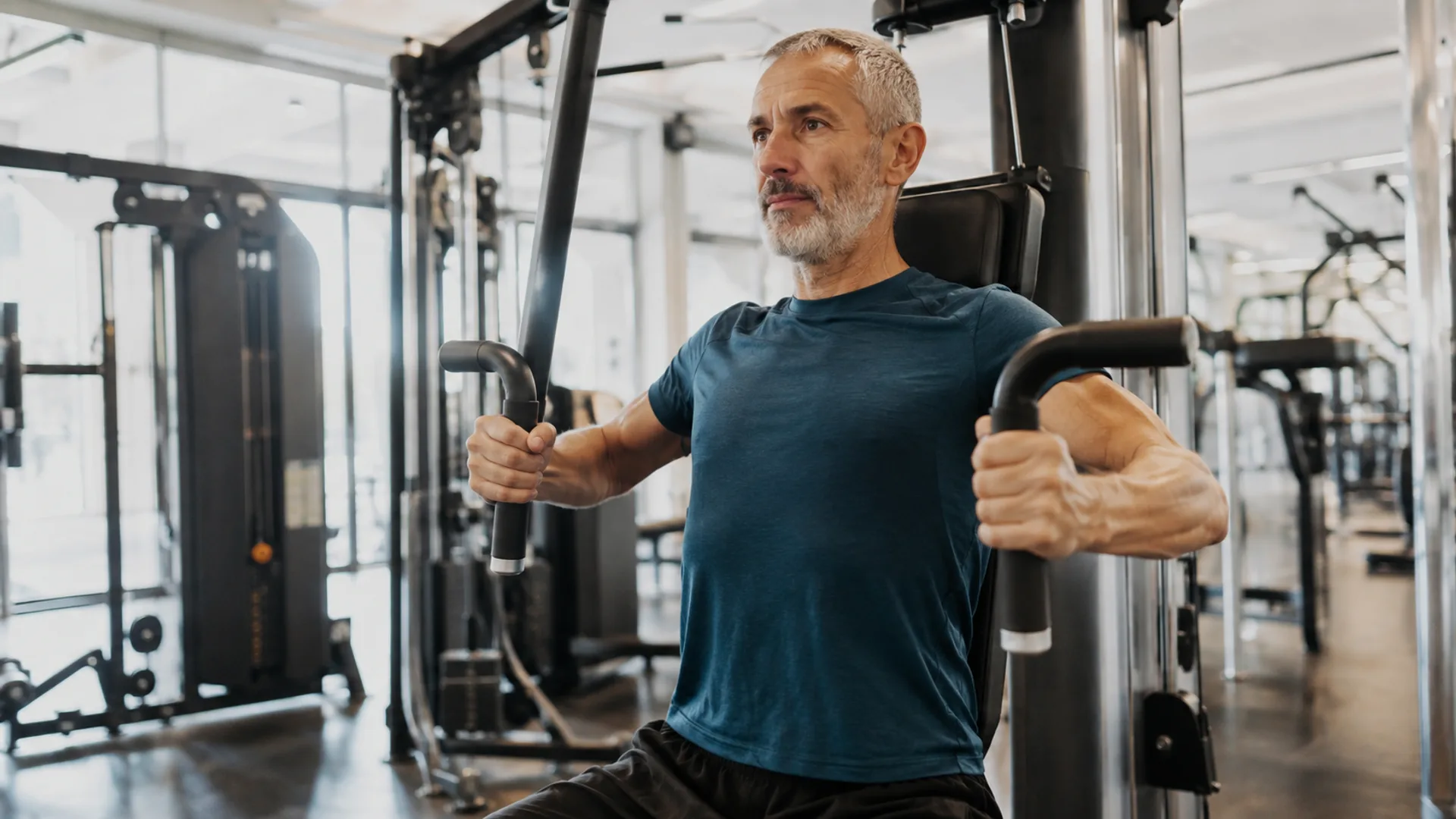
You lose:
20 pounds.
What were those pounds made of?
Ideally:
mostly fat.
But diet-induced weight loss usually includes some lean tissue too.
After 50, that distinction matters more.
Resistance training changes what you lose
A meta-analysis of randomized trials in older adults with obesity compared calorie restriction:
- with resistance training
- without resistance training
Adding resistance training prevented approximately:
93% of the lean-mass loss
seen with calorie restriction alone.
Fat and total weight loss remained similar.
In other words, the scale moved by a similar amount, but the composition of that loss was better.
A major NEJM trial showed the same principle
Researchers studied:
160 adults age 65 and older
with obesity.
During weight loss they performed:
- aerobic training
- resistance training
- or both
Weight fell roughly 9% across exercise groups.
But lean-mass loss was smaller in the groups performing resistance exercise.
Strength rose dramatically in the resistance and combined groups.
The combined group showed the greatest overall improvement in physical function.
Cardio is not the enemy
Aerobic activity improves:
- cardiorespiratory fitness
- endurance
- cardiovascular health
- energy expenditure
Resistance training provides a different signal:
keep this muscle.
The best overall program often includes both.
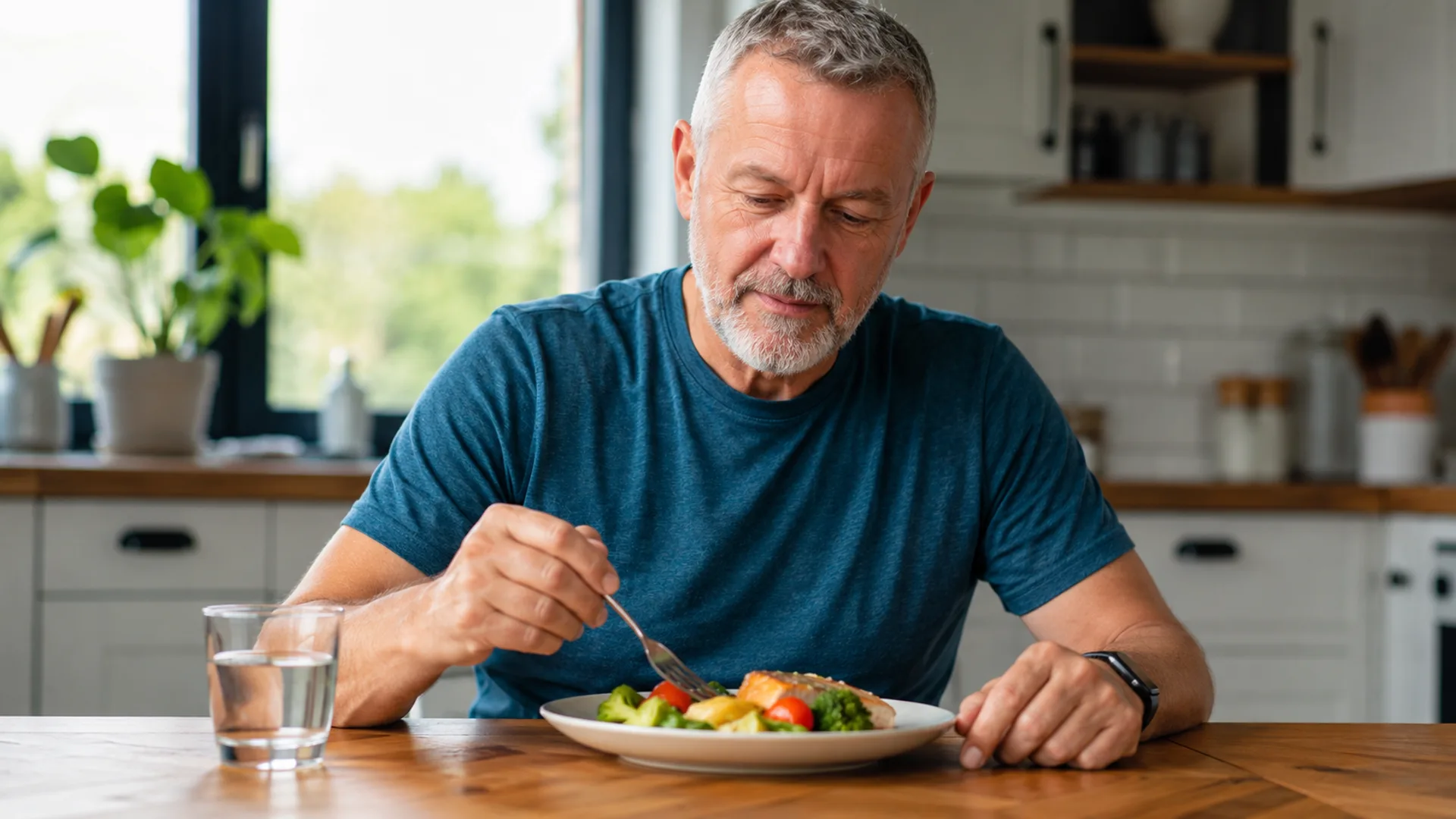
Protein supplies the building material
Older muscle can become less responsive to small protein doses.
Several aging experts recommend roughly:
1.0–1.2 g/kg/day
for many healthy older adults, with higher intake sometimes appropriate in active people or during weight loss.
Protein works best when paired with:
muscle-loading exercise.
Do not make the calorie deficit unnecessarily extreme
The faster the scale falls, the better — right?
Not necessarily.
Very aggressive restriction can make it more difficult to preserve:
- muscle
- training performance
- adequate nutrient intake
After 50, there is little value in winning a race to become:
lighter but weaker.
The scale cannot tell what tissue was lost
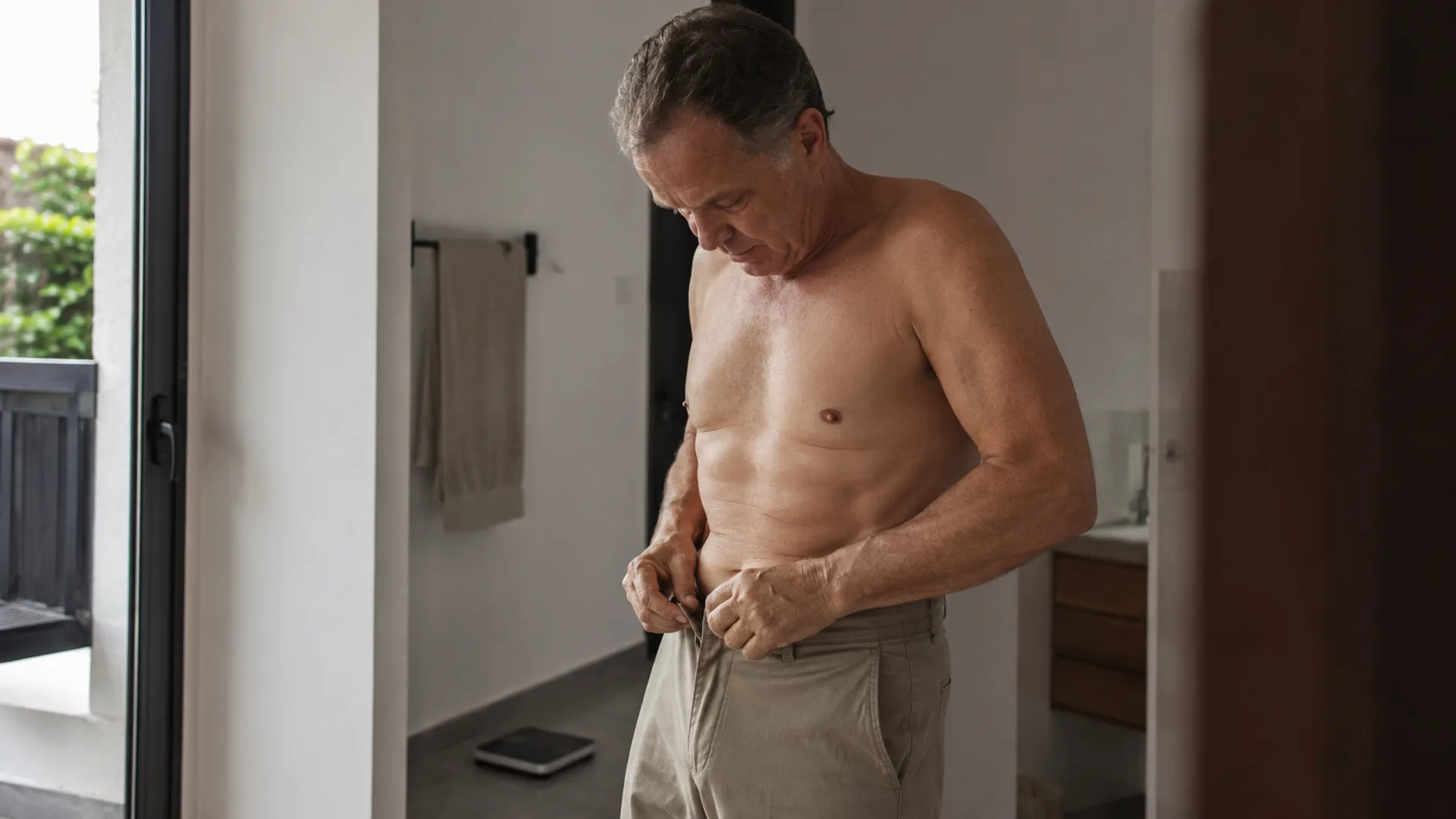
Two people can both lose 15 pounds.
One loses mostly fat.
The other loses much more lean tissue.
The scale gives them the same score.
Useful additional markers include:
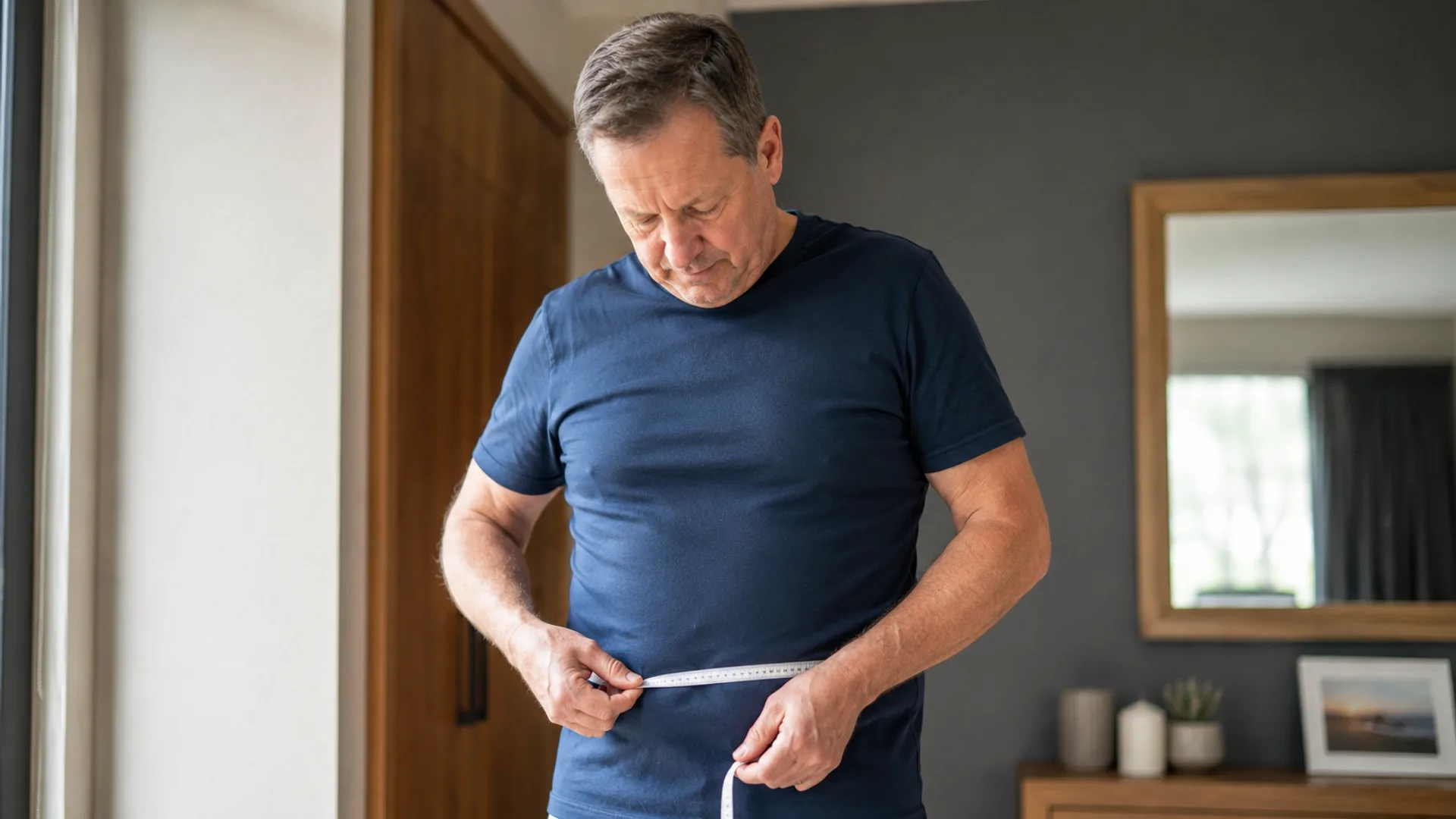
- waist circumference
- strength
- training performance
- body-composition measurements
- clothing fit
Get the research, without the noise.
Practical, sourced writing on blood sugar and metabolic health. One email a week.
One email a week. Unsubscribe any time. See our privacy policy.
Muscle preservation can slow apparent scale loss
If you lose six pounds of fat while gaining two pounds of lean tissue, the scale shows only:
four pounds down.
That can still be a superior outcome.
The Health Facts takeaway
Can you lose fat without losing muscle after 50?
Perfect preservation is not guaranteed.
But you can dramatically improve the odds by combining:
reasonable calorie deficit + adequate protein + progressive resistance training.
Add aerobic activity for cardiovascular fitness.
Then judge success by more than body weight.
The goal is not simply:
“How light can I become?”
It is:
“How much excess fat can I lose while keeping the strength and muscle I will still need decades from now?”
Sources
- 1. Villareal DT, et al. Aerobic or Resistance Exercise, or Both, in Dieting Obese Older Adults. New England Journal of Medicine, 2017. doi:10.1056/NEJMoa1616338
- 2. Sardeli AV, et al. Resistance Training Prevents Muscle Loss Induced by Caloric Restriction in Obese Elderly Individuals: A Systematic Review and Meta-Analysis. Nutrients, 2018. doi:10.3390/nu10040423
- 3. Cava E, et al. Preserving Healthy Muscle During Weight Loss. Advances in Nutrition, 2017. doi:10.3945/an.116.014506
- 4. Bauer J, Biolo G, Cederholm T, et al. Evidence-Based Recommendations for Optimal Dietary Protein Intake in Older People: A Position Paper From the PROT-AGE Study Group. Journal of the American Medical Directors Association, 2013. doi:10.1016/j.jamda.2013.05.021
- 5. Deutz NEP, Bauer JM, Barazzoni R, et al. Protein Intake and Exercise for Optimal Muscle Function With Aging: Recommendations From the ESPEN Expert Group. Clinical Nutrition, 2014. doi:10.1016/j.clnu.2014.04.007
Comments
No comments yet.
Leave a comment
Comments are moderated. Be kind and stay on topic.