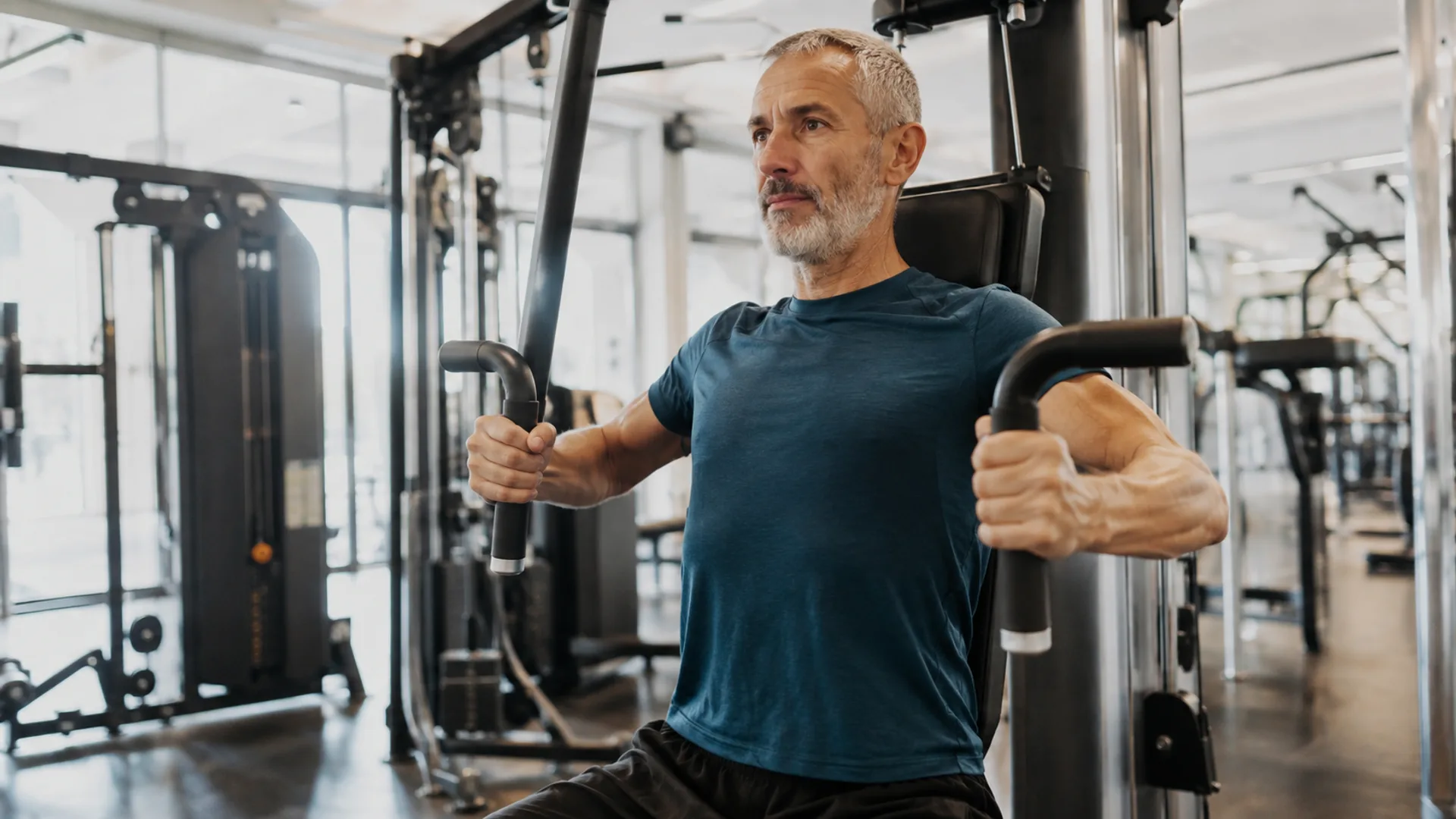
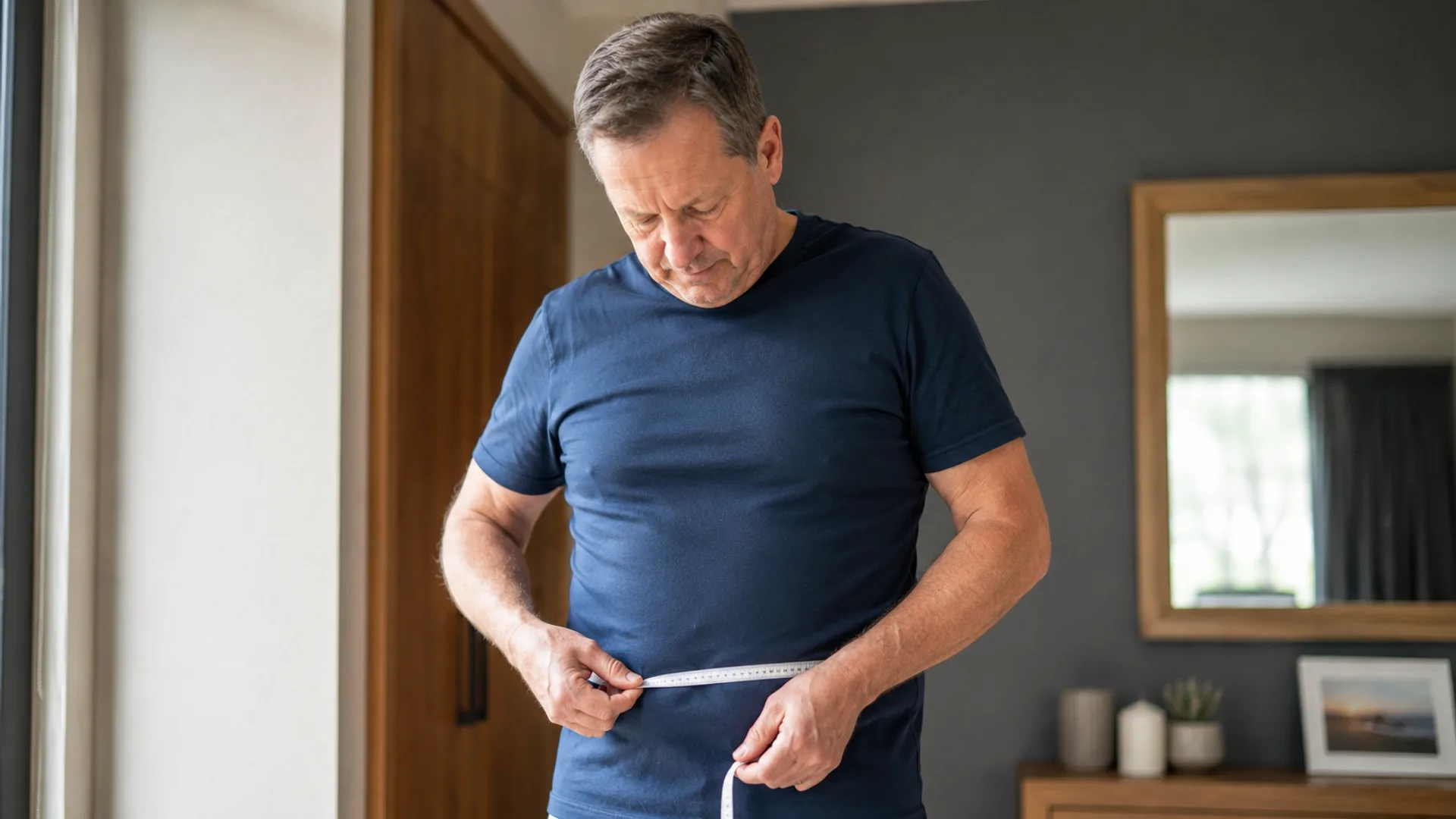
Weight & Body Composition
Why the Scale Can Stay the Same While Your Body Gets Healthier
Body weight is only the total. It cannot tell whether you are losing fat, gaining muscle, shrinking your waist, or improving fitness.
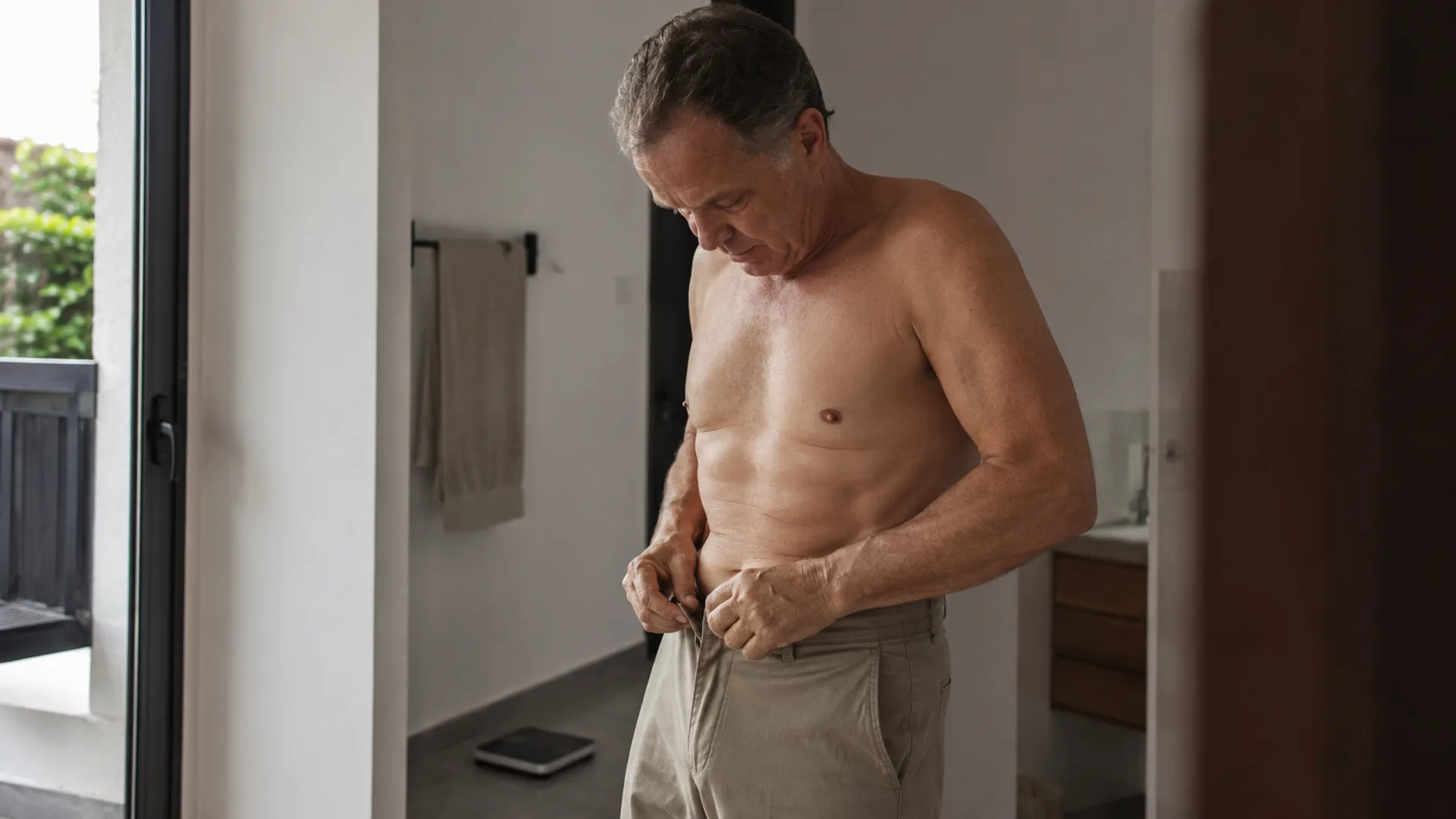
You exercise for six weeks.
Your waist shrinks.
Your clothes fit better.
You're stronger.
Then the scale says:
same weight.
That does not automatically mean nothing changed.
The scale gives you one total
Body weight includes:
- fat
- muscle
- bone
- water
- glycogen
- food in the digestive tract
Suppose you lose:
8 pounds of fat
while gaining:
5 pounds of lean tissue
and holding a few pounds more water and glycogen.
The scale may barely move.
Your body composition can still be substantially different.
Resistance training can produce exactly this pattern
A meta-analysis of resistance-training trials in adults with overweight or obesity found that resistance-based programs reduced fat mass while increasing lean mass.
Across the studies, average changes were roughly:
- 1.6 kg lower fat mass
- 0.8 kg higher lean mass
Net scale change can therefore look small even when tissue composition changes meaningfully.
Muscle doesn't “weigh more than fat”
A pound of muscle and a pound of fat both weigh one pound.
The difference is:
density.
Muscle occupies less volume than the same weight of fat.
So someone can weigh the same while becoming:
- smaller around the waist
- firmer
- better fitting in clothes
Exercise can reduce abdominal fat without weight loss
Controlled studies have deliberately held body weight stable while participants exercised.
Even without weight loss, researchers have observed reductions in:
- abdominal fat
- visceral fat
along with improved:
cardiorespiratory fitness.
The scale says:
no change.
Imaging and performance testing say:
substantial change.
Fitness can improve independently
Suppose you start at 210 pounds and can walk briskly for only 10 minutes.
Three months later you weigh 208.
But now you can walk uphill for 40 minutes.
Calling that:
“only two pounds of progress”
makes no sense.
Fitness is its own health variable.
Short-term weight is noisy
Your weight can change rapidly because of:
- sodium
- glycogen
- carbohydrate intake
- menstrual-cycle changes
- food volume
- exercise-related inflammation
- hydration
A salty meal can add several pounds of water.
A hard new strength workout can temporarily increase muscle water.
Neither means you gained several pounds of fat overnight.
Track trends, not one reading
If you use the scale, compare measurements under similar conditions.
Weekly averages are often more useful than individual readings.
Then combine weight with:
- waist circumference
- strength
- fitness
- clothing fit
- blood pressure
Get the research, without the noise.
Practical, sourced writing on blood sugar and metabolic health. One email a week.
One email a week. Unsubscribe any time. See our privacy policy.
A plateau is not always secret progress
Body recomposition is real.
But it should not become an excuse for every six-month plateau.
If:
- weight
- waist
- strength
- fitness
- photos
are all unchanged for months, the program may genuinely need adjustment.
Look for evidence.
After 50, tissue quality matters more
Aggressive dieting can produce scale loss partly by reducing:
lean tissue.
Resistance training during calorie restriction can preserve much more muscle.
That means two people can lose the same 20 pounds but end with very different bodies.
The Health Facts takeaway
The scale is not lying.
It is just answering a narrow question:
“How much mass is on top of me?”
It cannot tell you:
- where fat was lost
- whether muscle was gained
- whether fitness improved
- whether your waist shrank
That is why progress can look like:
same weight
↓
less fat
↓
more or better-preserved muscle
↓
smaller waist
↓
healthier body
Use the scale.
Just don't give it the authority to overrule every other signal.
Sources
- 1. Wewege MA, et al. The Effect of Resistance Training in Healthy Adults on Body Fat Percentage, Fat Mass and Visceral Fat: A Systematic Review and Meta-Analysis. Sports Medicine, 2022. doi:10.1007/s40279-021-01562-2
- 2. Ross R, et al. Exercise-Induced Changes in Obesity With and Without Weight Loss. Controlled trials.
- 3. Ross R, et al. Waist Circumference as a Vital Sign in Clinical Practice: A Consensus Statement From the IAS and ICCR Working Group on Visceral Obesity. Nature Reviews Endocrinology, 2020. doi:10.1038/s41574-019-0310-7
- 4. Sardeli AV, et al. Resistance Training Prevents Muscle Loss Induced by Caloric Restriction in Obese Elderly Individuals: A Systematic Review and Meta-Analysis. Nutrients, 2018. doi:10.3390/nu10040423
Comments
No comments yet.
Leave a comment
Comments are moderated. Be kind and stay on topic.