Weight & Body Composition
Why Waist Size May Tell You More About Health Risk Than Body Weight
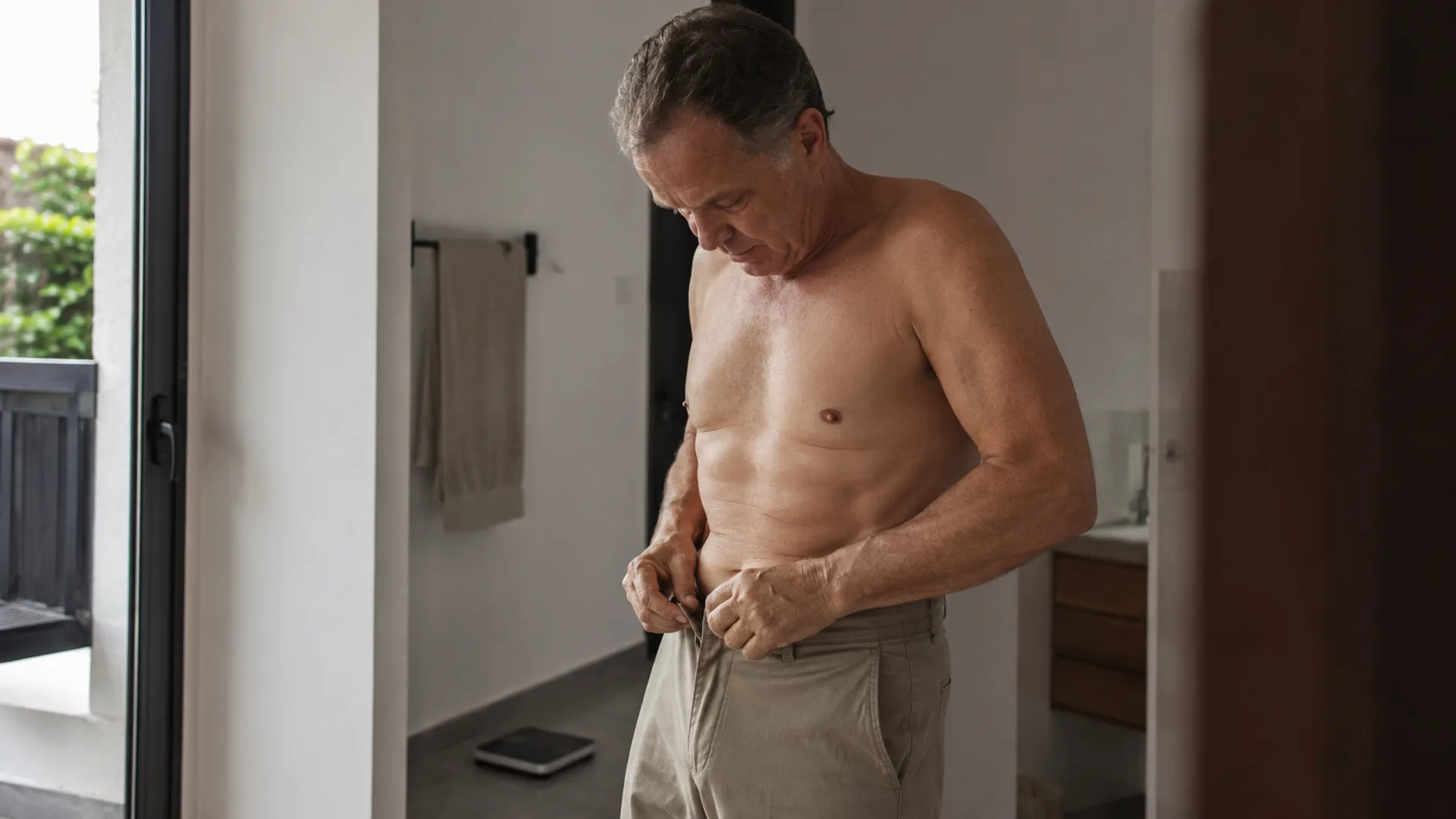
Two people can weigh exactly the same and carry that weight very differently. Waist circumference adds information the scale and even BMI can miss.
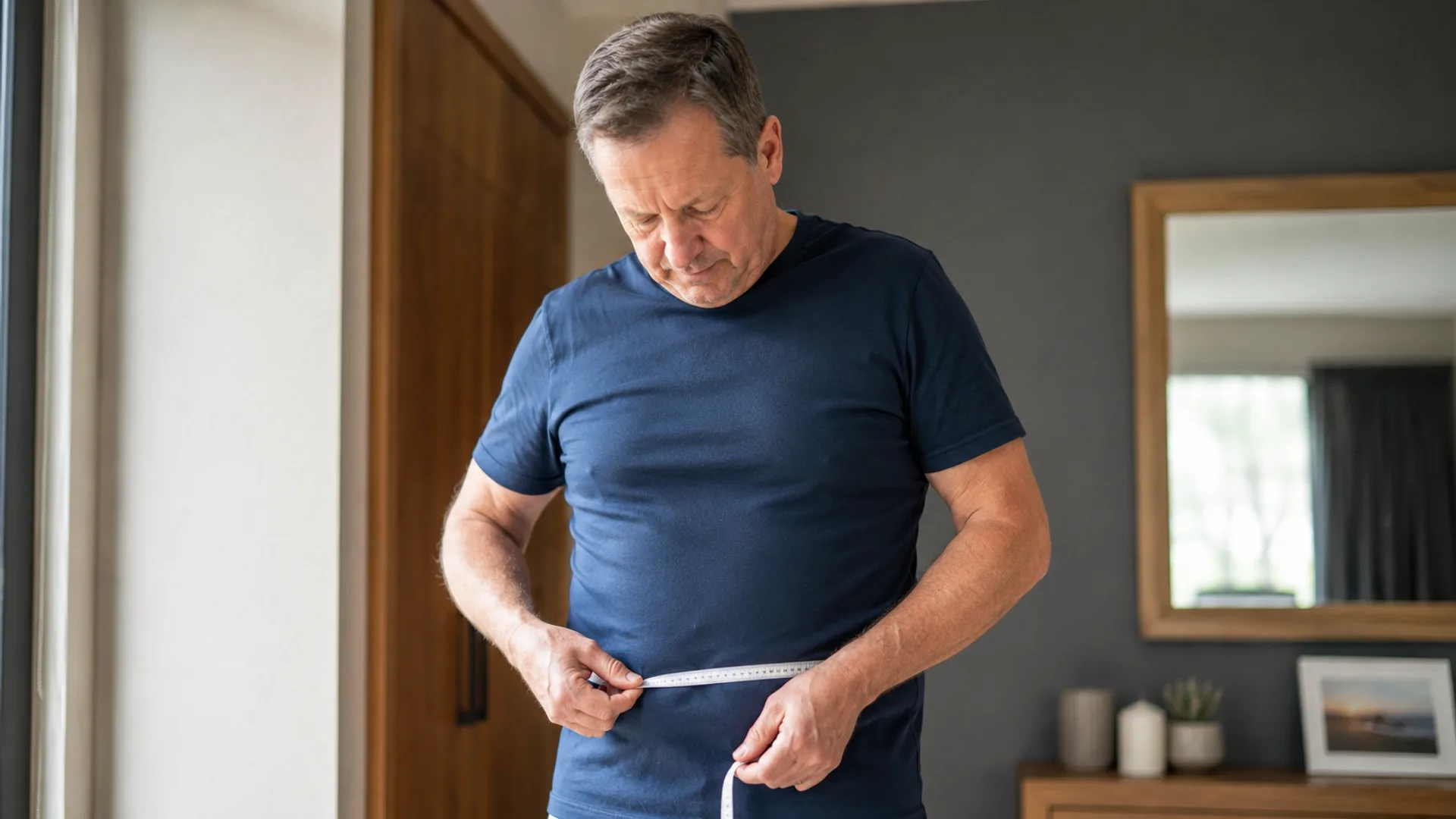
Two people can be:
- the same height
- the same weight
- the same BMI
and still carry very different health risk.
Why?
Because:
where body fat is stored matters.
The scale only measures total mass
A scale cannot distinguish:
- muscle
- fat
- bone
- water
It also has no idea where body fat sits.
BMI improves on weight by adjusting for height.
But BMI still does not distinguish:
- muscle from fat
- abdominal fat from lower-body fat
Waist circumference adds information about:
central adiposity.
More than 650,000 adults were studied
A pooled analysis combined:
11 prospective studies
involving:
650,386 adults.
Higher waist circumference predicted higher mortality even after researchers adjusted for:
- BMI
- smoking
- alcohol
- physical activity
Every additional:
5 cm — about 2 inches
of waist circumference was associated with roughly:
- 7% higher mortality in men
- 9% higher mortality in women
The association appeared across BMI categories.
That means a “normal” BMI does not automatically erase the information contained in a large waist.
Why abdominal fat matters
A larger waist often reflects more:
- abdominal subcutaneous fat
- visceral fat
Visceral fat sits deeper inside the abdomen around organs and has stronger associations with:
- insulin resistance
- triglycerides
- inflammation
- cardiovascular disease
A tape measure cannot tell exactly how much visceral fat you have.
But it provides a useful practical marker of abdominal adiposity.
Common U.S. thresholds
Frequently used screening thresholds are:
Men more than 40 inches / 102 cm
Women more than 35 inches / 88 cm
These are not biological cliffs.
A waist of 39.9 inches is not automatically safe while 40.1 is dangerous.
Risk generally changes continuously.
Appropriate cutoffs can also differ by ethnicity and population.
Waist-to-height ratio adds another idea
A widely discussed rule is:
Keep your waist below roughly half your height.
A waist-to-height ratio around:
0.5
has performed reasonably well as a simple screening measure in many populations.
It is not a universal diagnostic threshold.
Measure consistently
A useful method:
- Stand upright.
- Place the tape around the abdomen just above the hip bones.
- Keep the tape level.
- Breathe out normally.
- Do not pull the tape tightly into the skin.
Use the same technique each time.
Get the research, without the noise.
Practical, sourced writing on blood sugar and metabolic health. One email a week.
One email a week. Unsubscribe any time. See our privacy policy.
Waist can improve even when weight barely changes
Exercise can reduce:
- waist circumference
- visceral fat
without dramatic weight loss.
That can happen when someone:
- loses abdominal fat
- gains or preserves muscle
So an unchanged scale does not always mean body composition is unchanged.
The Health Facts takeaway
Weight tells you:
how heavy you are.
BMI adds:
how tall you are.
Waist circumference adds:
where some of that weight is being stored.
That is why a simple tape measure can reveal information the bathroom scale completely misses.
Sources
- 1. Cerhan JR, et al. A Pooled Analysis of Waist Circumference and Mortality in 650,000 Adults. Mayo Clinic Proceedings, 2014. doi:10.1016/j.mayocp.2013.11.011
- 2. de Hollander EL, et al. The Association Between Waist Circumference and Risk of Mortality Considering Body Mass Index in 65- to 74-Year-Olds: A Meta-Analysis of 29 Cohorts Involving More Than 58,000 Elderly Persons. International Journal of Epidemiology, 2012. doi:10.1093/ije/dys008
- 3. Ross R, et al. Waist Circumference as a Vital Sign in Clinical Practice: A Consensus Statement From the IAS and ICCR Working Group on Visceral Obesity. Nature Reviews Endocrinology, 2020. doi:10.1038/s41574-019-0310-7
- 4. NHLBI. Metabolic Syndrome: Diagnosis.
Comments
No comments yet.
Leave a comment
Comments are moderated. Be kind and stay on topic.