
What A1C Actually Measures — and What It Can Miss
A1C is one of the most useful numbers for understanding blood sugar, but it is still an average. Here is what the test actually measures — and what it cannot tell you.
How glucose is measured, what the numbers mean in and out of range, and what published research says about keeping them steady.
A1C is one of the most useful numbers for understanding blood sugar, but it is still an average. Here is what the test actually measures — and what it cannot tell you.

Your A1C can look good while your morning glucose runs high — or fasting glucose can look normal while it spikes after meals. These numbers measure different things.

You haven't eaten all night, yet your glucose is higher when you wake up. The explanation has less to do with breakfast than with your liver and early-morning hormones.
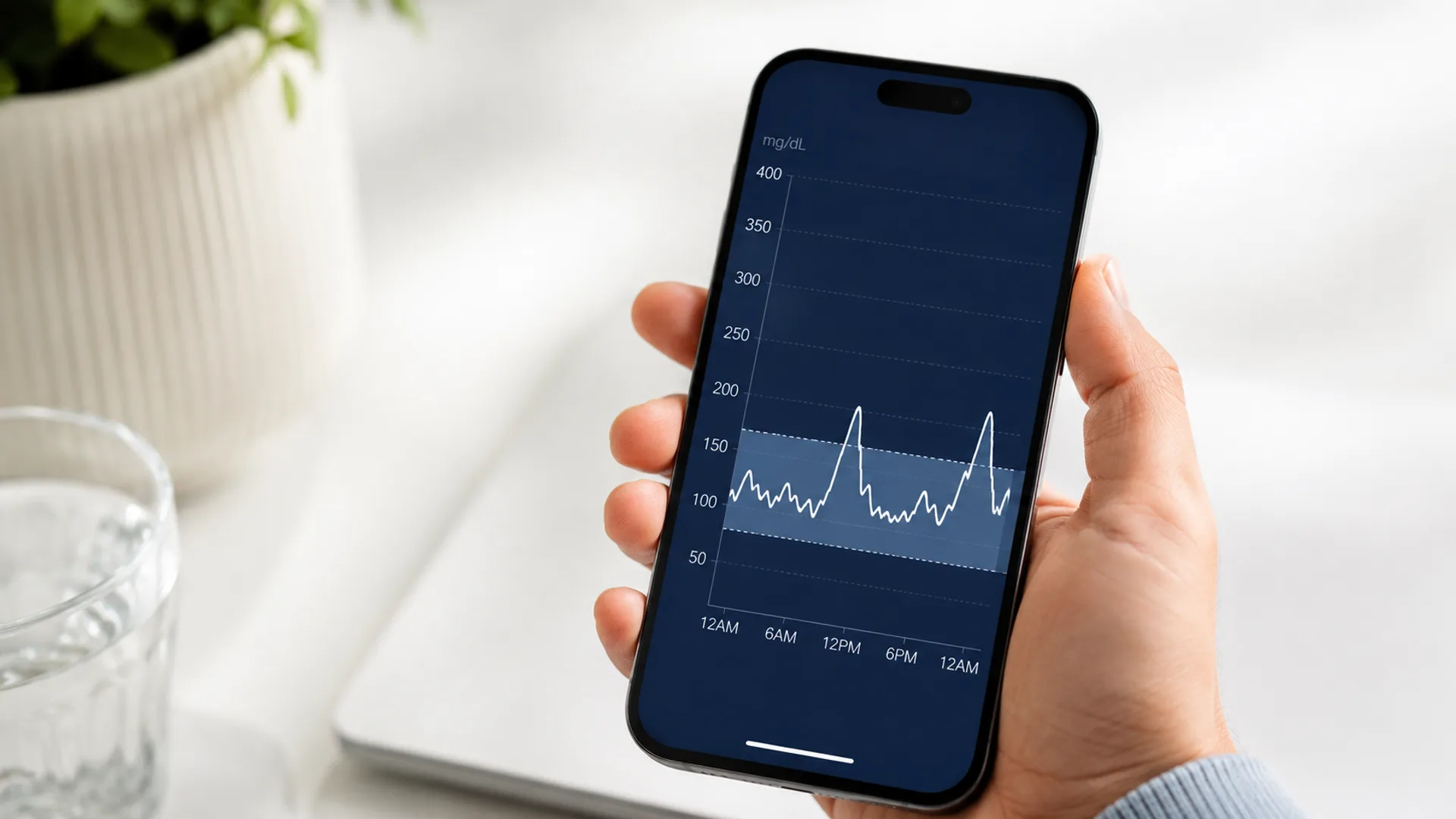
Two people can have the same A1C while spending very different amounts of their day with high, low, or stable glucose. Time in Range shows what the average leaves out.
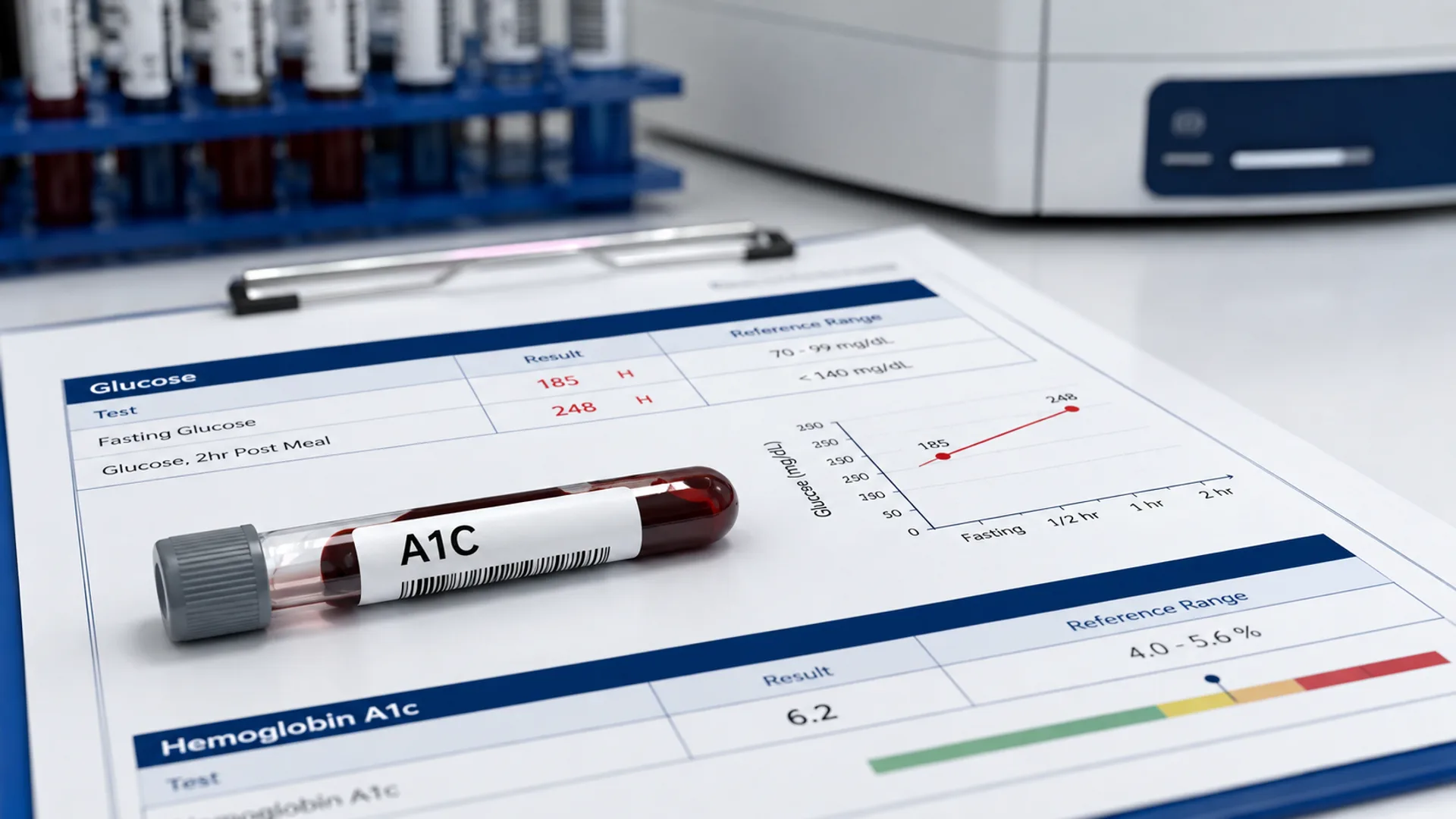
A1C is one of the most useful blood sugar tests — but it depends on red blood cells as well as glucose, so it can read higher or lower than your actual glucose exposure.
Practical, sourced writing on blood sugar and metabolic health. One email a week.
One email a week. Unsubscribe any time. See our privacy policy.