Type 2 Diabetes
Fatty Liver, Fatty Pancreas and Blood Sugar: Why Where You Store Fat Matters
Body fat is not metabolically identical everywhere. Excess fat in and around the liver is strongly linked to insulin resistance, and losing it tracks with better glucose control.
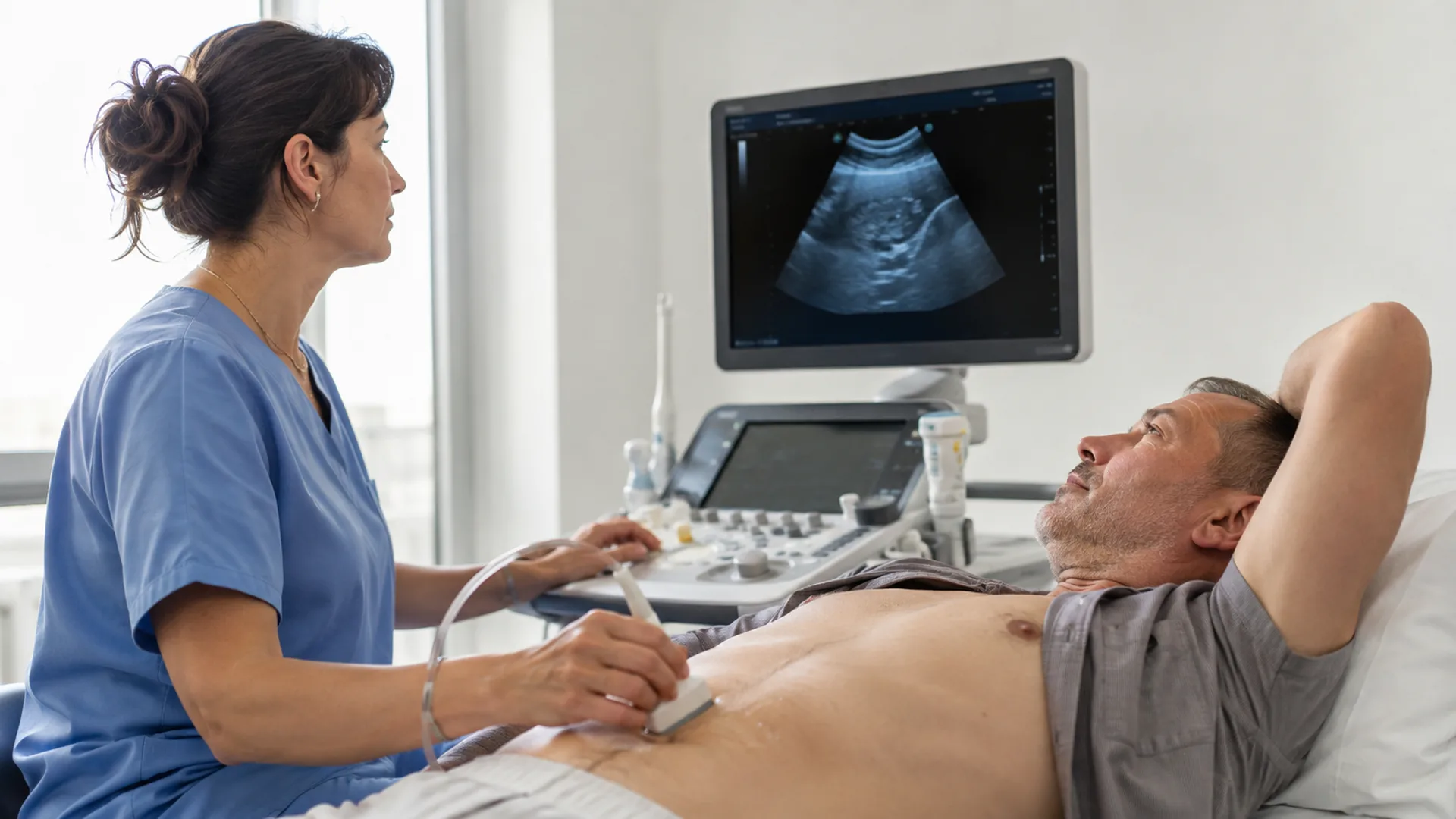
Two people can weigh exactly the same.
They can even have similar amounts of total body fat.
Yet one may have:
normal blood sugar
while the other develops:
insulin resistance and type 2 diabetes.
One reason is becoming increasingly clear:
Where fat is stored matters.
Fat stored underneath the skin is not metabolically identical to excess fat accumulating:
- around abdominal organs
- inside the liver
- within skeletal muscle
- in and around the pancreas
Researchers call fat stored in tissues not primarily designed for long-term fat storage:
ectopic fat.
And some of the strongest evidence connects excess ectopic fat — particularly liver fat — with insulin resistance and type 2 diabetes.
Your fat tissue has an important job
Body fat is not inherently abnormal.
Adipose tissue is supposed to store energy.
After you eat more energy than you immediately need, some of that energy can be packaged as triglyceride and stored safely inside fat cells for later use.
That's normal physiology.
The problem can begin when the amount of energy being stored repeatedly exceeds the capacity of someone's adipose tissue to handle it efficiently.
Then more fat may begin accumulating in places such as:
the liver.
This matters because the liver is one of the major organs controlling blood glucose.
What does a fatty liver have to do with fasting glucose?
Your liver releases glucose when you're not eating.
That keeps blood glucose available:
- overnight
- between meals
- during fasting
Insulin normally helps regulate that process.
After a meal, when glucose and insulin rise, insulin signals the liver to:
reduce glucose production.
But an insulin-resistant liver doesn't respond normally.
It may continue producing and releasing too much glucose even when plenty is already circulating.
That can contribute directly to:
high fasting blood sugar.
Excess liver fat is strongly associated with this hepatic insulin resistance.
The problem isn't necessarily the fat molecule itself
This is an important scientific distinction.
Saying:
"Fat in the liver causes insulin resistance"
is useful shorthand, but the biology is more complicated.
Researchers have identified lipid intermediates — particularly molecules such as:
diacylglycerol
that can accumulate inside liver cells.
These molecules can activate signaling pathways that interfere with normal insulin signaling.
The result is that insulin becomes less effective at suppressing liver glucose production.
So the concern isn't simply that:
"there is visible fat sitting in the liver."
It is that abnormal lipid metabolism inside the liver can interfere with how that organ responds to insulin.
Fatty liver is extremely common in type 2 diabetes
The condition now commonly called:
metabolic dysfunction-associated steatotic liver disease
or:
MASLD
describes excess liver fat occurring in the setting of metabolic risk.
It was previously widely called nonalcoholic fatty liver disease, or NAFLD.
MASLD and type 2 diabetes frequently occur together.
Current American Diabetes Association guidance specifically recommends evaluating people with type 2 diabetes for clinically significant liver fibrosis risk.
That's because MASLD can range from relatively uncomplicated liver fat accumulation to:
- liver inflammation
- fibrosis
- cirrhosis
So fatty liver is not only a blood sugar issue.
It can be a liver-health issue in its own right.
Here's where the story becomes particularly interesting
If excess liver fat contributes to insulin resistance...
what happens when liver fat falls?
Researchers tested this in a small but influential study of people with relatively recent type 2 diabetes.
Participants followed a medically supervised very-low-calorie diet for eight weeks.
At the beginning of the study, average liver fat was approximately:
12.8%.
By the end of the intervention, it had fallen to approximately:
2.9%.
But the glucose improvement started much earlier.
After only:
7 days
fasting glucose fell from approximately:
166 mg/dL
to:
106 mg/dL.
At the same time, the liver became dramatically more responsive to insulin.
Insulin's ability to suppress liver glucose production increased from approximately:
43%
to:
74%.
In other words:
liver metabolism changed
before:
large visible changes in body size had occurred.
This helps explain why glucose can improve quickly during weight loss
We covered this in Can Blood Sugar Improve Before You Lose a Lot of Weight?.
Weight loss doesn't necessarily affect every fat depot at exactly the same rate.
Early negative energy balance can rapidly reduce liver fat.
And because the liver directly controls fasting glucose production, relatively rapid changes inside the liver can produce surprisingly fast changes in blood sugar.
That's one reason:
5 pounds lost
doesn't always mean:
only a tiny metabolic improvement.
The bathroom scale cannot tell you where those metabolic changes occurred.
What about fat in the pancreas?
This is where we need to be more careful.
You may have heard the phrase:
"fatty pancreas."
Researchers can use imaging techniques to measure fat within the pancreas.
And people with type 2 diabetes frequently have more pancreatic fat than metabolically healthy comparison groups.
Weight-loss studies have also found that pancreatic fat can decrease alongside improvements in glucose regulation.
But the science is not as simple as:
Pancreas fat directly causes diabetes.
The pancreas is a complicated organ.
The fat measured by MRI can represent several different anatomical and metabolic phenomena, including fat between pancreatic cells rather than simply triglyceride stored inside the insulin-producing beta cells themselves.
So pancreatic fat is best thought of as:
part of a larger metabolic picture
rather than a standalone clinical number that diagnoses the cause of someone's diabetes.
Still, the remission studies found something important
The DiRECT trial gave researchers an opportunity to study this in greater detail.
A subgroup underwent metabolic testing and MRI imaging before and after weight loss.
Before the intervention, average liver fat was approximately:
16.0%.
After weight loss, it fell to about:
3.1%.
Pancreatic fat also decreased.
But something interesting happened.
Both responders and nonresponders lost liver and pancreatic fat.
Only some participants regained normal glucose control.
What separated them?
The people who achieved remission were able to recover a much stronger:
first-phase insulin response.
In other words:
Reducing ectopic fat appeared to create a more favorable metabolic environment.
But remission still depended heavily on whether the pancreatic beta cells could recover enough function.
That distinction is extremely important
It prevents us from saying something overly simplistic such as:
"Remove pancreas fat and diabetes disappears."
The actual picture looks more like:
excess fat accumulates in metabolically important tissues
↓
insulin sensitivity deteriorates
↓
the liver releases too much glucose
↓
beta cells have to work harder
↓
beta-cell function eventually deteriorates in susceptible people
↓
type 2 diabetes develops
When substantial weight loss occurs:
liver fat can fall
↓
hepatic insulin sensitivity improves
↓
excess liver glucose production falls
↓
pancreatic fat may also decrease
↓
some beta cells recover function
↓
some people achieve remission
But the final step does not happen equally in everyone.
Duration of diabetes appears to matter
In the DiRECT metabolic study, people who responded had lived with diabetes for an average of about:
2.7 years
compared with:
3.8 years
among nonresponders.
That's not an absolute cutoff.
People with longer-duration diabetes can still improve tremendously.
But it supports an important principle:
Beta-cell recovery becomes less predictable as diabetes progresses.
Removing some of the metabolic pressure doesn't guarantee that every beta cell can regain normal function.
This may help explain why two people can lose similar amounts of weight...
yet achieve different glucose outcomes.
What happens when the weight comes back?
Researchers followed participants over time.
Among people who maintained diabetes remission:
- liver fat remained low
- liver triglyceride export remained lower
- pancreatic fat remained lower
- first-phase insulin secretion remained improved
But among people who initially achieved remission and later relapsed, researchers observed:
- increasing liver lipid export
- reaccumulation of pancreatic fat
- loss of the recovered first-phase insulin response
That doesn't prove every step causes the next one in a simple chain.
But the timing strongly supports the idea that:
disordered fat handling and glucose regulation are closely linked.
This is sometimes described as the "twin cycle"
Researchers have proposed a model to explain how these processes may reinforce each other.
One cycle occurs largely in the:
liver.
Chronic excess energy promotes liver fat accumulation.
The liver becomes more insulin resistant.
It produces more glucose and exports more triglyceride.
The second proposed cycle involves the:
pancreas.
Greater lipid delivery to the pancreas occurs alongside worsening beta-cell function in susceptible individuals.
Eventually, insulin production can no longer compensate for insulin resistance.
Blood glucose rises.
The two processes can reinforce one another.
It's a useful model.
But it should not be mistaken for a complete explanation of every case of type 2 diabetes.
Type 2 diabetes is biologically heterogeneous.
Genetics, muscle insulin resistance, adipose-tissue function, inflammation, beta-cell biology, medications, sleep, activity, and other factors all contribute.
You don't have to look obese for this to happen
This may be the most surprising part.
Ectopic fat does not perfectly track with:
BMI.
BMI tells us body weight relative to height.
It cannot tell us exactly:
- where fat is stored
- how much visceral fat someone has
- how much fat is in their liver
- how much muscle they have
- how well their fat tissue handles excess energy
So someone can have a BMI that doesn't meet the conventional definition of obesity...
and still develop type 2 diabetes.
Researchers tested this directly in a study of:
20 people with type 2 diabetes
whose BMI was below:
27 kg/m².
Participants underwent repeated modest weight-loss cycles.
At baseline, average BMI was approximately:
24.8.
After weight loss it fell to:
22.5.
Liver fat and liver fat export fell toward values observed in matched people without diabetes.
And:
14 of the 20 participants — 70% — achieved sustained diabetes remission.
The initial weight loss required to achieve remission was a median of only about:
6.5% of body weight.
That doesn't mean lean people with diabetes should universally lose weight.
The study was small and highly selected.
But it demonstrates that:
"normal BMI" does not automatically mean metabolically appropriate fat distribution for that individual.
This leads to the idea of a personal fat threshold
People differ in how much fat they can store in traditional adipose tissue before metabolic problems begin.
One person may gain considerable subcutaneous fat while maintaining relatively normal liver fat and insulin sensitivity.
Another may begin accumulating visceral and liver fat at a much lower BMI.
That could partly explain why:
- some people with obesity never develop diabetes
- some people with much lower body weight do
The idea is not that everyone has one precisely measurable number called their "fat threshold."
There is no clinical test for that.
It's a useful physiological concept:
the amount of excess fat a person's metabolism can tolerate differs between individuals.
Get the research, without the noise.
Practical, sourced writing on blood sugar and metabolic health. One email a week.
One email a week. Unsubscribe any time. See our privacy policy.
Visceral fat matters too
Another type of fat worth distinguishing is:
visceral fat.
This is fat stored deep inside the abdomen around internal organs.
It is different from the subcutaneous fat you can pinch underneath the skin.
Higher visceral adiposity is strongly associated with:
- insulin resistance
- type 2 diabetes
- abnormal lipids
- cardiovascular disease
- fatty liver
Current ADA guidance recognizes this limitation of BMI and notes that measurements such as:
- waist circumference
- waist-to-height ratio
- waist-to-hip ratio
can provide additional information about fat distribution.
None is a perfect metabolic test.
But they can reveal risk that BMI alone misses.
Can you specifically target liver fat?
You cannot choose where your body removes each individual pound of fat.
There is no exercise that directly:
burns fat from the liver.
But several interventions can reduce liver fat as overall metabolism improves.
These include:
- sustained weight loss when excess adiposity is present
- reducing chronic excess energy intake
- regular physical activity
- appropriate diabetes treatment
- obesity pharmacotherapy when indicated
- metabolic surgery in appropriate candidates
For people with type 2 diabetes and MASLD plus overweight or obesity, current ADA guidance recommends lifestyle interventions designed to produce weight loss.
A minimum weight reduction of approximately:
5%
can improve aspects of liver disease.
Larger reductions — often around:
10% or more
— are generally associated with greater improvements, particularly when liver inflammation or fibrosis is present.
Exercise can improve liver health even beyond the scale
Physical activity is important here too.
Exercise can improve:
- insulin sensitivity
- glucose disposal
- cardiorespiratory fitness
- body composition
and can reduce liver fat even when total weight loss is relatively modest.
That is another reminder that:
the bathroom scale is not a complete metabolic measurement.
You can change what is happening inside metabolically important tissues without seeing a dramatic difference in total body weight immediately.
Don't turn this into fear of dietary fat
Another common misunderstanding would be:
"If organ fat is bad, eating fat must directly create fatty organs."
Human metabolism does not work that simply.
Liver fat can arise from several sources, including:
- fatty acids released from adipose tissue
- fat from food
- fat manufactured by the liver from excess carbohydrate through de novo lipogenesis
The dominant contribution differs depending on someone's metabolic state and diet.
The larger problem is generally:
chronic energy excess plus impaired fat handling
rather than one nutrient moving directly from your plate into your liver.
That is why current diabetes guidelines do not treat either:
all dietary fat
or:
all carbohydrate
as the sole cause.
The Health Facts takeaway
Body fat is not just about:
how much you have.
It's also about:
where your body is storing it.
Subcutaneous fat can serve as an important energy reservoir.
But excess fat accumulating in metabolically important tissues — especially the liver — is closely connected with insulin resistance.
And the liver directly influences fasting blood sugar.
The physiology can look something like this:
energy consistently exceeds storage capacity
↓
more fat accumulates in the liver and other ectopic locations
↓
liver insulin sensitivity worsens
↓
liver glucose production becomes harder to suppress
↓
the pancreas has to compensate with more insulin
↓
beta-cell function may eventually deteriorate
↓
blood glucose rises
And importantly, parts of that process can run in reverse.
Weight-loss studies have shown:
liver fat falls
↓
hepatic insulin sensitivity improves
↓
fasting glucose can improve rapidly
↓
beta-cell function may recover in some people
↓
remission becomes possible for some
That's a more useful way to understand weight and type 2 diabetes than simply:
"You weigh too much."
The scale cannot tell you:
- where your fat is stored
- how much liver fat you have
- how well your beta cells function
- how insulin-sensitive your tissues are
Two people at the same weight can therefore have very different metabolic health.
Where the fuel ends up matters.
And in type 2 diabetes, reducing excess fat from the wrong places may be just as important as changing the number on the scale.
Sources
- 1. Lim EL, Hollingsworth KG, Aribisala BS, et al. Reversal of Type 2 Diabetes: Normalisation of Beta Cell Function in Association With Decreased Pancreas and Liver Triacylglycerol. Diabetologia, 2011. doi:10.1007/s00125-011-2204-7
- 2. Taylor R, Al-Mrabeh A, Zhyzhneuskaya S, et al. Remission of Human Type 2 Diabetes Requires Decrease in Liver and Pancreas Fat Content but Is Dependent Upon Capacity for β Cell Recovery. Cell Metabolism, 2018. doi:10.1016/j.cmet.2018.07.003
- 3. Al-Mrabeh A, Zhyzhneuskaya SV, Peters C, et al. Hepatic Lipoprotein Export and Remission of Human Type 2 Diabetes After Weight Loss. Cell Metabolism, 2020.
- 4. Al-Mrabeh A, Hollingsworth KG, Shaw JAM, et al. 2-Year Remission of Type 2 Diabetes and Pancreas Morphology: A Post-hoc Analysis of the DiRECT Open-Label, Cluster-Randomised Trial. Lancet Diabetes & Endocrinology, 2020. doi:10.1016/S2213-8587(20)30303-X
- 5. Samuel VT, Petersen KF, Shulman GI. Lipid-Induced Insulin Resistance: Unravelling the Mechanism. Lancet, 2010. doi:10.1016/S0140-6736(10)60408-4
- 6. Petersen MC, Shulman GI. Mechanisms of Insulin Action and Insulin Resistance. Physiological Reviews, 2018. doi:10.1152/physrev.00063.2017
- 7. Taylor R, Holman RR, et al. Aetiology of Type 2 Diabetes in People With a 'Normal' Body Mass Index: Testing the Personal Fat Threshold Hypothesis. Clinical Science, 2023.
- 8. American Diabetes Association Professional Practice Committee for Diabetes. Comprehensive Medical Evaluation and Assessment of Comorbidities: Standards of Care in Diabetes—2026. Diabetes Care, 2026.
- 9. American Diabetes Association Professional Practice Committee for Diabetes. Obesity and Weight Management for the Prevention and Treatment of Diabetes: Standards of Care in Diabetes—2026. Diabetes Care, 2026. doi:10.2337/dc26-S008
Comments
No comments yet.
Leave a comment
Comments are moderated. Be kind and stay on topic.
Related articles

Type 2 Diabetes Remission: What Doctors Actually Mean by 'Remission'

A1C Isn't the Whole Story: 7 Other Numbers Worth Watching With Type 2 Diabetes

Why Morning Blood Sugar Can Be High Even When You Haven't Eaten Anything