Heart Health
What Your Blood Pressure Numbers Actually Mean — and Why the Top Number Matters More After 50
Blood pressure has two numbers, but they do not carry equal information at every age. As arteries stiffen with aging, systolic pressure often becomes the more important signal.
A blood pressure reading gives you two numbers:
128 / 76
The first is systolic pressure — the pressure in your arteries when the heart contracts.
The second is diastolic pressure — the pressure between beats, when the heart relaxes.
Both matter. But their importance shifts with age.
According to the current AHA/ACC framework, blood pressure is generally classified as:
- Normal: below 120 and below 80
- Elevated: 120–129 and below 80
- Stage 1 hypertension: 130–139 or 80–89
- Stage 2 hypertension: 140 or higher or 90 or higher
These are clinical categories, not biological cliffs. A reading of 129 is not suddenly harmless while 130 becomes dangerous.
Why systolic pressure often rises with age
Young arteries are relatively elastic. They expand when the heart ejects blood and recoil between beats.
With aging, large arteries tend to become stiffer. The same heartbeat is now pushing blood into a less compliant system.
That tends to raise:
systolic pressure
and can widen the gap between systolic and diastolic pressure, called pulse pressure.
This helps explain why isolated systolic hypertension — a high top number with a relatively normal bottom number — becomes increasingly common in older adults.
A Framingham analysis found a transition around the 50s
Researchers following thousands of adults in the Framingham Heart Study found that the predictive value of the two numbers changed with age.
Before about age 50, diastolic pressure carried substantial cardiovascular information. During the 50s, the relationship shifted. By the 60s and beyond, systolic pressure and pulse pressure became increasingly important predictors.
That does not mean the bottom number stops mattering.
It means a reading such as:
152 / 74
should not be dismissed because 74 looks normal.
Why the top number matters
Higher systolic pressure repeatedly exposes the artery wall to greater force.
Over years, hypertension is associated with greater risk of:
- stroke
- heart attack
- heart failure
- kidney disease
- vascular damage
One of the landmark modern trials was SPRINT. More than 9,300 adults age 50 and older at elevated cardiovascular risk were randomized to a more intensive systolic target or a standard target.
The intensive group had fewer major cardiovascular events and lower mortality, although intensive treatment also caused more adverse effects in some participants.
The lesson is not that everyone should push systolic pressure as low as possible on their own.
It is that systolic pressure is not merely a cosmetic number.
One reading is not your blood pressure
Blood pressure changes minute to minute. It can rise because of:
- exercise
- caffeine
- stress
- pain
- talking
- a full bladder
- poor measurement technique
That is why diagnosis and treatment usually rely on repeated measurements rather than one isolated value.
Home readings can also reveal white-coat hypertension or masked hypertension.
How to measure it better at home
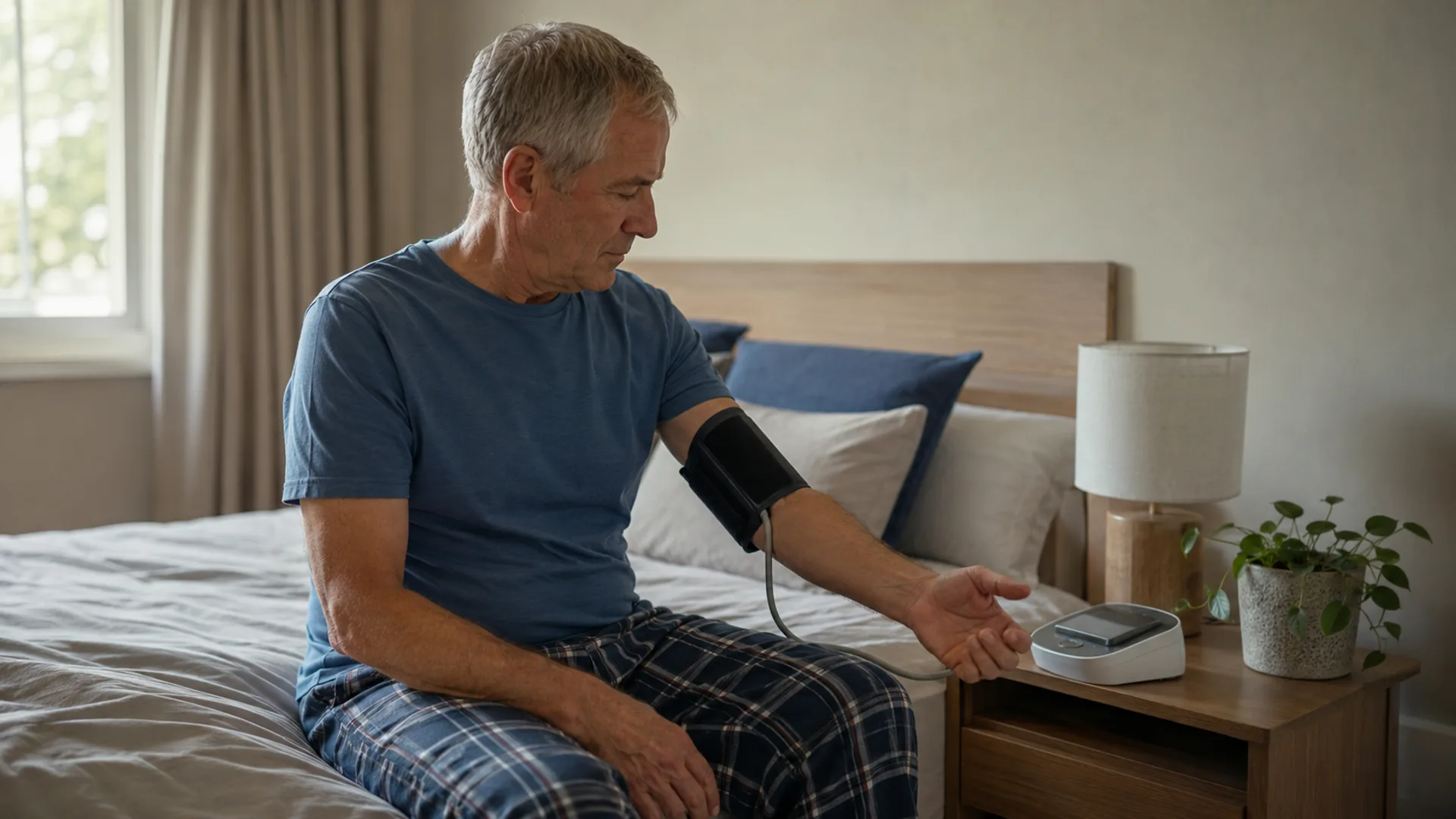
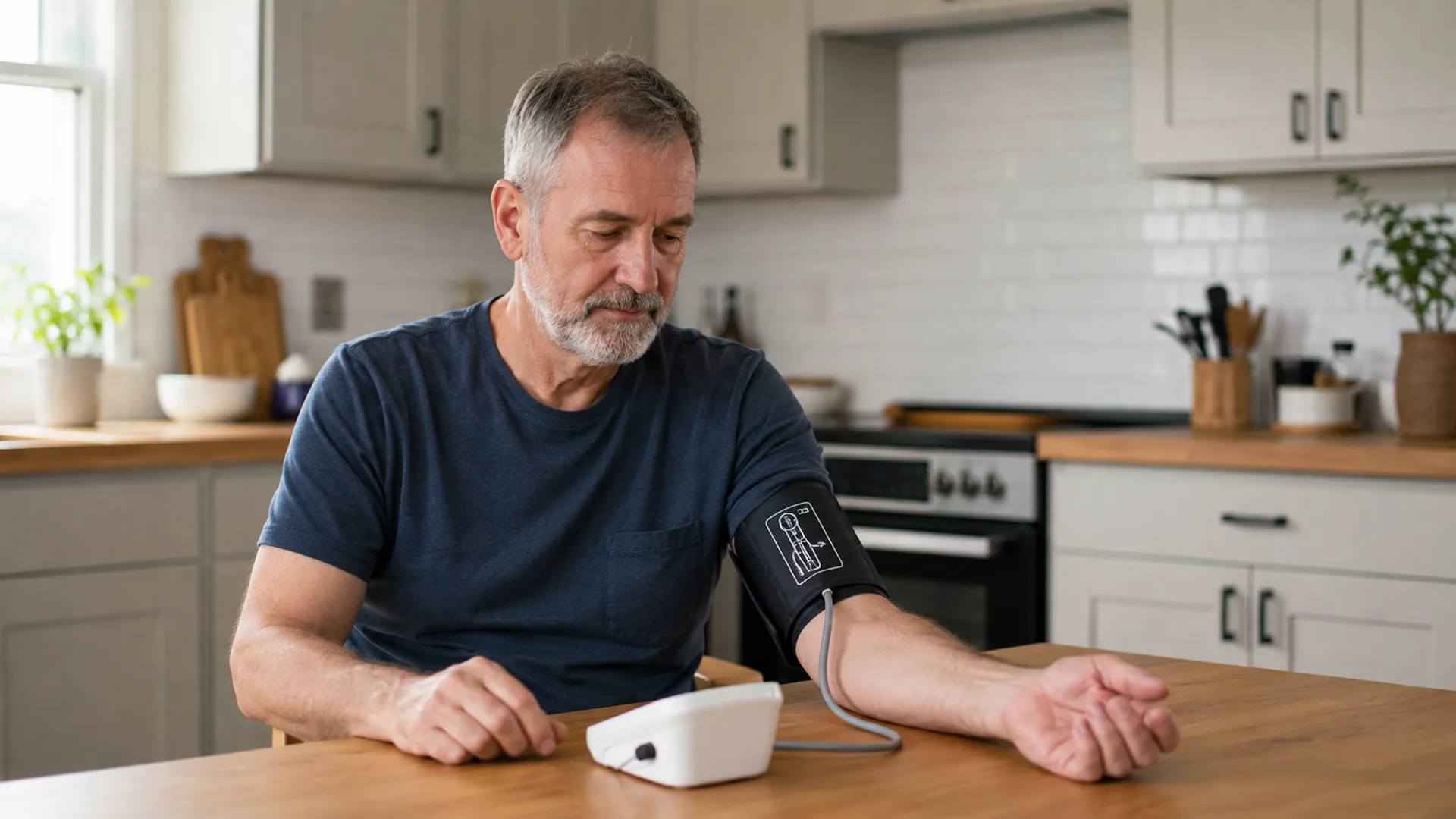
- Sit quietly for about five minutes.
- Keep your back supported and feet flat.
- Rest your arm at heart level.
- Use a validated upper-arm cuff of the correct size.
- Avoid talking during the reading.
- Take two readings about one minute apart.
A cuff that is too small can falsely raise the result.
Get the research, without the noise.
Practical, sourced writing on blood sugar and metabolic health. One email a week.
One email a week. Unsubscribe any time. See our privacy policy.
The Health Facts takeaway
After 50, the top number often deserves extra attention because aging arteries tend to become stiffer.
A pattern like:
148 / 76
is not reassuring simply because 76 is normal.
Think of the two numbers this way:
Systolic pressure tells you about the peak force with each heartbeat.
Diastolic pressure tells you about pressure remaining between beats.
Both matter. But as we age, the peak pressure increasingly reflects how much work the heart and arteries are doing against a stiffer vascular system.
Sources
- 1. American Heart Association / American College of Cardiology. Guideline for the Prevention, Detection, Evaluation, and Management of High Blood Pressure in Adults. doi:10.1161/HYP.0000000000000249
- 2. Franklin SS, et al. Hemodynamic Patterns of Age-Related Changes in Blood Pressure: The Framingham Heart Study. Circulation. doi:10.1161/01.CIR.96.1.308
- 3. SPRINT Research Group. A Randomized Trial of Intensive versus Standard Blood-Pressure Control. New England Journal of Medicine, 2015. doi:10.1056/NEJMoa1511939
- 4. American Heart Association. Home Blood Pressure Monitoring.
Comments
No comments yet.
Leave a comment
Comments are moderated. Be kind and stay on topic.