Sleep & Stress
Do Naps Help or Hurt Your Sleep? It Depends on How Long You Nap
Short afternoon naps can improve alertness and reduce fatigue, while longer or later naps are more likely to cause grogginess and may reduce nighttime sleep pressure.
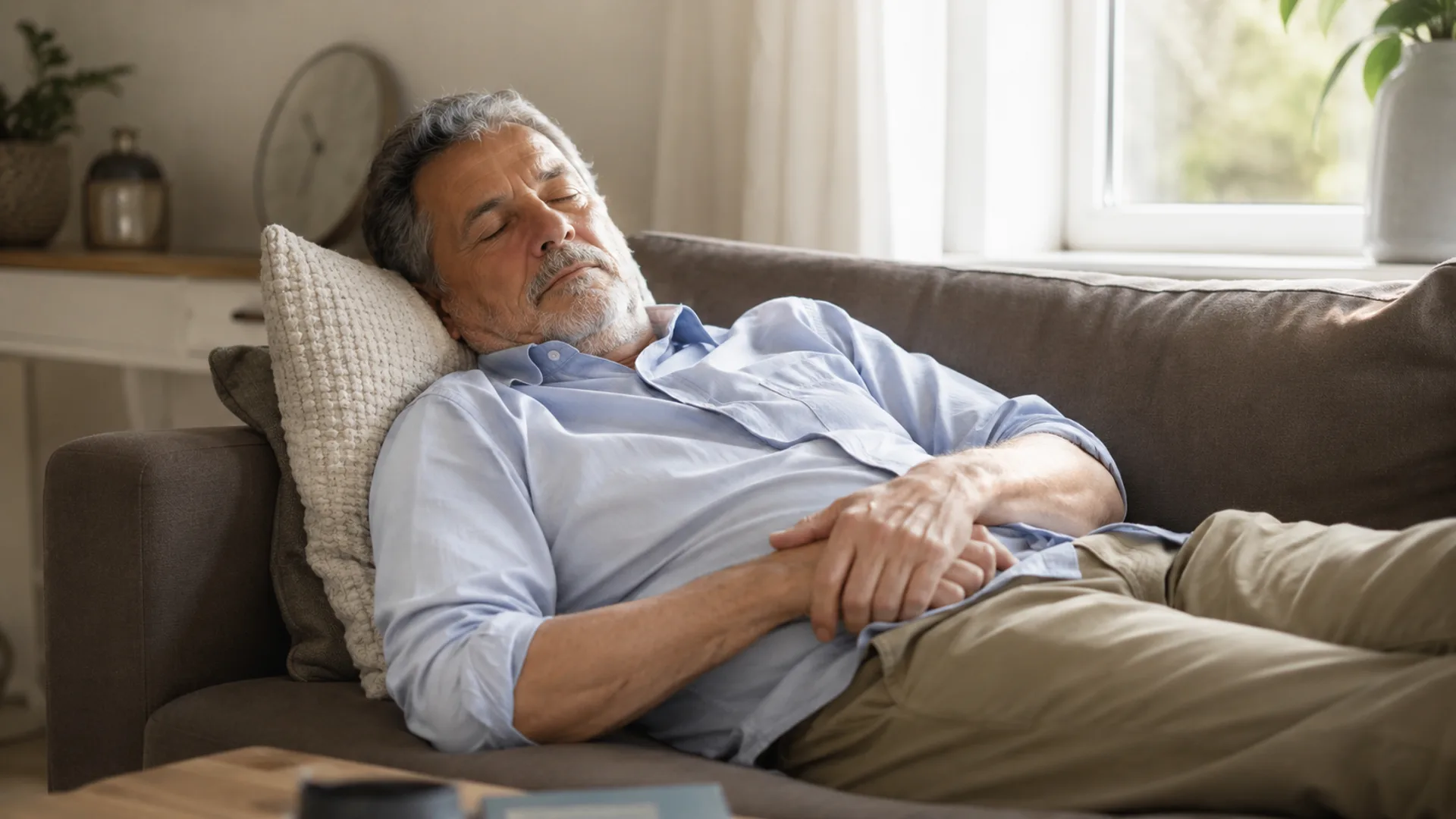
A 20-minute nap can leave you refreshed.
A 90-minute nap at 5 P.M. can leave you:
- foggy now
- wide awake at bedtime
Both are naps.
Physiologically, they are very different.
Why naps work
Sleep pressure builds the longer you remain awake.
A nap temporarily reduces some of that pressure.
That can improve:
- alertness
- fatigue
- mood
- cognitive performance
But reducing sleep pressure too late in the day can make nighttime sleep harder.
Researchers compared 5-, 10-, 20-, and 30-minute naps
A classic experiment studied healthy adults after restricted nighttime sleep.
The:
5-minute nap
produced little benefit.
The:
10-minute nap
produced rapid improvements in alertness and performance, with some effects lasting more than two hours.
The 20-minute nap also helped, but benefits were more delayed.
The 30-minute nap produced a different problem:
sleep inertia.
Sleep inertia is the “nap hangover”
You wake and feel:
- heavy
- confused
- slow
- more tired than before
That is sleep inertia.
It tends to be worse when you wake from deeper sleep.
Longer naps create more opportunity to enter slow-wave sleep.
So a longer nap may ultimately provide more recovery while temporarily making you worse immediately after waking.
Newer research complicates the “20-minute rule”
A 2023 experiment compared 10-, 30-, and 60-minute naps.
All improved subjective sleepiness and mood.
The 30-minute nap showed benefits for memory encoding in that study.
But the longer naps also produced more sleep inertia.
So there is no universal scientifically perfect nap duration.
The best duration depends on:
- how sleep deprived you are
- what you need to do afterward
- how much time you have
- whether nighttime sleep is already difficult
What about older adults?
A systematic review specifically examining older adults found that naps could improve:
- sleepiness
- fatigue
- psychomotor performance
- learning
with relatively little evidence that daytime naps inherently harmed nighttime sleep in healthy older adults.
One laboratory study of adults age 55–85 found an afternoon nap added sleep across the 24-hour day without substantially worsening later nighttime sleep.
That is very different from saying:
"Older adults should never nap."
Timing matters
A nap around:
1–3 P.M.
is several hours from bedtime and coincides with a natural circadian dip in alertness.
A long nap around:
5 or 6 P.M.
is much more likely to reduce the sleep pressure you need later.
That is why NIH advice for older adults with nighttime sleep problems generally cautions against:
- long naps
- late-afternoon or evening naps
If you have insomnia, naps deserve extra attention
A cycle can form:
poor nighttime sleep
↓
long daytime nap
↓
less sleep pressure at bedtime
↓
harder nighttime sleep
↓
another nap tomorrow
That does not mean the nap caused the original insomnia.
But it can help maintain the pattern.
Get the research, without the noise.
Practical, sourced writing on blood sugar and metabolic health. One email a week.
One email a week. Unsubscribe any time. See our privacy policy.
The 90-minute “full cycle” rule is oversimplified
Human sleep cycles are not exactly 90 minutes every time.
They vary between people and across the sleep period.
So setting an alarm for exactly 90 minutes does not guarantee you'll wake at the perfect biological moment.
The Health Facts takeaway
There is no universal good or bad nap.
A practical framework is:
Need quick alertness? Try roughly 10–20 minutes.
Have more recovery time? A 30-minute nap may help, but temporary grogginess is more likely.
Sleeping 60+ minutes? Expect more opportunity for deeper sleep, sleep inertia, and reduced nighttime sleep pressure.
Already struggling with insomnia? Keep naps earlier and shorter — or discuss whether avoiding them temporarily would help.
A nap is a tool.
The dose and timing determine whether it helps today's fatigue or steals from tonight's sleep.
Sources
- 1. Brooks A, Lack L. A Brief Afternoon Nap Following Nocturnal Sleep Restriction: Which Nap Duration Is Most Recuperative?. Sleep, 2006. doi:10.1093/sleep/29.6.831
- 2. Leong RLF, et al. Influence of Mid-Afternoon Nap Duration and Sleep Parameters on Memory Encoding, Mood, Processing Speed, and Vigilance. Sleep, 2023. doi:10.1093/sleep/zsad025
- 3. Hilditch CJ, et al. A Review of Short Naps and Sleep Inertia: Do Naps of 30 Min or Less Really Avoid Sleep Inertia and Slow-Wave Sleep?. Sleep Medicine, 2017. doi:10.1016/j.sleep.2016.12.016
- 4. Souabni M, et al. Benefits and Risks of Napping in Older Adults: A Systematic Review. Frontiers in Aging Neuroscience, 2022. doi:10.3389/fnagi.2022.1000707
- 5. National Institute on Aging. Sleep and Older Adults.
Comments
No comments yet.
Leave a comment
Comments are moderated. Be kind and stay on topic.