Sleep & Stress
Why You Keep Waking Up at 3 A.M. — and What May Be Happening in Your Body
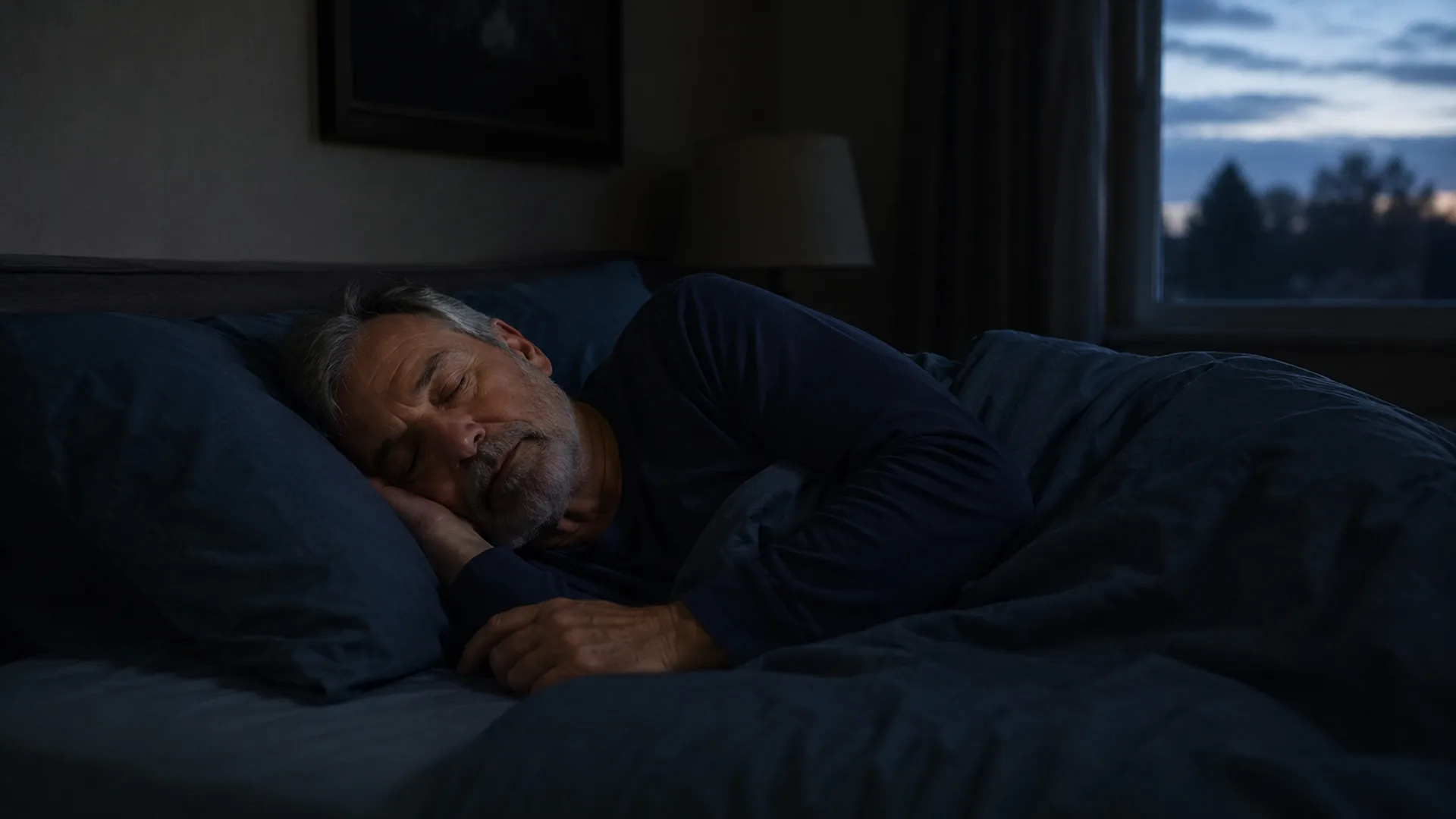
Waking during the night becomes more common with age, but 3 A.M. is not a mysterious biological danger zone. Sleep naturally becomes easier to interrupt as the night progresses.

You fall asleep normally.
Then your eyes open.
You check the clock.
3:07 A.M.
Again.
The first thing to know is:
there is nothing biologically magical about 3 A.M.
Repeated waking at that hour does not point to one specific organ, hormone, or disease.
What's more useful is where 3 A.M. falls within your individual sleep period.
Sleep changes across the night
Sleep is not one continuous state.
The brain cycles through:
- light non-REM sleep
- deeper slow-wave sleep
- REM sleep
Deep sleep is concentrated more heavily in the first part of the night.
Later in the night, sleep generally contains relatively more:
- lighter non-REM sleep
- REM sleep
Lighter sleep is easier to interrupt.
A sound, full bladder, pain, breathing disturbance, or partner movement that did not wake you at midnight may wake you several hours later.
Brief awakenings are normal
Healthy sleepers do not necessarily remain completely unconscious for eight straight hours.
Brief arousals can happen between sleep stages and cycles.
Often you do not remember them.
The more important question is:
What happens after you wake?
A 30-second awakening followed by immediate sleep is very different from waking and remaining alert for two hours.
Aging makes sleep more fragmented
As people age, sleep generally becomes:
- lighter
- more fragmented
- less rich in slow-wave sleep
Older adults also tend to experience more time awake after initially falling asleep.
That does not mean severe insomnia is a normal part of aging.
It means sleep can become easier to disturb.
Your body clock may shift earlier
Older adults often develop an earlier circadian phase.
Sleepiness may arrive earlier in the evening.
The biological tendency to wake may also shift earlier.
Someone who once naturally slept midnight to 8 A.M. may later feel more comfortable sleeping 10 P.M. to 6 A.M.
Going to bed very early can therefore leave the final hours of sleep more vulnerable to awakening.
Cortisol is often oversimplified
You may hear:
"You wake at 3 A.M. because cortisol spikes."
Cortisol does follow a daily rhythm.
It is generally lower earlier in the sleep period and rises toward the biological morning.
But there is no universal pathological cortisol surge at exactly 3 A.M.
The cortisol awakening response is associated with waking itself and morning circadian timing.
It is not a reliable one-size-fits-all explanation for nighttime awakening.
Stress can turn a normal awakening into insomnia
You wake briefly.
Then you think:
"Not again."
You check the time.
You calculate how many hours remain.
Now your attention is focused on:
trying to sleep.
That effort can increase arousal.
Clock watching and worrying about sleep are recognized factors that can worsen insomnia.
The original awakening may have been normal.
The struggle with it may keep you awake.
Alcohol can fragment the second half of the night
Alcohol can make people feel sleepy and fall asleep faster.
But as the night progresses, it can:
- disrupt sleep architecture
- increase fragmentation
- worsen breathing during sleep
So someone may correctly notice:
"Alcohol helps me fall asleep."
while missing that it makes later sleep worse.
The bladder can be cause or consequence
You wake and decide to urinate.
Did the bladder wake you?
Sometimes.
But sometimes another sleep disturbance woke you first and you simply noticed you could use the bathroom.
Nocturia becomes more common with age and can interact strongly with insomnia and sleep apnea.
Get the research, without the noise.
Practical, sourced writing on blood sugar and metabolic health. One email a week.
One email a week. Unsubscribe any time. See our privacy policy.
Sleep apnea is an important possibility
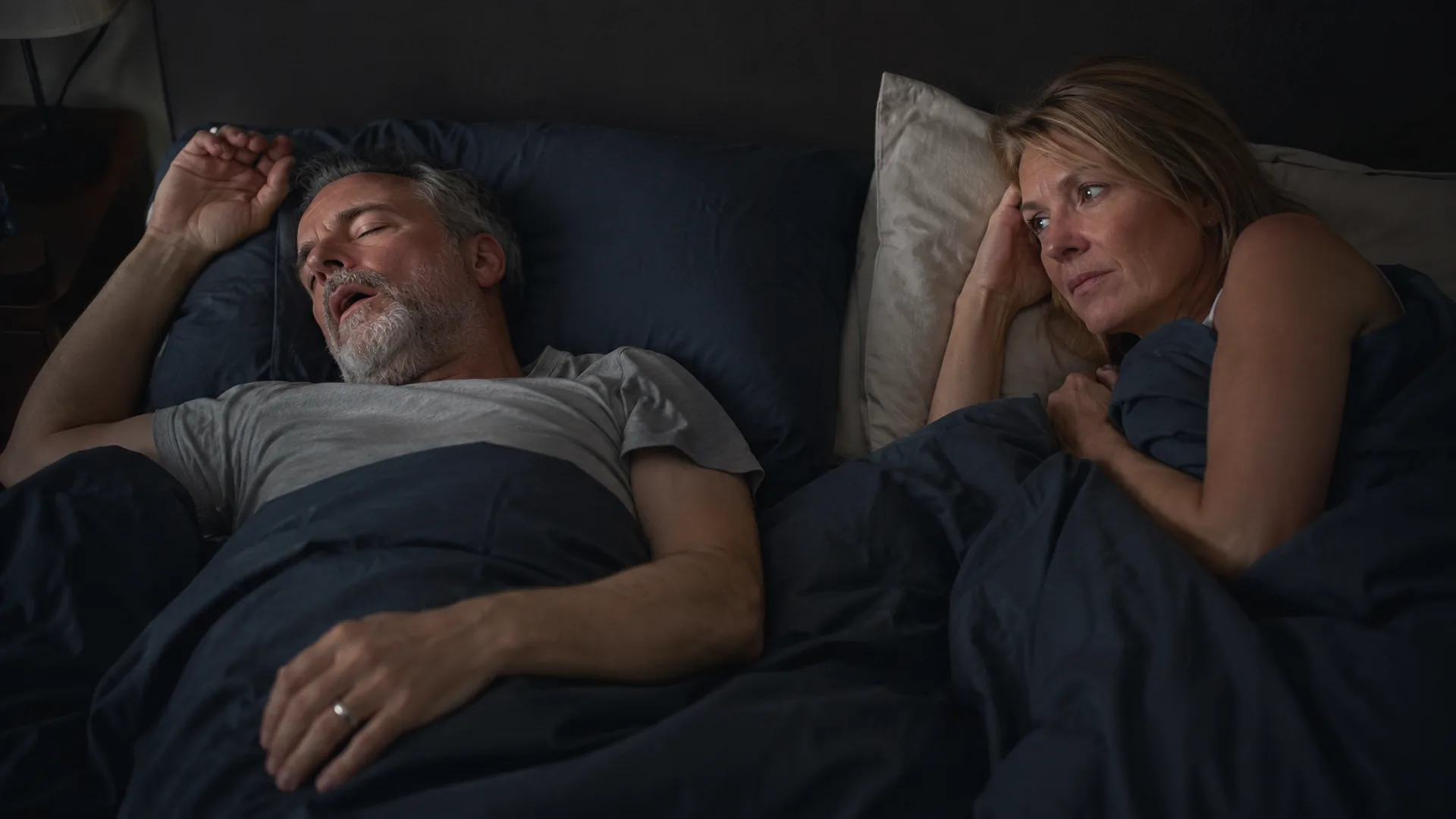
Obstructive sleep apnea can produce dozens of brief arousals each hour without the person remembering them.
Clues include:
- loud snoring
- gasping
- witnessed breathing pauses
- morning headaches
- daytime sleepiness
- frequent nighttime urination
Someone may think:
"I keep waking at 3."
when the real problem is repeated sleep disruption throughout the night.
When does it become chronic insomnia?
Chronic insomnia generally involves sleep difficulty:
at least 3 nights per week for at least 3 months
with meaningful daytime impairment.
For chronic insomnia, one of the best-supported treatments is:
CBT-I — cognitive behavioral therapy for insomnia.
It is more effective than sleep-hygiene advice alone for many people.
The Health Facts takeaway
3 A.M. is not a special danger hour.
The useful question is not:
"What organ wakes up at 3?"
It is:
"What is making my sleep easier to interrupt, and what prevents me from returning to sleep?"
Possible answers include:
- normal sleep architecture
- aging
- stress
- alcohol
- nocturia
- pain
- menopause
- sleep apnea
- chronic insomnia
Look at the pattern, not the clock.
Sources
- 1. Li J, Vitiello MV, Gooneratne NS. Sleep in Normal Aging. Sleep Medicine Clinics, 2022. doi:10.1016/j.jsmc.2022.02.007
- 2. Edinger JD, et al. Behavioral and Psychological Treatments for Chronic Insomnia Disorder in Adults: An American Academy of Sleep Medicine Clinical Practice Guideline. Journal of Clinical Sleep Medicine, 2021. doi:10.5664/jcsm.8986
- 3. National Heart, Lung, and Blood Institute. Insomnia.
- 4. National Heart, Lung, and Blood Institute. Sleep Apnea.
- 5. Stalder T, Oster H, Abelson JL, Huthsteiner K, Klucken T, Clow A. The Cortisol Awakening Response: Regulation and Functional Significance. Endocrine Reviews, 2025. doi:10.1210/endrev/bnae024
Comments
No comments yet.
Leave a comment
Comments are moderated. Be kind and stay on topic.