Healthy Aging
How Much Muscle Do You Actually Lose After 50?
Muscle loss with age is real, but the common claim that everyone loses 1–2% of muscle every year after 50 oversimplifies the evidence. Strength often falls faster than muscle mass.
You've probably heard:
"After 50, you lose 1–2% of your muscle every year."
It is memorable.
It is also too simple.
Age-related muscle decline is real, but the rate varies substantially with:
- age
- sex
- activity
- illness
- nutrition
- starting muscle mass
And perhaps most importantly:
strength often declines faster than muscle mass.
What the research actually shows
A quantitative review of longitudinal studies found that around older age, annual muscle-mass loss was often in the neighborhood of:
- 0.6–0.7% per year in women
- 0.8–1.0% per year in men
Strength declined substantially faster — often several percent per year.
The Health ABC study showed the same pattern.
Older adults lost roughly:
1% of leg lean mass per year
while strength fell by approximately:
2.6–4.1% per year.
Some participants even maintained or gained measurable muscle mass while still losing strength.
Why strength can fall faster
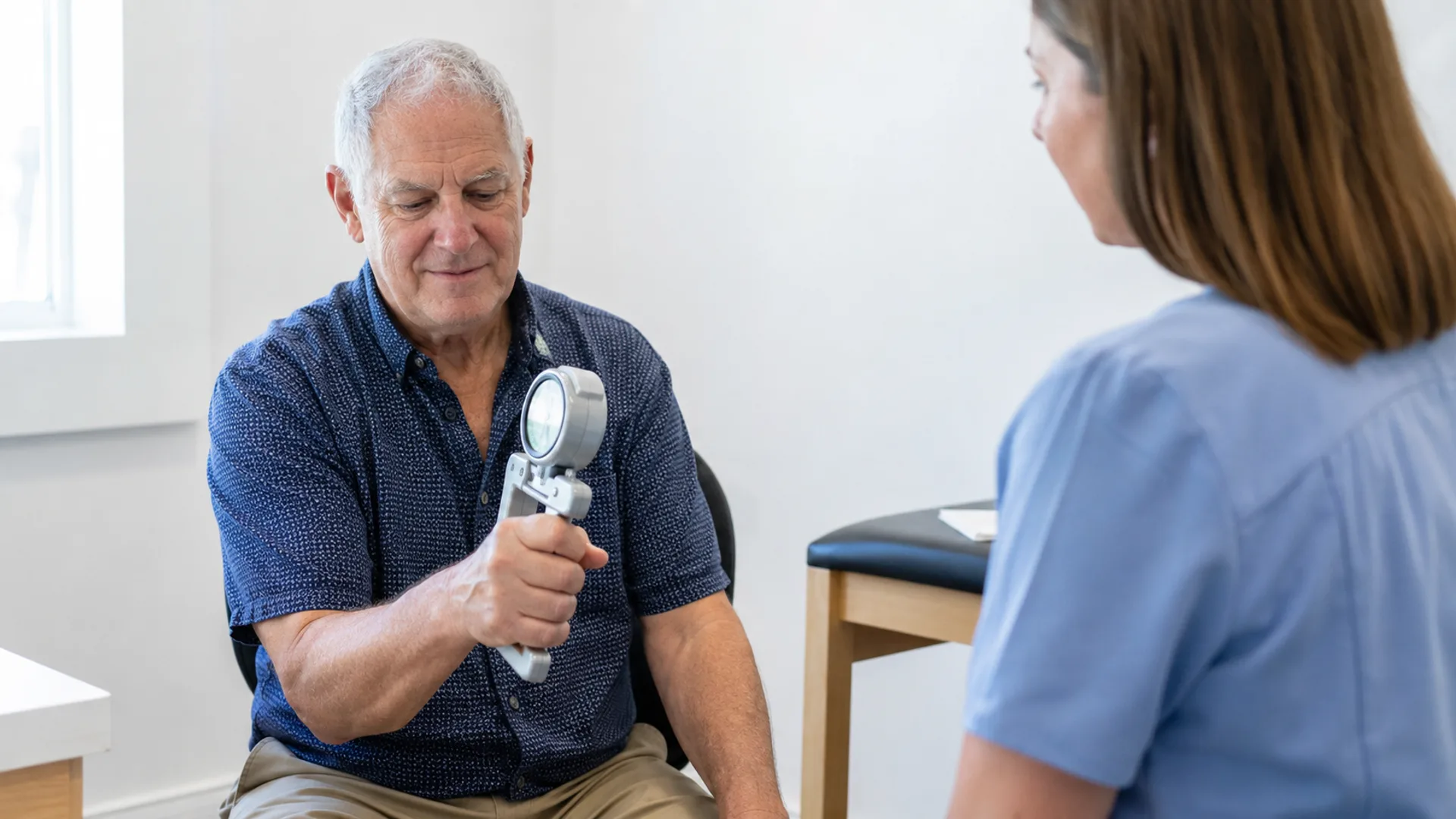
Muscle size is only one part of strength.
Strength also depends on:
- motor neurons
- motor-unit recruitment
- coordination
- muscle architecture
- tendon function
- fat infiltration inside muscle
- muscle-fiber type
Aging can affect all of those systems.
That is why modern definitions of sarcopenia place major emphasis on low muscle strength rather than muscle mass alone.
Fast-twitch fibers are especially important
Type II muscle fibers generate rapid force.
They help you:
- catch yourself during a stumble
- climb stairs
- rise quickly from a chair
- produce power
These fibers tend to be particularly vulnerable to aging and inactivity.
That means the problem is not simply becoming slightly smaller.
It can mean becoming:
slower and less powerful.
The scale can hide the change
Imagine you weigh:
180 pounds at 50
and:
180 pounds at 70.
It looks like nothing changed.
But part of the muscle could have been replaced by fat.
Body weight stayed constant.
Body composition did not.
Inactivity accelerates the process
Muscle loss is not caused by birthdays alone.
Periods of:
- hospitalization
- bed rest
- injury
- inactivity
can rapidly reduce muscle and strength.
Older adults may recover more slowly afterward, especially if they entered the event with little reserve.
This is why muscle can be thought of as:
physical savings.
The more reserve you have before illness or injury, the more capacity you have to lose without becoming functionally limited.
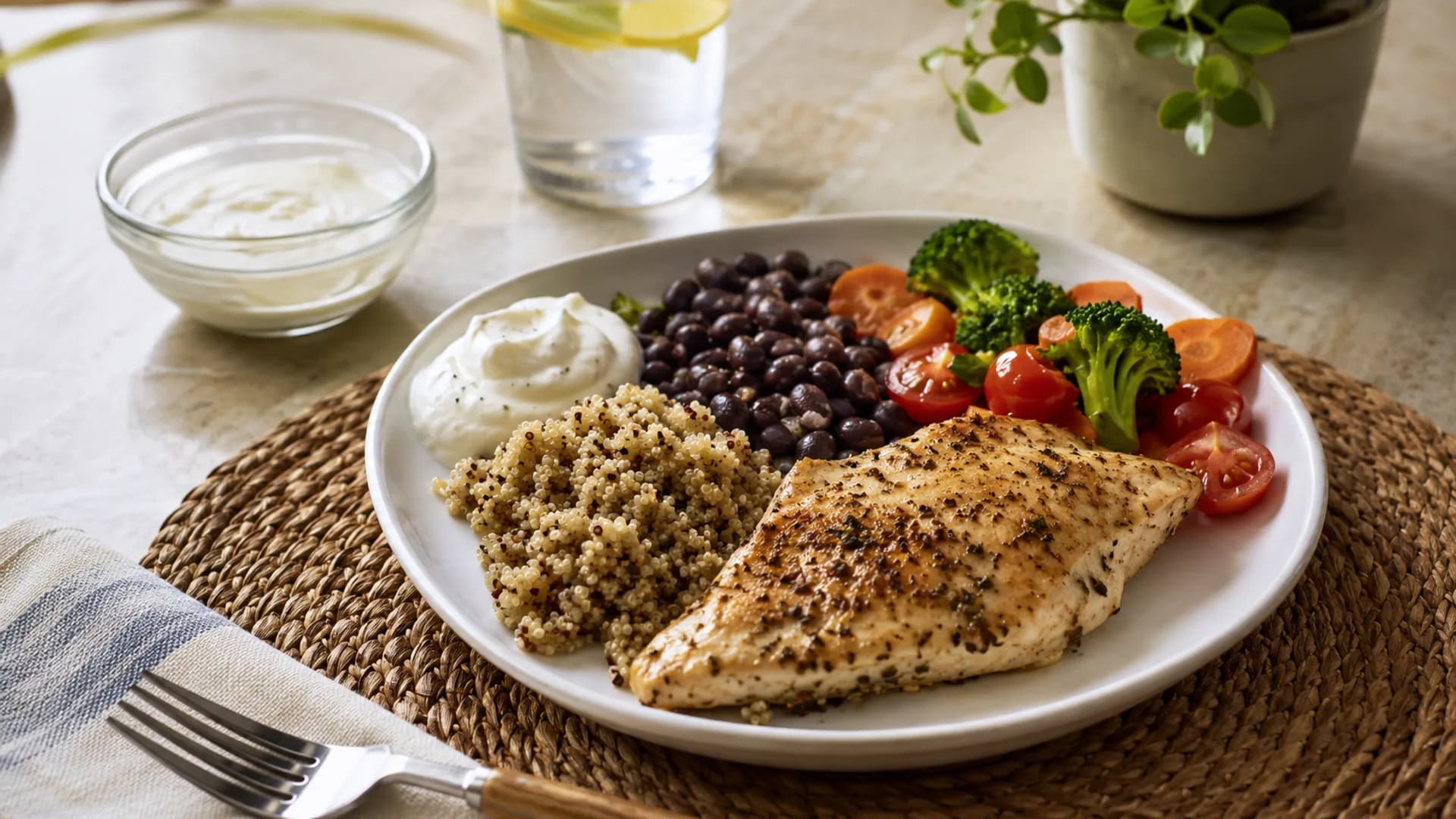
Protein matters — but it is not enough by itself
Older muscle can become less responsive to small protein doses, sometimes called:
anabolic resistance.
Several expert groups recommend that many healthy older adults consume roughly:
1.0–1.2 g/kg/day
of protein rather than treating 0.8 g/kg as an optimal target for every older person.
But extra protein without muscle use has limits.
The strongest signal for preserving and rebuilding muscle is:
resistance training.
Get the research, without the noise.
Practical, sourced writing on blood sugar and metabolic health. One email a week.
One email a week. Unsubscribe any time. See our privacy policy.
Older adults can still build muscle
Randomized trials show that resistance exercise improves:
- strength
- muscle mass
- physical function
even in adults in their 70s, 80s, and beyond.
Aging reduces the margin for neglect.
It does not eliminate the body's ability to adapt.
The Health Facts takeaway
Muscle does decline with age.
But “1–2% every year after 50” should not be treated as destiny.
The more important pattern is:
muscle mass may decline gradually
while:
strength and power can decline faster.
That makes the practical target broader than simply preserving biceps.
You want to preserve:
- muscle tissue
- strength
- power
- movement skill
because those are the systems that allow you to remain physically independent.
Sources
- 1. Mitchell WK, et al. Sarcopenia, Dynapenia, and the Impact of Advancing Age on Human Skeletal Muscle Size and Strength. Frontiers in Physiology, 2012. doi:10.3389/fphys.2012.00260
- 2. Goodpaster BH, et al. The Loss of Skeletal Muscle Strength, Mass, and Quality in Older Adults: The Health ABC Study. Journal of Gerontology. doi:10.1093/gerona/61.10.1059
- 3. Cruz-Jentoft AJ, et al. Sarcopenia: Revised European Consensus on Definition and Diagnosis. Age and Ageing, 2019. doi:10.1093/ageing/afz046
- 4. Fragala MS, et al. Resistance Training for Older Adults: Position Statement From the National Strength and Conditioning Association. Journal of Strength and Conditioning Research, 2019. doi:10.1519/JSC.0000000000003230
- 5. Bauer J, Biolo G, Cederholm T, et al. Evidence-Based Recommendations for Optimal Dietary Protein Intake in Older People: A Position Paper From the PROT-AGE Study Group. Journal of the American Medical Directors Association, 2013. doi:10.1016/j.jamda.2013.05.021
Comments
No comments yet.
Leave a comment
Comments are moderated. Be kind and stay on topic.