Healthy Aging
How Much Protein Do Adults Over 50 Actually Need?
The adult RDA is 0.8 g/kg per day, but many aging and nutrition experts recommend roughly 1.0–1.2 g/kg for healthy older adults, particularly when preserving muscle is a priority.
The official adult protein RDA is:
0.8 grams per kilogram of body weight per day.
So a 180-pound person — about 82 kg — gets an RDA of roughly:
66 grams per day.
But does that mean 66 grams is the ideal amount for preserving muscle after 50?
Not necessarily.
What the RDA actually means
The RDA is designed to meet the basic needs of nearly all healthy adults.
It is not specifically designed to answer:
“What intake best preserves muscle during aging, weight loss, or resistance training?”
Several expert groups focusing on aging recommend somewhat higher intakes.
A common older-adult range is 1.0–1.2 g/kg
The PROT-AGE Study Group and ESPEN experts have recommended approximately:
1.0–1.2 g/kg/day
for many healthy older adults.
For a person weighing 180 pounds:
0.8 g/kg 66 g/day
1.0 g/kg 82 g/day
1.2 g/kg 98 g/day
These are practical ranges, not magic thresholds.
Why might older adults need more?
Older muscle can show:
anabolic resistance
— a reduced muscle-protein-synthesis response to smaller protein doses.
That does not mean older adults cannot build muscle.
It means a small amount of protein may provide less stimulation than it would in younger muscle.
Resistance exercise helps overcome part of this resistance.
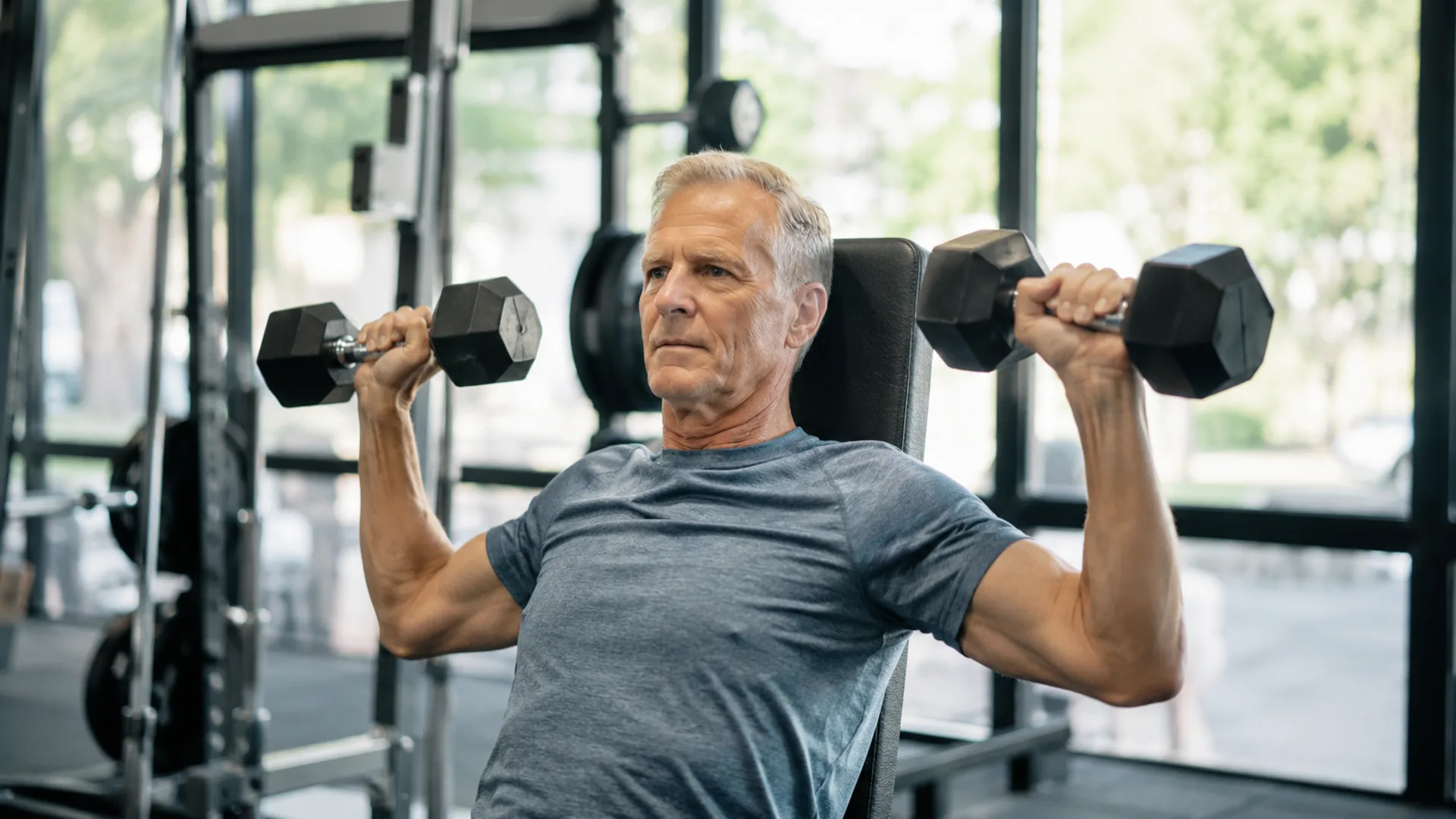
That is why the strongest combination is usually:
adequate protein + resistance training.
What about active adults?
A large meta-analysis of resistance-training studies found that additional protein supported gains in lean mass and strength.
The estimated benefit for fat-free mass tended to plateau around:
1.6 g/kg/day
in resistance-trained adults.
That does not mean every 65-year-old needs 1.6 g/kg.
It shows active adults can often use more than the basic RDA when building or preserving muscle.
Protein matters during weight loss too
Calorie restriction can reduce:
- fat mass
- lean mass
Higher protein intake combined with resistance training can help preserve more lean tissue.
That matters because weight loss that removes too much muscle can leave someone:
lighter but weaker.
Does each meal need 30 grams?
Not exactly.
A common practical target is around:
25–35 grams of high-quality protein per meal
for many older adults.
Another way to think about it is roughly:
0.4 g/kg per meal
for a substantial muscle-protein-synthesis stimulus.
But total daily intake remains more important than making every meal mathematically perfect.
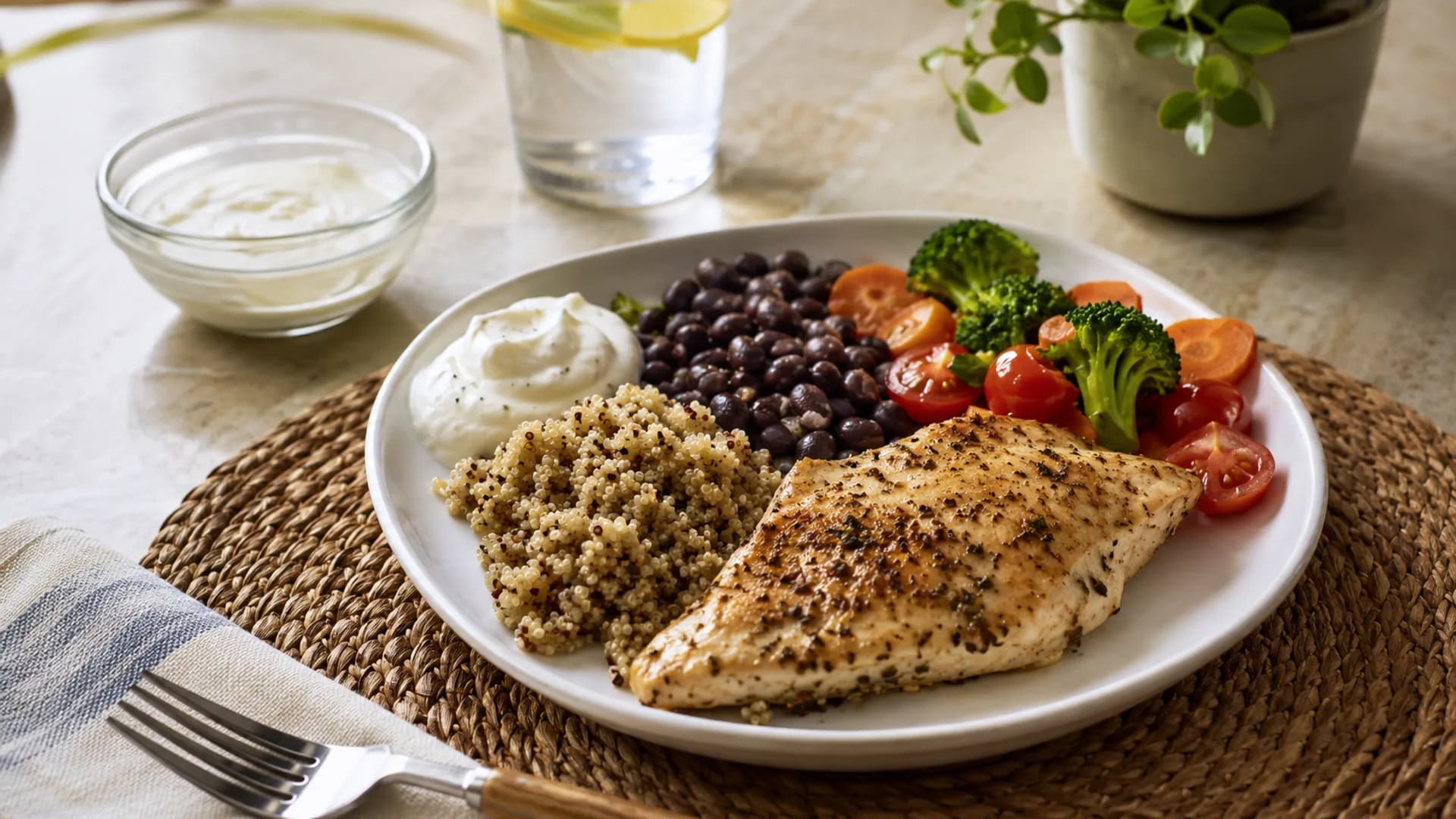
Plant protein counts too
Animal proteins tend to contain all essential amino acids in useful proportions.
Plant proteins absolutely count.
Foods such as:
- soy
- lentils
- beans
- peas
- whole grains
- nuts and seeds
can contribute substantially.
Plant-based diets may simply require attention to total intake and variety.
Get the research, without the noise.
Practical, sourced writing on blood sugar and metabolic health. One email a week.
One email a week. Unsubscribe any time. See our privacy policy.
Powders are optional
Protein powder is convenient.
It is not required.
A shake can help someone who struggles to eat enough protein at breakfast or during a busy day.
Ordinary foods can provide all the protein many people need.
The Health Facts takeaway
Adults do not suddenly cross a biological line at age 50 where protein requirements change overnight.
But aging muscle becomes more difficult to maintain.
For many healthy older adults, roughly:
1.0–1.2 g/kg/day
is a reasonable evidence-based neighborhood.
If you resistance train or are trying to lose fat while preserving muscle, somewhat more may be appropriate.
The useful question is not:
“What's the minimum protein I can survive on?”
It is:
“How much protein supports the muscle I want to keep?”
Sources
- 1. Bauer J, Biolo G, Cederholm T, et al. Evidence-Based Recommendations for Optimal Dietary Protein Intake in Older People: A Position Paper From the PROT-AGE Study Group. Journal of the American Medical Directors Association, 2013. doi:10.1016/j.jamda.2013.05.021
- 2. Deutz NEP, Bauer JM, Barazzoni R, et al. Protein Intake and Exercise for Optimal Muscle Function With Aging: Recommendations From the ESPEN Expert Group. Clinical Nutrition, 2014. doi:10.1016/j.clnu.2014.04.007
- 3. Morton RW, et al. A Systematic Review, Meta-Analysis and Meta-Regression of the Effect of Protein Supplementation on Resistance Training-Induced Gains in Muscle Mass and Strength in Healthy Adults. British Journal of Sports Medicine, 2018. doi:10.1136/bjsports-2017-097608
- 4. National Academies. Dietary Reference Intakes for Protein.
Comments
No comments yet.
Leave a comment
Comments are moderated. Be kind and stay on topic.