Blood Sugar-Friendly Eating
Meal Order and Blood Sugar: Does Eating Protein and Vegetables Before Carbs Really Work?
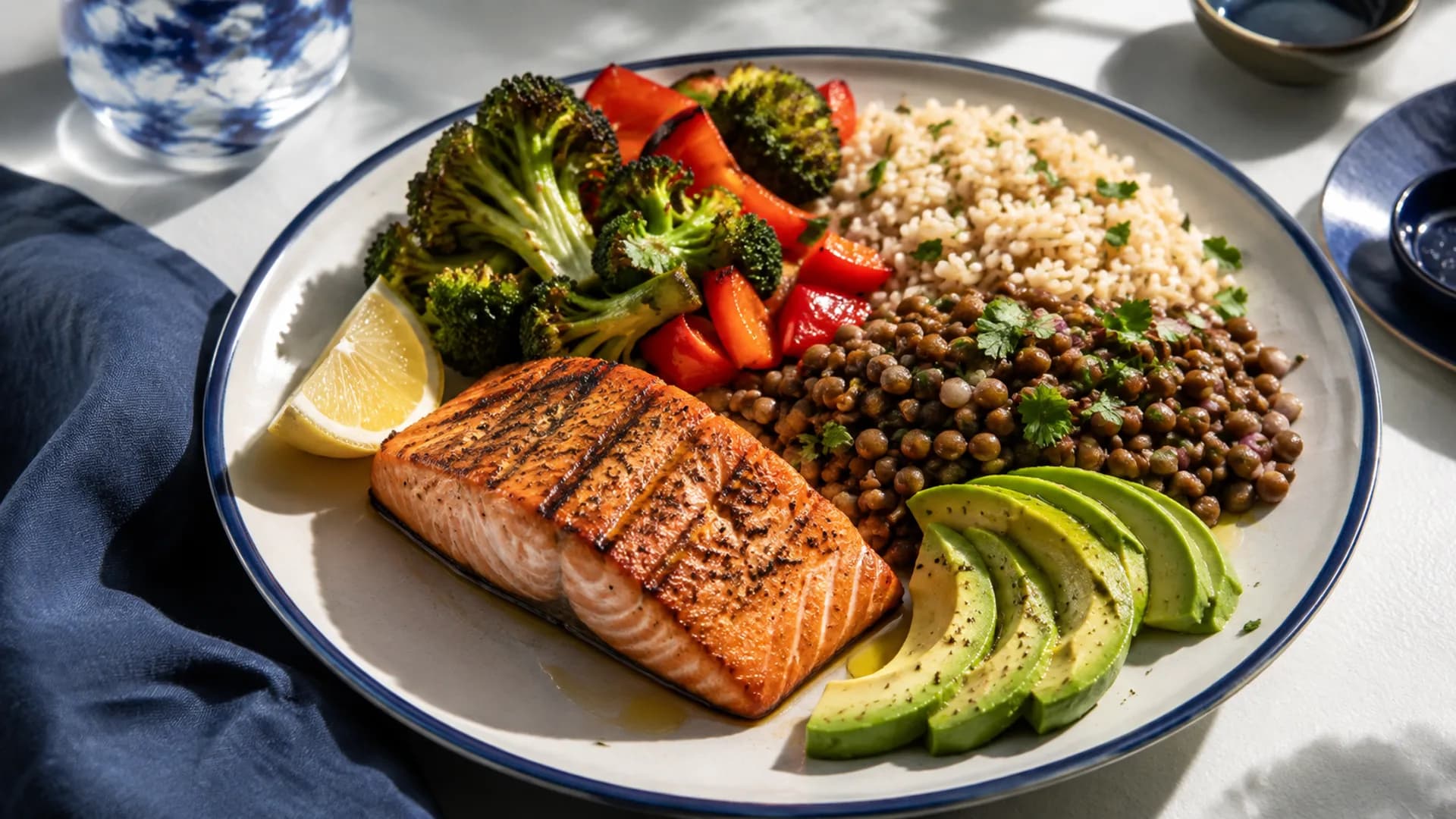
Eating vegetables and protein before the carbohydrate portion of a meal can reduce the post-meal glucose rise. The short-term effect can be large; the long-term benefit is smaller.
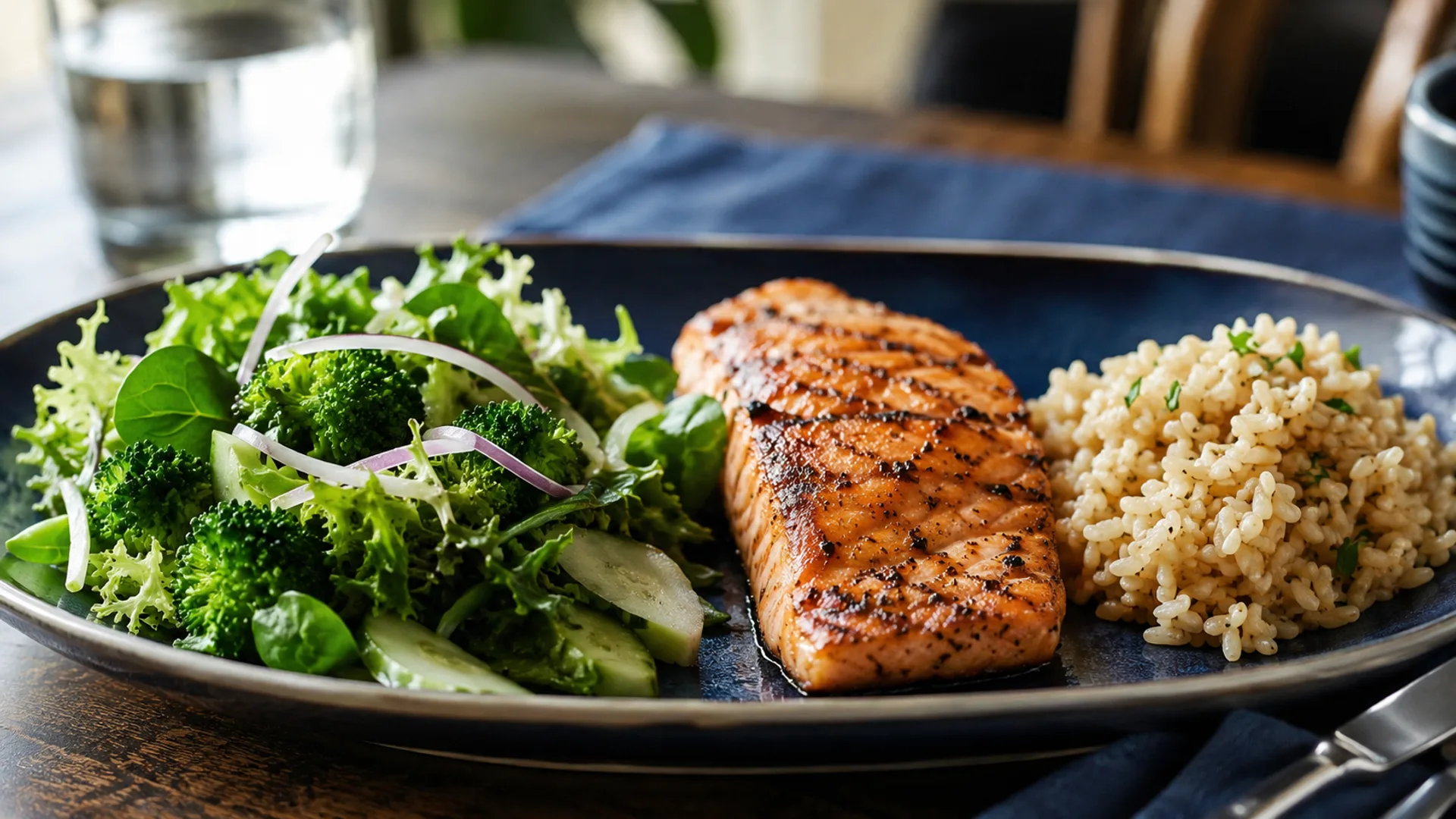
Imagine eating the exact same dinner twice.
Same calories.
Same chicken.
Same vegetables.
Same rice.
The only thing you change is what you eat first.
On one day:
rice first
then chicken and vegetables.
On another:
chicken and vegetables first
then rice.
It sounds too simple to matter.
But in controlled studies, that small change has sometimes produced a surprisingly different glucose response.
The short answer
Yes.
Eating the carbohydrate portion of a mixed meal last appears to reduce the immediate post-meal glucose rise in many people with type 2 diabetes or prediabetes.
But there is an important second part:
The strongest evidence is for short-term glucose response. The effect on long-term A1C appears much smaller.
That distinction matters.
One small study found a 73% lower glucose excursion
A frequently cited pilot study involved 11 adults with type 2 diabetes treated with metformin.
Researchers gave each participant the exact same 628-calorie meal on two different occasions.
The meal contained:
- 55 g protein
- 68 g carbohydrate
- 16 g fat
On one day, participants ate:
bread and orange juice first
then waited 15 minutes before eating:
chicken and vegetables.
On the other day, they reversed the order.
Same food.
Same calories.
Same carbohydrate.
Different sequence.
When vegetables and protein were eaten first, post-meal glucose was lower by approximately:
- 29% at 30 minutes
- 37% at 60 minutes
- 17% at 120 minutes
And the total glucose excursion over two hours was:
73% lower
than when the carbohydrate portion was eaten first.
That is a large acute difference.
But it was also a very small study.
So researchers tested the idea again.
A second study used three different meal orders
Another randomized crossover study involved 16 adults with type 2 diabetes.
This time participants ate the same meal in three ways:
Carbohydrate first
Carbohydrate followed by protein and vegetables.
Carbohydrate last
Protein and vegetables followed by carbohydrate.
Everything together
All meal components eaten as a mixed meal.
When carbohydrate was eaten last, the total glucose excursion over three hours was:
53% lower
than when carbohydrate was eaten first.
The peak glucose rise was about:
54% lower.
Even compared with simply eating everything together, the carbohydrate-last sequence produced a smaller glucose response.
That is hard to ignore.
And interestingly, the insulin response was also about:
25% lower
when carbohydrate was eaten last compared with carbohydrate first.
So the lower glucose was not simply explained by dumping dramatically more insulin into the bloodstream.
The same pattern has been seen in prediabetes
Researchers later tested three meal sequences in 15 adults with prediabetes.
Participants again ate the same foods.
The order changed.
When protein and vegetables were eaten before carbohydrate, the peak glucose rise was reduced by more than:
40%
compared with eating carbohydrate first.
Total post-meal glucose exposure was approximately:
39% lower.
A vegetables-first sequence also produced a smaller glucose response.
Again:
nothing was removed from the meal.
Only the order changed.
So why would food order matter?
There probably isn't one mechanism.
Several things happen simultaneously.
The carbohydrate reaches the intestine later
If you begin with vegetables and protein, the carbohydrate portion simply enters the digestive system later.
That alone can spread glucose delivery over a longer period.
But it doesn't appear to be only a stopwatch effect.
Protein stimulates gut hormones
Protein can increase secretion of hormones such as:
GLP-1
which can:
- stimulate glucose-dependent insulin secretion
- slow gastric emptying
- influence satiety
In the 16-person type 2 diabetes study, GLP-1 exposure was significantly higher when carbohydrate was eaten last.
That may help explain why glucose entered circulation more gradually.
Vegetables provide fiber and volume first
Nonstarchy vegetables can contribute:
- fiber
- water
- physical bulk
That can alter the environment into which the carbohydrate arrives.
As we've covered in our article on Protein, Fat and Fiber, mixed meals behave differently from isolated carbohydrate.
Gastric emptying appears to slow
This is probably one of the most important mechanisms.
A 2026 systematic review and meta-analysis found that carbohydrate-last eating delayed gastric-emptying half-time by an average of approximately:
28 minutes
compared with carbohydrate-first or unordered eating.
Slower stomach emptying means glucose from the meal generally enters the small intestine — and then the bloodstream — more gradually.
The newest meta-analysis gives us a better reality check
Small crossover studies can produce dramatic percentages.
What happens when researchers combine the evidence?
A recent systematic review and meta-analysis included:
17 randomized studies
with:
389 participants with type 2 diabetes.
Compared with eating carbohydrate first or in no particular order, carbohydrate-last eating lowered post-meal glucose by an average of approximately:
At 60 minutes: 43 mg/dL
At 120 minutes: 13 mg/dL
Those are meaningful short-term differences.
But when researchers looked at A1C over follow-up, the average difference was only:
0.16 percentage points lower.
The authors specifically described the A1C effect as minimal and noted that more research is needed to establish long-term benefits.
That's probably the fairest summary of the evidence:
Meal order can substantially change the immediate glucose curve.
But:
Meal order alone is unlikely to transform long-term diabetes control.
That's an important distinction
Imagine someone has an A1C of:
8.5%
and they begin eating vegetables before rice.
Could that help?
Possibly.
But if the rest of the day still includes:
- oversized portions
- frequent refined carbohydrates
- sugary beverages
- low activity
- poor sleep
- excess calorie intake
meal order is unlikely to overcome all of that.
This is a useful lever.
It is not a substitute for the rest of the metabolic picture.
You also don't need to turn dinner into a 30-minute science experiment
Some of the research protocols are quite artificial.
Participants might eat one part of the meal...
wait:
10 or 15 minutes
and then eat the next portion.
You do not necessarily need to sit at the table with a timer.
The practical idea can be much simpler.
If the meal contains:
- salad or vegetables
- chicken or fish
- rice or potatoes
you might simply start with:
vegetables + protein
and leave most of the starch until later in the meal.
No stopwatch required.
No weird ritual.
Does "vegetables first" mean you can eat unlimited carbs afterward?
No.
Food order doesn't erase carbohydrate.
If you eat an enormous serving of refined carbohydrate at the end of the meal, your body still has to process it.
The total amount and type of carbohydrate remain important predictors of glucose response.
The 2026 ADA nutrition standards continue to emphasize individualized eating plans that consider:
- carbohydrate amount
- food quality
- total calories
- metabolic goals
Meal order can sit on top of those principles.
It doesn't replace them.
Get the research, without the noise.
Practical, sourced writing on blood sugar and metabolic health. One email a week.
One email a week. Unsubscribe any time. See our privacy policy.
And don't game the glucose curve by loading the meal with fat
You could theoretically slow carbohydrate absorption by eating a large amount of fatty food first.
That doesn't automatically make the meal healthier.
High-fat meals can delay the glucose rise, sometimes pushing hyperglycemia several hours later.
And replacing one problem with excessive saturated fat isn't a good cardiovascular strategy — particularly in people with diabetes.
So the most sensible version of "carbs last" isn't:
Eat half a block of cheese, then eat dessert.
It's closer to:
Start with the nutritious, lower-glycemic parts of the meal, then eat the concentrated carbohydrate portion.
What would this look like in real life?
Taco night
Instead of beginning with chips or tortillas:
Start with:
- protein
- salsa
- vegetables
- beans
Then eat the tortillas.
Italian dinner
Instead of starting with:
- bread
- pasta
start with:
- salad
- vegetables
- protein
then move to the pasta.
Rice bowl
Start with:
- vegetables
- chicken, fish, tofu, or another protein
then eat more of the rice afterward.
Breakfast
Instead of beginning with:
- toast
- cereal
- juice
eat:
- eggs or Greek yogurt
- nuts or another protein-rich food
before the more concentrated carbohydrate.
Again, this isn't a rule that must be followed at every meal.
It's a simple strategy that may be useful when the foods are already on your plate.
The Health Facts takeaway
Most nutrition advice tells you to change:
what you eat
or:
how much you eat.
Meal-order research asks a third question:
What if you changed what you eat first?
The evidence suggests that eating vegetables and protein before concentrated carbohydrate can meaningfully reduce the immediate post-meal glucose rise.
The best recent evidence suggests the effect is real.
But it also puts the hype into perspective:
post-meal glucose can improve considerably
while:
long-term A1C changes only modestly.
That's exactly how we'd use it.
Not as:
"The secret trick that fixes blood sugar."
But as:
One small lever that can make the same meal easier for your body to handle.
And that's an important distinction.
Managing blood sugar doesn't always require removing another food.
Sometimes you can change:
- the portion
- the combination
- the timing
- or even simply the order
before deciding that the entire meal has to disappear.
Sources
- 1. Saldarriaga-Callejas LM, Ratan P, Pasqualotto E, et al. Nutrient Intake Order on Metabolic Outcomes in Type 2 Diabetes: A Systematic Review and Meta-analysis. Acta Diabetologica, 2026. doi:10.1007/s00592-025-02586-0
- 2. Shukla AP, Andono J, Touhamy SH, et al. Carbohydrate-Last Meal Pattern Lowers Postprandial Glucose and Insulin Excursions in Type 2 Diabetes. BMJ Open Diabetes Research & Care, 2017. doi:10.1136/bmjdrc-2017-000440
- 3. Shukla AP, Iliescu RG, Thomas CE, Aronne LJ. Food Order Has a Significant Impact on Postprandial Glucose and Insulin Levels. Diabetes Care, 2015. doi:10.2337/dc15-0429
- 4. Shukla AP, Dickison M, Coughlin N, et al. The Impact of Food Order on Postprandial Glycaemic Excursions in Prediabetes. Diabetes, Obesity and Metabolism, 2019. doi:10.1111/dom.13503
- 5. Imai S, Fukui M, Kajiyama S. Effect of Eating Vegetables Before Carbohydrates on Glucose Excursions in Patients With Type 2 Diabetes. Journal of Clinical Biochemistry and Nutrition, 2014. doi:10.3164/jcbn.13-67
- 6. American Diabetes Association Professional Practice Committee. Facilitating Positive Health Behaviors and Well-being to Improve Health Outcomes: Standards of Care in Diabetes—2026. Diabetes Care, 2026.
Comments
No comments yet.
Leave a comment
Comments are moderated. Be kind and stay on topic.
Related articles
Can You Still Eat Pasta, Rice and Bread? 5 Things That Change the Blood Sugar Response
Why Your A1C Can Stay High Even When You Think You're Eating Healthy
Protein, Fat and Fiber: What They Actually Do to Your Blood Sugar After a Meal