Blood Sugar-Friendly Eating
Can You Still Eat Pasta, Rice and Bread? 5 Things That Change the Blood Sugar Response
Pasta, rice and bread all contain substantial carbohydrate, but the glucose response depends on more than the food name. Portion, structure, meal order and activity all matter.
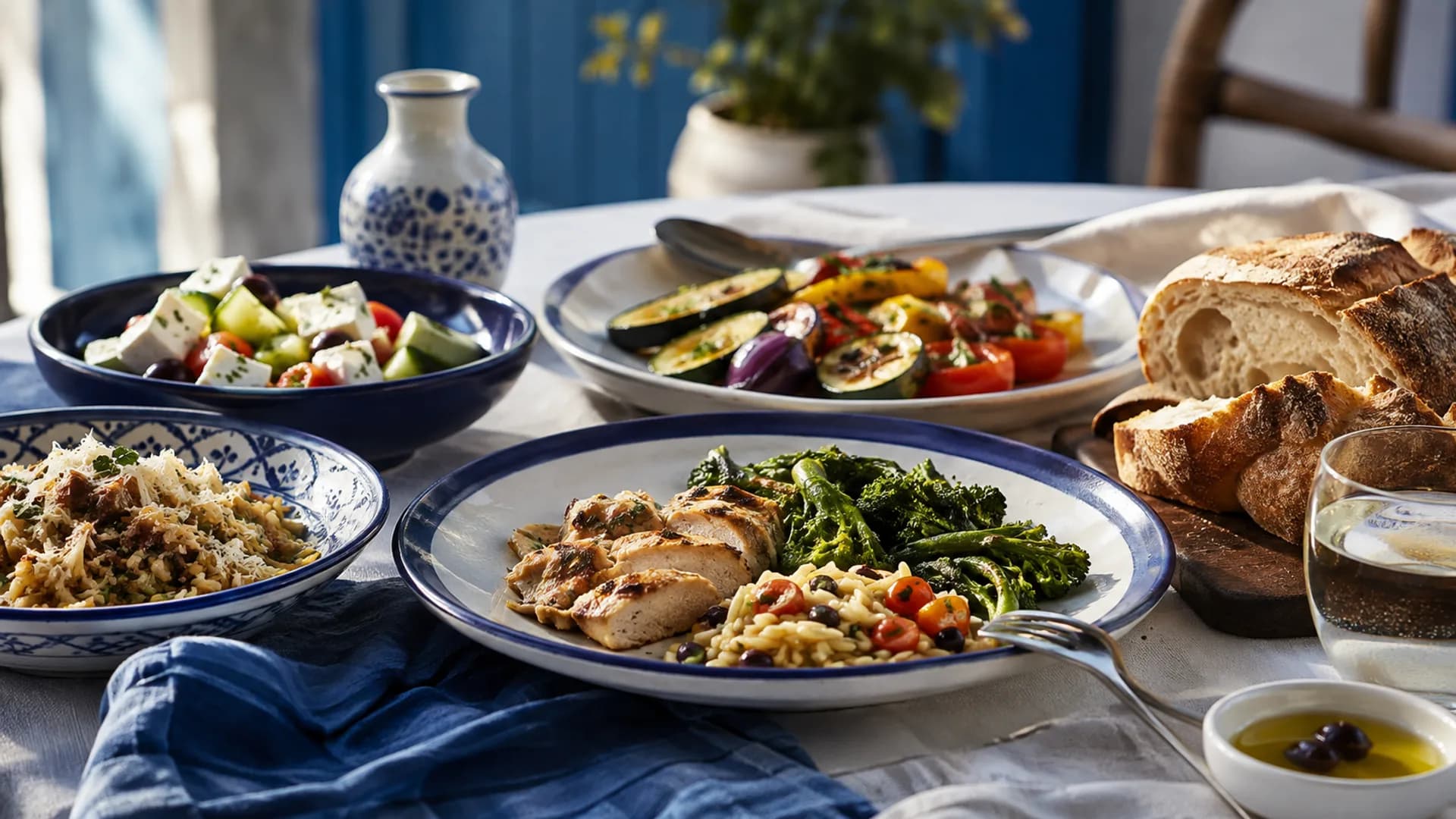
If your blood sugar is high, foods like these are usually the first to get blamed:
Pasta.
Rice.
Bread.
And the logic seems obvious.
They contain a lot of carbohydrate.
Carbohydrate is broken down into glucose.
So the solution must be:
Stop eating them.
For some people, substantially reducing these foods may indeed make glucose easier to manage.
But the science is more useful than simply putting every starch on a forbidden-food list.
Because the blood sugar response to pasta, rice, or bread can change considerably depending on how much you eat, how the food is structured, what accompanies it, what you eat first, and what you do afterward.
Here are five things worth understanding.
The portion may matter more than the name of the food
Start with the simplest factor.
A few bites of rice and a giant restaurant bowl of rice are not the same glucose challenge.
Neither are:
½ cup of pasta
and
3 cups of pasta.
The glycemic index of a food tells you something about the quality of its carbohydrate.
But your body also has to deal with the quantity you actually eat.
That's why researchers use another concept called:
glycemic load
which takes both into account.
You don't need to calculate glycemic load at every meal to use the idea.
The practical lesson is simply:
A moderate portion of carbohydrate inside a mixed meal can be metabolically very different from making the carbohydrate the majority of the meal.
Current American Diabetes Association guidance reflects that nuance.
The ADA does not recommend one universal carbohydrate percentage for everyone with diabetes.
It recommends individualized eating patterns based on:
- metabolic goals
- food preferences
- total energy intake
- carbohydrate amount and quality
And for culturally important foods such as rice, the ADA specifically notes that when switching to whole-grain versions isn't practical or culturally appropriate, portion control remains useful.
So the first question isn't necessarily:
"Can I eat rice?"
It's:
"How much rice am I eating?"
The physical structure of the starch can dramatically change the response
This is where things become more surprising.
Consider pasta and bread.
Both can be made primarily from wheat.
Both contain starch.
Yet their glucose responses can be very different.
Researchers tested this directly by giving healthy adults portions of:
- spaghetti
- penne
- couscous
- bread
each containing the same:
50 grams of available carbohydrate.
Compared with bread, the two-hour glucose response was approximately:
41% lower after spaghetti
and:
30% lower after penne.
Why?
Not because pasta contained magically different carbohydrate.
The researchers found that pasta maintained a much more compact physical structure during chewing and digestion.
Much of its starch remained embedded inside a protein network, making it less accessible to digestive enzymes.
Bread and couscous broke down much more quickly.
Same wheat.
Same carbohydrate dose.
Different structure.
Different glucose response.
That's a perfect example of why nutrition labels don't tell the entire story.
Bread can behave differently depending on how it's made too
Even within bread, the response can vary.
In a randomized crossover study involving people with type 2 diabetes, researchers compared four whole-grain breads that were nutritionally similar but differed in grain particle size and processing.
The more structurally intact breads generally produced smaller glucose responses.
The researchers concluded that:
whole-grain structural integrity is itself a determinant of glycemic response.
That's an important distinction.
A finely milled whole-wheat bread and an intact-grain bread may both legally say:
100% whole grain
while behaving differently during digestion.
So when choosing bread, it can be useful to favor products that contain more:
- intact grains
- seeds
- coarser grain particles
- minimally processed structure
rather than assuming that every brown-colored loaf produces the same effect.
What about rice?
Rice varies too.
Different varieties can differ in:
- starch composition
- amylose content
- processing
- cooking characteristics
And preparation can matter.
When starch is cooked, cooled, and stored, some of it can undergo a process called retrogradation.
Part of that starch becomes more resistant to digestion.
In a randomized study of 32 adults with type 1 diabetes, participants ate the same long-grain white rice either:
freshly cooked
or:
cooled for 24 hours and reheated.
The cooled/reheated rice produced a smaller glucose rise and substantially lower three-hour glucose exposure.
But there's an important warning:
Participants used their normal insulin dose, and hypoglycemia occurred more frequently after the cooled rice.
So cooling rice isn't a "blood sugar hack" that insulin users should casually experiment with without considering their medication.
It simply demonstrates again that:
how starch is prepared can change how quickly it is digested.
What you eat WITH the starch changes the meal
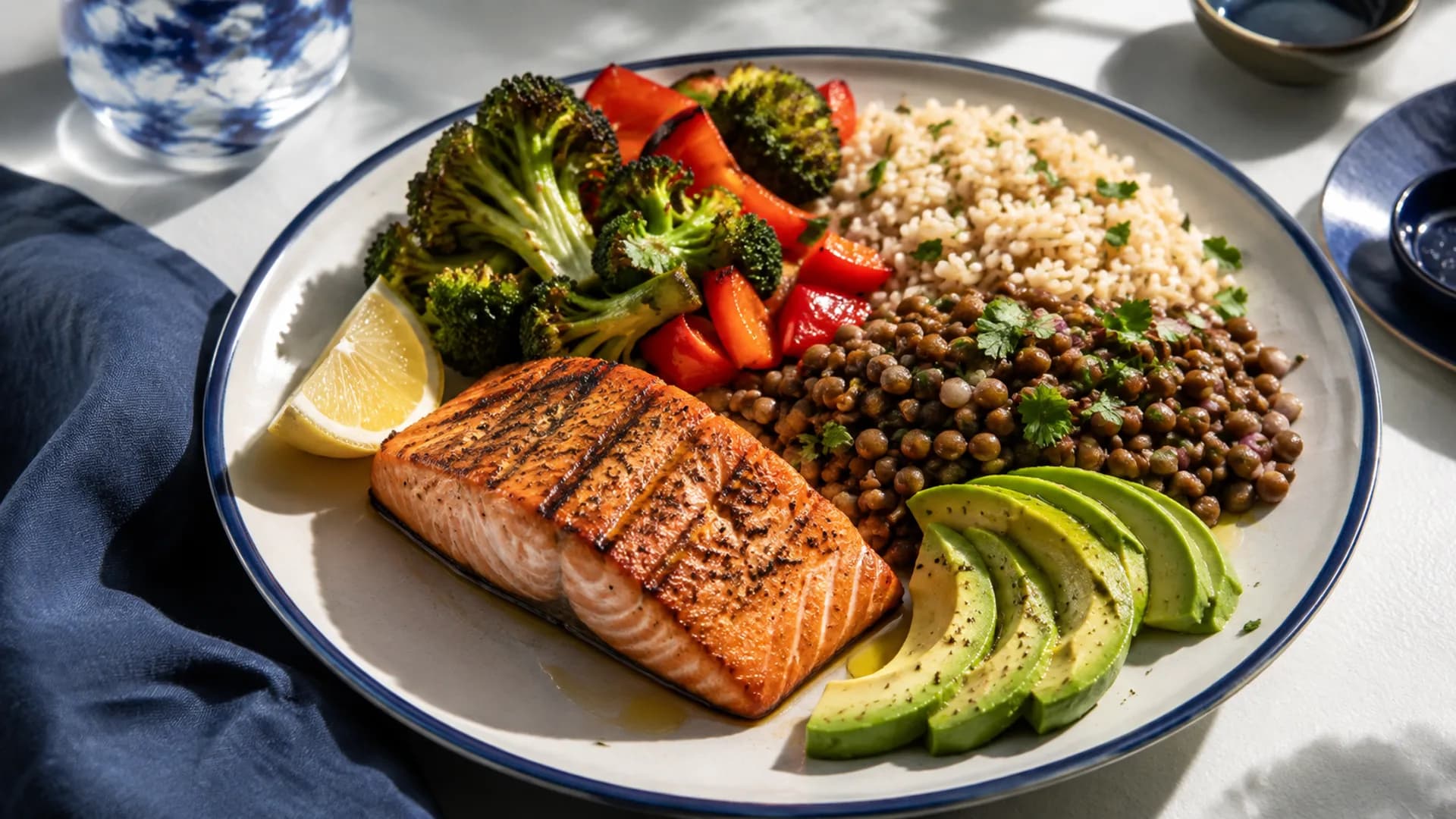
Imagine eating:
Meal A
A large bowl of white rice.
Now compare it with:
Meal B
A smaller amount of rice with:
- grilled salmon
- broccoli
- lentils
- olive oil
The rice didn't become carbohydrate-free.
But the overall meal is completely different.
Protein, fiber, and fat can influence:
- gastric emptying
- glucose absorption
- insulin secretion
- satiety
- the timing of the glucose response
As we covered in Protein, Fat and Fiber: What They Actually Do to Your Blood Sugar After a Meal, protein can increase insulin and incretin responses, while fiber can slow carbohydrate delivery.
That can reduce or delay the immediate glucose rise.
The useful strategy therefore isn't necessarily:
"Never eat pasta."
It can be:
"Stop making pasta the entire meal."
For example:
Instead of:
Huge bowl of pasta + bread
try:
protein + vegetables + salad + a moderate pasta portion.
Same food category.
Very different meal.
Be careful with the "add fat to flatten glucose" trick
There is a trap here.
Adding substantial fat can slow stomach emptying and reduce the early glucose spike.
But high-fat mixed meals can sometimes create a later and more prolonged glucose rise.
So covering bread in huge amounts of butter isn't automatically a metabolic upgrade because the first-hour CGM line looks flatter.
People with diabetes also have elevated cardiovascular risk, which is one reason ADA guidance recommends limiting foods high in saturated fat.
The goal isn't to manipulate one glucose peak at the expense of everything else.
It's to build a better overall meal.
Eating the carbohydrate later can change the same meal
Here's perhaps the easiest experiment of all.
You don't even have to change the food.
Change the order.
Instead of:
bread → rice/pasta → protein → vegetables
try:
vegetables → protein → rice/pasta/bread.
Recent randomized research in type 2 diabetes suggests that this can meaningfully reduce the immediate glucose response.
A 2026 meta-analysis combined:
17 randomized studies
including:
389 adults with type 2 diabetes.
Compared with eating carbohydrate first or in no particular order, eating carbohydrate last lowered glucose by approximately:
43 mg/dL at 60 minutes
and:
13 mg/dL at 120 minutes.
That's a substantial difference in the immediate glucose curve.
But the long-term A1C advantage was much smaller:
about 0.16 percentage points.
So meal order is useful.
It's not magic.
You can read the full breakdown in Meal Order and Blood Sugar: Does Eating Protein and Vegetables Before Carbs Really Work?.
The practical version is simple:
If the restaurant brings bread first...
you don't necessarily have to start with it.
Eat some:
vegetables and protein first.
Then enjoy the bread or starch with the rest of the meal.
What you do AFTER the meal can change the glucose response too
The meal ends.
What happens next?
For many people:
sit down.
Maybe for several hours.
But skeletal muscle is one of the body's major destinations for glucose.
And contracting muscle can increase glucose uptake through mechanisms that do not depend entirely on insulin.
That means movement shortly after eating can change what happens to some of the glucose entering your bloodstream.
Researchers tested this in 41 adults with type 2 diabetes.
Participants completed two walking strategies:
Strategy A
Walk for 30 minutes once per day.
Strategy B
Walk for 10 minutes after each of the three main meals.
Total prescribed walking time was the same.
But glucose wasn't.
Post-meal glucose exposure was significantly lower when the walking was divided into 10-minute walks after meals.
The effect was strongest after dinner, when participants consumed the most carbohydrate and tended to be most sedentary.
So instead of thinking:
"I ate rice, now I ruined the meal."
a more useful response may simply be:
"Let's walk for ten minutes."
Again, this doesn't cancel the carbohydrate.
It changes what the body is doing when that carbohydrate arrives.
Put the five together
Now imagine a typical restaurant pasta meal.
Version 1
Bread basket first.
Large plate of pasta.
Little protein.
Almost no vegetables.
Sit for three hours afterward.
Now imagine:
Version 2
Start with salad.
Eat protein and vegetables.
Moderate pasta portion afterward.
Skip or reduce the extra bread.
Walk for ten minutes after dinner.
Both people ate pasta.
But saying:
"They both ate carbs."
misses almost everything that was different about those meals.
Get the research, without the noise.
Practical, sourced writing on blood sugar and metabolic health. One email a week.
One email a week. Unsubscribe any time. See our privacy policy.
So can people with type 2 diabetes eat pasta, rice, and bread?
For many people:
Yes.
There is no ADA guideline saying every person with type 2 diabetes must permanently eliminate pasta, rice, or bread.
In fact, the 2026 Standards specifically include:
- whole grains
- whole-grain pasta
- brown rice
among appropriate carbohydrate foods within individualized eating patterns.
At the same time, the ADA also says that reducing overall carbohydrate intake can improve glycemia for some adults with diabetes.
Both statements can be true.
Some people may handle a moderate portion of minimally processed carbohydrate very well.
Others with significant insulin resistance may find that the same portion produces an unacceptably large or prolonged glucose response.
Medication matters.
Activity matters.
Portion matters.
The person matters.
That's why blanket rules are less useful than understanding the response.
What about "I can never eat pizza again"?
This is often the fear hiding underneath the question.
People don't really want to know whether pasta contains carbohydrate.
They know that already.
What they want to know is:
"Does getting my blood sugar under control mean I can never eat normal food again?"
And that's where sustainability matters.
The goal isn't necessarily to construct a diet in which glucose never rises.
Glucose is supposed to rise after eating.
The goal is to avoid excessive, prolonged glucose exposure while improving the body's ability to handle meals over time.
That leaves room for nuance.
A food you eat:
three times per day
matters differently from something you eat:
once per week.
A giant portion matters differently from a moderate one.
And an eating pattern you can follow for years matters more than a perfect plan you abandon after twelve days.
The Health Facts takeaway
When people talk about blood sugar, foods often become the enemy.
Bread is bad.
Rice is bad.
Pasta is bad.
But food doesn't enter the body as a label.
The glucose response depends on the entire situation.
Five things can change it:
1. Portion How much carbohydrate actually arrives?
2. Structure Is the starch finely processed or still trapped inside a more intact food matrix?
3. The rest of the meal Are protein, fiber, and minimally processed foods present?
4. Order Did the concentrated carbohydrate arrive first or later?
5. Movement What did your muscles do after you ate?
None of these turns unlimited pasta into a free food.
But together, they reveal a much more useful principle:
Blood sugar-friendly eating isn't always about removing more foods. Sometimes it's about changing the context in which you eat them.
That's important because the ultimate goal isn't to become extraordinarily good at avoiding glucose.
It's to improve the body's ability to handle fuel efficiently.
And that leaves considerably more room for real life.
Sources
- 1. American Diabetes Association Professional Practice Committee. Facilitating Positive Health Behaviors and Well-being to Improve Health Outcomes: Standards of Care in Diabetes—2026. Diabetes Care, 2026.
- 2. Fardet A, et al. / Pasta structure investigators. Pasta Structure Affects Mastication, Bolus Properties, and Postprandial Glucose and Insulin Metabolism in Healthy Adults. Journal of Nutrition, 2021.
- 3. Reynolds AN, Mann J, Elbalshy M, et al. Wholegrain Particle Size Influences Postprandial Glycemia in Type 2 Diabetes: A Randomized Crossover Study Comparing Four Wholegrain Breads. Diabetes Care, 2020.
- 4. Sonia S, Witjaksono F, Ridwan R. Effect of Cooling of Cooked White Rice on Resistant Starch Content and Glycemic Response. Asia Pacific Journal of Clinical Nutrition, 2015. doi:10.6133/apjcn.2015.24.4.13
- 5. Dworatzek PD, et al. Influence of Resistant Starch Resulting From the Cooling of Rice on Postprandial Glycemia in Type 1 Diabetes. Journal of Nutritional Science, 2022.
- 6. Saldarriaga-Callejas LM, Ratan P, Pasqualotto E, et al. Nutrient Intake Order on Metabolic Outcomes in Type 2 Diabetes: A Systematic Review and Meta-analysis. Acta Diabetologica, 2026. doi:10.1007/s00592-025-02586-0
- 7. Reynolds AN, Mann JI, Williams S, Venn BJ. Advice to Walk After Meals Is More Effective for Lowering Postprandial Glycaemia in Type 2 Diabetes Mellitus Than Advice That Does Not Specify Timing: A Randomised Crossover Study. Diabetologia, 2016. doi:10.1007/s00125-016-4085-2
Comments
No comments yet.
Leave a comment
Comments are moderated. Be kind and stay on topic.
Related articles
Meal Order and Blood Sugar: Does Eating Protein and Vegetables Before Carbs Really Work?
Why Your A1C Can Stay High Even When You Think You're Eating Healthy
Protein, Fat and Fiber: What They Actually Do to Your Blood Sugar After a Meal