Food & Metabolism
Why Two People Can Eat the Same Meal and Get Completely Different Blood Sugar Responses
The same food doesn't always produce the same glucose response in two people. Insulin sensitivity, meal composition, activity, sleep and the gut microbiome may all play a role.

Two people sit down.
They eat the same meal.
Same food.
Same portion.
Same number of carbohydrates.
You might expect their blood sugar to react roughly the same way.
It doesn't always happen that way.
Researchers have found surprisingly large differences in how individual people respond to the exact same foods.
And that may explain why nutritional advice that works beautifully for one person can seem almost useless for another.
One study tracked almost 47,000 meals
In a landmark 2015 study published in Cell, researchers at the Weizmann Institute continuously monitored glucose in 800 people.
They recorded responses to:
46,898 meals.
The researchers found substantial differences between individuals — even when people ate standardized, identical foods.
One particularly memorable comparison involved:
bananas and cookies.
One participant had a much larger glucose response after eating a banana than after eating cookies containing a similar amount of calories.
Another participant showed almost the opposite pattern.
That does not mean cookies are healthier than bananas.
It means something more interesting:
The food itself is only one part of the glucose response.
The person eating it matters too.
A much larger study found the same thing
Several years later, researchers studied 1,002 adults as part of the PREDICT-1 trial.
Participants ate standardized meals while researchers measured:
- glucose
- insulin
- triglycerides
- sleep
- physical activity
- body composition
- genetics
- gut microbiome
Again, the responses differed dramatically.
Even after identical meals, researchers observed large person-to-person variation in:
- glucose response
- insulin response
- triglyceride response
For post-meal glucose specifically, the population variation was approximately 68%.
So why can the same meal produce such different results?
There isn't one explanation.
There are several.
Your insulin sensitivity is different
This is probably one of the biggest pieces of the puzzle.
Imagine two people eat the same bowl of rice.
For Person A, insulin works efficiently.
The pancreas releases insulin, muscle cells respond, and glucose moves out of the bloodstream relatively quickly.
For Person B, the muscles are more insulin resistant.
The pancreas may need to produce considerably more insulin to handle the same glucose load.
The result may be:
- a higher glucose peak
- a longer elevation
- or both
This is why carbohydrate grams alone cannot perfectly predict someone's glucose response.
The same incoming fuel is entering two different metabolic systems.
Muscle changes where glucose can go
Skeletal muscle is one of the body's major destinations for glucose after a meal.
More active muscle generally gives glucose somewhere useful to go.
And muscle contraction can increase glucose uptake through pathways that are not completely dependent on insulin.
That's one reason the same meal may affect you differently depending on what you did beforehand.
For example:
Meal after sitting all afternoon
may not produce the same response as:
the identical meal after a long walk or workout.
The food didn't change.
The metabolic environment did.
What you ate with the carbohydrate matters
Saying:
"This meal contains 50 grams of carbohydrates"
still doesn't tell you everything.
Those carbohydrates might arrive with:
- fiber
- protein
- fat
- water
- intact plant structure
or they might arrive as rapidly digested refined starch or sugar.
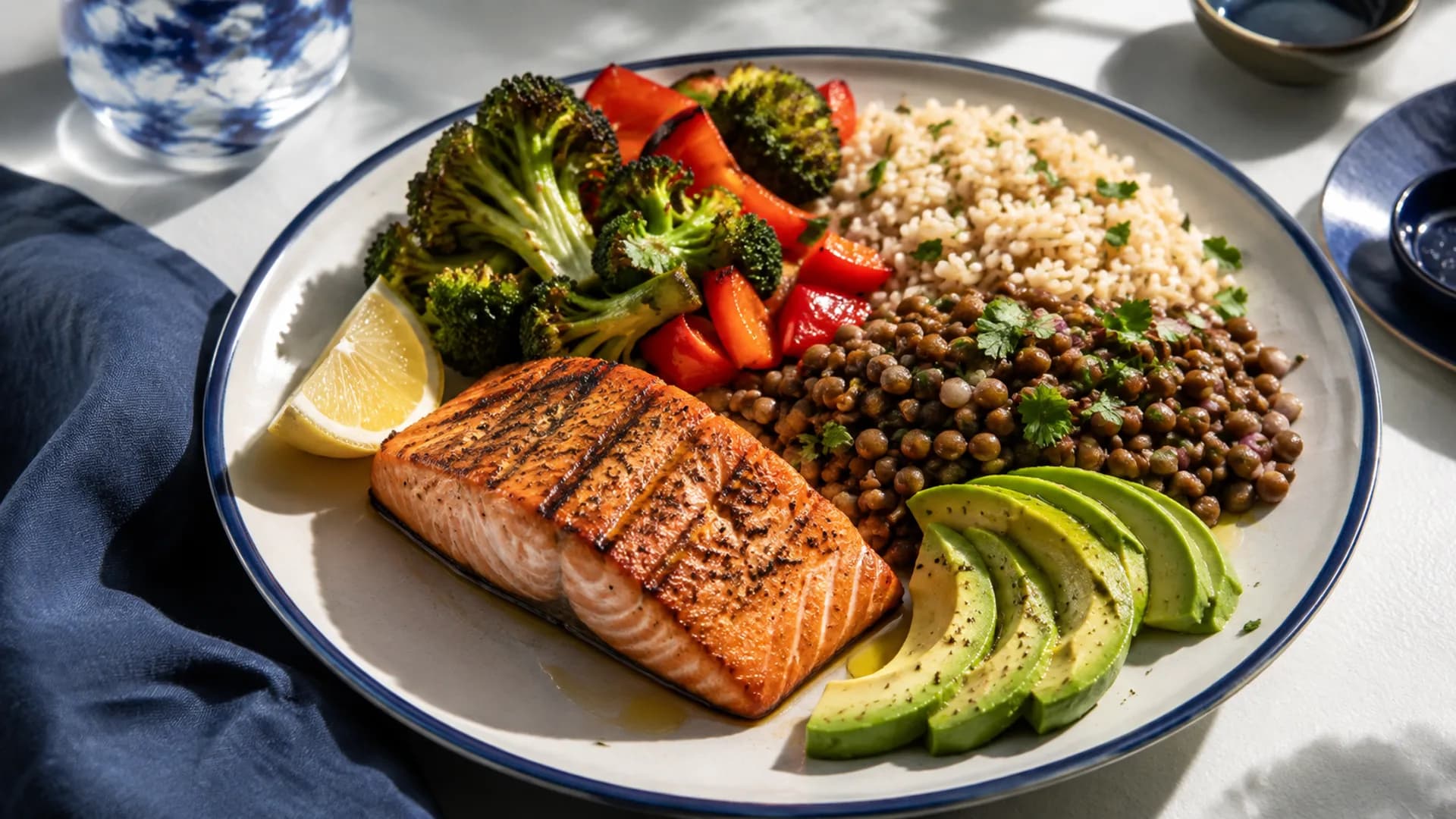
Protein, fat, and fiber can alter:
- stomach emptying
- digestion
- glucose absorption
- insulin secretion
- satiety
So:
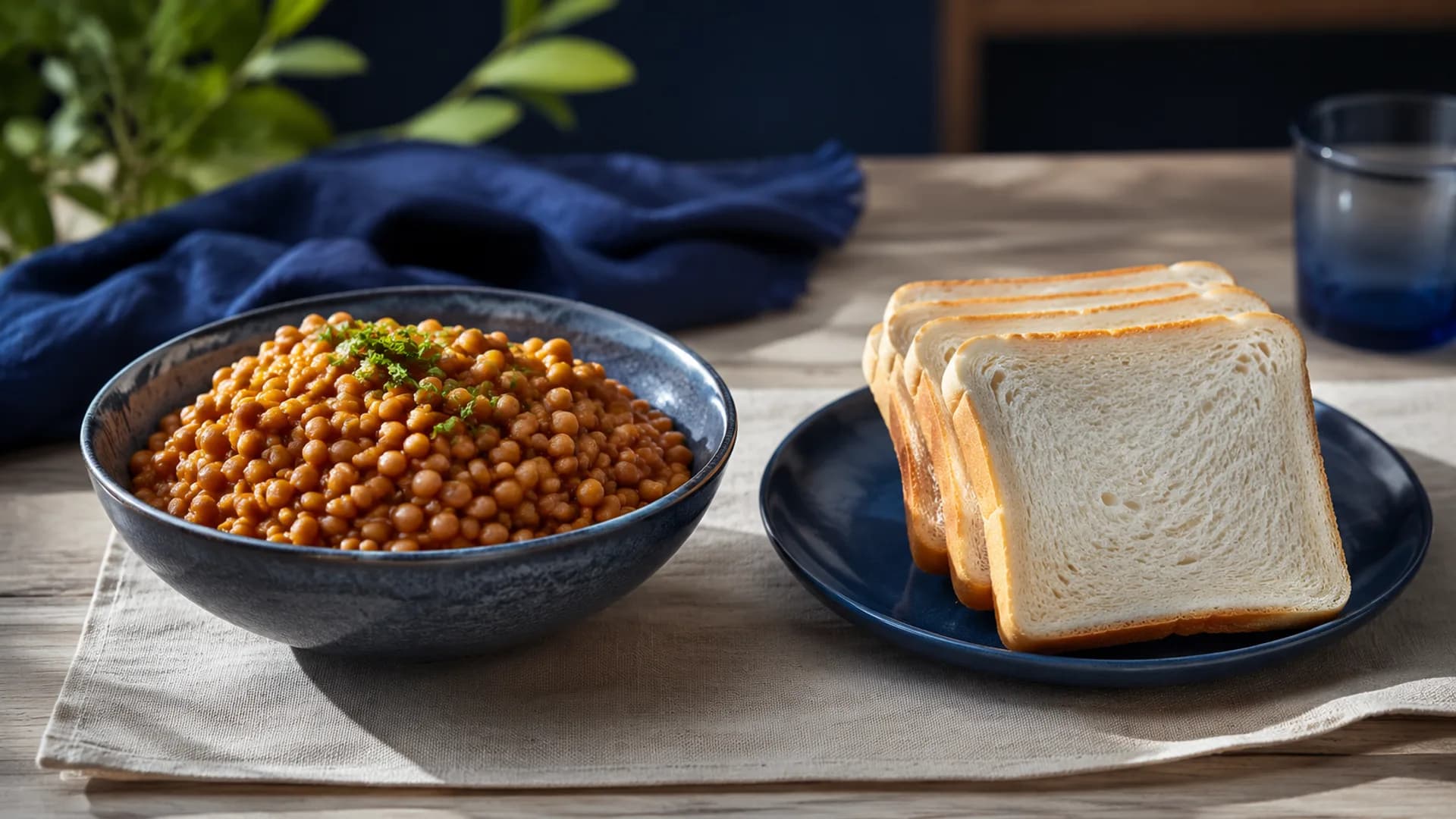
50 grams of carbohydrate from beans
and
50 grams from white bread
should not automatically be expected to produce identical glucose curves.
We'll cover this in more detail in our article on how protein, fat, and fiber affect blood sugar.
Even meal order can matter
Interestingly, the foods don't necessarily have to change.
Sometimes simply changing the order in which they are eaten can affect the glucose response.
Studies have found that eating:
vegetables and protein first
followed by:
carbohydrates later
can reduce post-meal glucose excursions compared with eating the carbohydrate first in some people.
Again:
Same general meal.
Different physiological response.
That tells us something important.
A meal is more than its nutrition label.
Sleep can change tomorrow's response
Your glucose response isn't fixed from day to day either.
Sleep is one example.
Poor or insufficient sleep can temporarily reduce insulin sensitivity.
So you might eat the same breakfast on:
Monday
after eight hours of good sleep
and
Tuesday
after five hours of broken sleep
and see different glucose responses.
That doesn't necessarily mean the food suddenly became "bad."
Your physiology changed.
The PREDICT researchers found that sleep duration, sleep efficiency, and the relationship between sleep timing and meal timing were associated with differences in post-meal glucose responses.
Time of day matters
The human body has a circadian rhythm.
Insulin sensitivity and glucose tolerance are not necessarily identical at:
8 a.m.
and
10 p.m.
For many people, glucose tolerance tends to be better earlier in the day than later.
That means the exact same food can theoretically produce a different response depending on when you eat it.
This is another reason nutritional questions aren't always as simple as:
"Is this food good for blood sugar?"
A better question can be:
"Good for whom, in what amount, and under what circumstances?"
Your gut microbiome may play a role — but don't overhype it
The original Weizmann study received enormous attention because researchers included information about participants' gut microbiomes in their glucose-prediction algorithm.
Microbiome characteristics did appear to help predict individual responses.
Later research has also identified relationships between gut microbes, habitual diets, and metabolic measurements.
But this area is sometimes exaggerated online.
In PREDICT-1, meal macronutrient composition explained more of the variation in post-meal glucose than microbiome features did.
For glycemic response, researchers estimated contributions of roughly:
15.4% from meal macronutrients
versus
6.0% from microbiome features.
So the microbiome matters.
But it isn't a magical explanation for everything.
Genetics matter — but perhaps less than people assume
Because people respond differently to food, it's tempting to assume the answer must be genetics.
Genetics do contribute.
But the PREDICT researchers studied twins specifically because that allowed them to examine this question more closely.
Their findings suggested that genetic variation explained only part of the differences in post-meal response.
For glucose response, genetic factors contributed meaningfully but did not explain most of the variation.
Your metabolic response appears to emerge from a combination of:
biology + behavior + environment + the meal itself.
Get the research, without the noise.
Practical, sourced writing on blood sugar and metabolic health. One email a week.
One email a week. Unsubscribe any time. See our privacy policy.
So does this mean nutrition guidelines are useless?
No.
This is where personalized nutrition can become overhyped.
There are still broad principles that work very well at a population level.
The 2026 American Diabetes Association Standards continue to emphasize eating patterns built around foods such as:
- nonstarchy vegetables
- whole fruits
- legumes
- whole grains
- nuts
- seeds
- appropriate protein sources
while minimizing:
- sugar-sweetened beverages
- refined grains
- highly processed foods
- ultraprocessed foods
But the ADA also explicitly says:
There is no one-size-fits-all eating pattern for people with diabetes.
Both ideas can be true.
There are general principles supported by evidence.
And individual responses still vary.
Don't become obsessed with every CGM spike
There's another trap here.
Once people discover that glucose responses are individual, they sometimes start trying to achieve a completely flat glucose line.
That's not necessary.
Glucose is supposed to rise after you eat.
The useful questions are more practical:
- How high does it rise?
- How long does it remain elevated?
- Does it return toward baseline?
- Does the same meal repeatedly produce the same pattern?
- How does the overall diet affect your A1C and metabolic health?
A single CGM spike doesn't transform a nutritious food into poison.
And a flat glucose response doesn't automatically make a food healthy.
Butter, for example, may produce very little immediate glucose rise.
That doesn't mean eating unlimited butter is automatically the best strategy for cardiovascular or metabolic health.
Glucose response is one piece of nutrition — not the entire definition of healthy food.
The Health Facts takeaway
The old nutritional model often sounds like this:
Food X does Y to blood sugar.
Reality is closer to:
Food X interacts with the person eating it.
Your response depends partly on:
- insulin sensitivity
- muscle activity
- sleep
- meal composition
- portion size
- time of day
- previous activity
- your underlying metabolic health
And possibly, to a smaller degree, factors such as genetics and the microbiome.
This is where the idea of metabolic flexibility becomes useful.
The goal isn't to create a life where you have memorized the exact glucose response to 300 different foods.
It's to build a metabolic system that can handle a reasonable variety of foods efficiently.
A more insulin-sensitive, active, metabolically healthy person generally has more room to work with.
That is very different from trying to find one universally perfect food list.
So instead of asking only:
"Is rice bad?"
or:
"Are bananas good?"
the more useful question may be:
"How does my overall metabolism handle this meal — and what can I do to improve that response over time?"
The same meal can tell two very different stories.
Because the meal is only half of the equation.
The other half is you.
Sources
- 1. Zeevi D, Korem T, Zmora N, et al. Personalized Nutrition by Prediction of Glycemic Responses. Cell, 2015. doi:10.1016/j.cell.2015.11.001
- 2. Berry SE, Valdes AM, Drew DA, et al. Human Postprandial Responses to Food and Potential for Precision Nutrition. Nature Medicine, 2020. doi:10.1038/s41591-020-0934-0
- 3. Asnicar F, Berry SE, Valdes AM, et al. Microbiome Connections With Host Metabolism and Habitual Diet From 1,098 Deeply Phenotyped Individuals. Nature Medicine, 2021. doi:10.1038/s41591-020-01183-8
- 4. American Diabetes Association Professional Practice Committee. Facilitating Positive Health Behaviors and Well-being to Improve Health Outcomes: Standards of Care in Diabetes—2026. Diabetes Care, 2026.
- 5. American Diabetes Association Professional Practice Committee. Glycemic Goals, Hypoglycemia, and Hyperglycemic Crises: Standards of Care in Diabetes—2026. Diabetes Care, 2026.
Comments
No comments yet.
Leave a comment
Comments are moderated. Be kind and stay on topic.
Related articles
Carbs Aren't All the Same: Why 40 Grams From Beans Is Different From 40 Grams From White Bread

Why Ultra-Processed Food Isn't the Same Thing as Simply 'Eating Carbs'
Protein, Fat and Fiber: What They Actually Do to Your Blood Sugar After a Meal