Blood Sugar
When A1C Can Be Misleading: 6 Things That Can Throw Off the Test
A1C is one of the most useful blood sugar tests — but it depends on red blood cells as well as glucose, so it can read higher or lower than your actual glucose exposure.
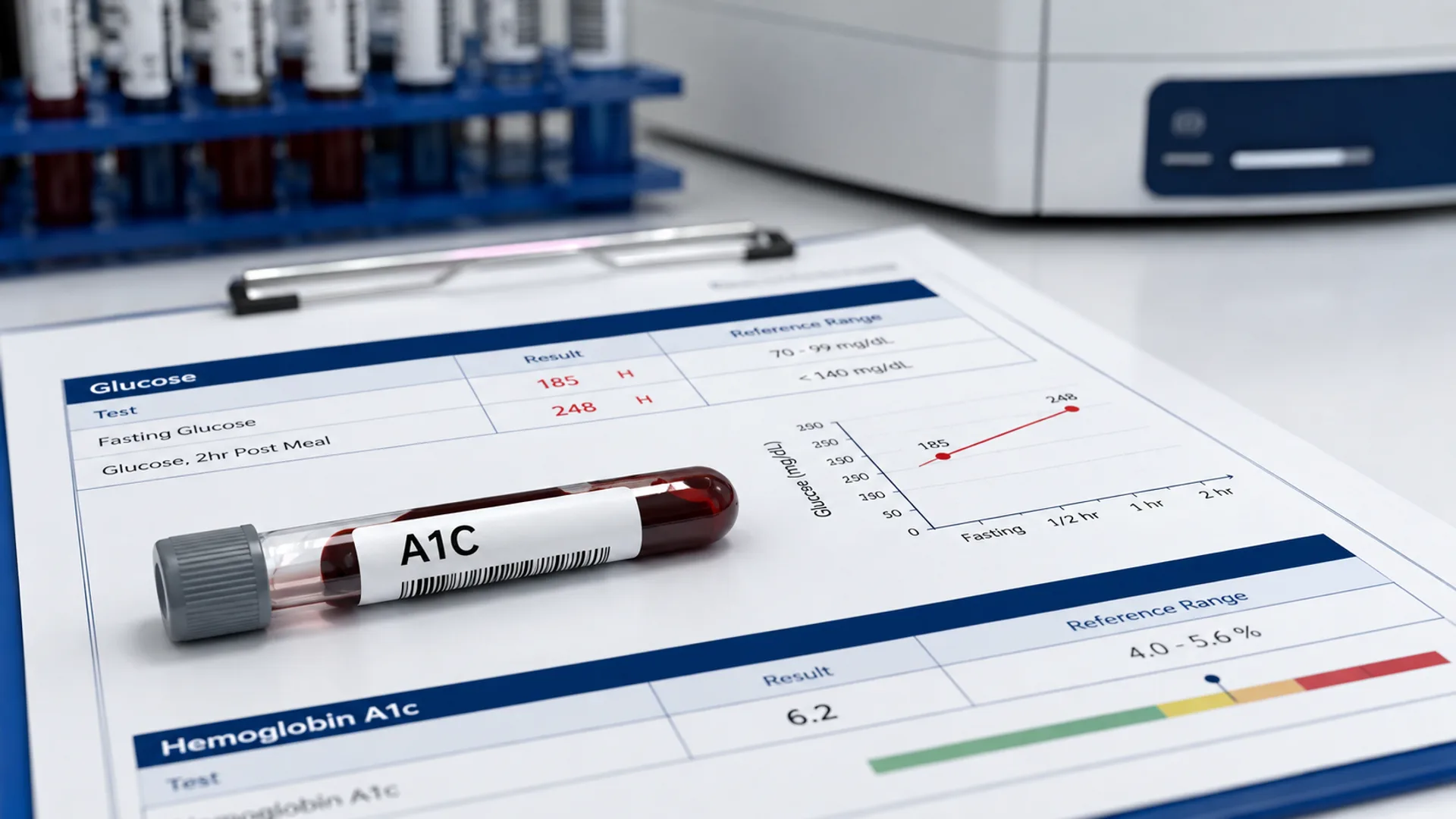
Your A1C says 6.4%.
But your glucose meter rarely shows anything particularly high.
Or maybe the opposite happens:
Your glucose readings have been running higher for months...
yet your A1C comes back unexpectedly low.
Which one should you trust?
Usually, A1C is an excellent measure of long-term glucose exposure.
But there is one detail that changes everything:
A1C doesn't measure glucose directly.
It measures glucose attached to hemoglobin inside your red blood cells.
That means anything that changes those red blood cells can potentially change the result.
Why red blood cell lifespan matters
A typical red blood cell circulates for roughly 120 days.
During that time, glucose gradually attaches to its hemoglobin.
The longer a red blood cell circulates, the more time it has to become glycated.
So, very broadly:
Red cells that live longer than expected can push A1C higher.
Red cells that disappear faster than expected can push A1C lower.
That's why two people with similar average glucose can sometimes have different A1C results.
And it's why the American Diabetes Association specifically recommends investigating when there is a consistent and substantial mismatch between measured glucose and A1C.
Here are six situations that can create that mismatch.
Iron-deficiency anemia can make A1C look higher
This one surprises a lot of people.
Iron deficiency is associated with higher A1C values, even in some people who do not have diabetes.
The National Glycohemoglobin Standardization Program — the organization that standardizes A1C testing — specifically warns about this effect.
Studies have also found that treating significant iron deficiency can lower A1C without the change necessarily representing the same degree of improvement in actual glucose.
So imagine:
Your A1C rises from:
5.7% → 6.1%
At the same time, you have developed significant iron-deficiency anemia.
It would be a mistake to automatically assume that the entire 0.4-point increase came from worsening glucose control.
Your clinician may need to look at the bigger picture.
Blood loss or increased red-cell destruction can make A1C look lower
Now imagine the opposite situation.
If red blood cells are removed from circulation earlier than normal, they have less time to accumulate glucose.
That can artificially lower A1C.
Examples include:
- significant recent blood loss
- hemolytic anemia
- conditions causing increased red-blood-cell destruction
- recovery after certain types of anemia
If someone has unusually rapid red-cell turnover, an A1C can look better than the person's actual glucose exposure would suggest.
Again:
The glucose hasn't necessarily changed.
The lifespan of the measuring device — your red blood cell — has changed.
A recent blood transfusion can scramble the picture
A blood transfusion makes A1C especially difficult to interpret.
Why?
Because suddenly some of the red blood cells being tested are not yours.
They came from a donor.
Those cells may have:
- a different age
- different previous glucose exposure
- different hemoglobin characteristics
Meanwhile, the medical condition that required the transfusion may itself have affected your red blood cells.
For that reason, the ADA specifically lists recent transfusion among situations where the normal relationship between A1C and glucose may be altered.
Depending on the situation, clinicians may rely more heavily on direct glucose measurements until enough time has passed for A1C to become representative again.
Advanced kidney disease can make A1C harder to interpret
Diabetes and chronic kidney disease commonly occur together.
Unfortunately, advanced kidney disease can also make A1C less straightforward.
People with kidney failure may develop anemia.
Many are treated with erythropoietin or other drugs that stimulate production of new red blood cells.
That increases the proportion of younger red cells circulating in the bloodstream.
Younger red blood cells have had less time for glucose to attach to them.
The result?
A1C can sometimes underestimate actual glucose exposure, particularly in people undergoing dialysis.
The NGSP notes that glycated albumin may sometimes provide useful additional information in these situations.
The ADA also lists:
- kidney failure
- dialysis
- erythropoietin treatment
among factors that can interfere with A1C interpretation.
Pregnancy changes the relationship between A1C and glucose
Pregnancy creates major changes in:
- red-blood-cell turnover
- iron requirements
- blood volume
- insulin sensitivity
For that reason, A1C does not behave exactly the same way during pregnancy as it does outside pregnancy.
NIDDK specifically notes that A1C is not the best test for monitoring glucose during pregnancy.
Instead, clinicians typically rely much more heavily on:
- fasting glucose
- post-meal glucose
- continuous glucose monitoring when appropriate
This is especially important because glucose targets during pregnancy are generally much tighter than standard diabetes targets.
So an A1C that looks reassuring under ordinary circumstances may not provide enough information during pregnancy.
Hemoglobin variants can affect some A1C tests
This is probably the most technical — but also one of the most important — limitations.
Not everyone has exactly the same form of hemoglobin.
Common variants include:
- hemoglobin S
- hemoglobin C
- hemoglobin D
- hemoglobin E
Some people carry a variant without having a symptomatic blood disorder.
The problem is that certain A1C laboratory methods can be affected by particular hemoglobin variants.
Depending on the assay, a result may read:
- falsely high
- falsely low
- or remain accurate
This is why there isn't a simple rule saying:
"Sickle cell trait makes A1C inaccurate."
It depends partly on which laboratory method is being used.
The NGSP maintains an updated list showing which A1C assays are affected by different hemoglobin variants.
There is also another genetic example worth knowing about.
A glucose-6-phosphate dehydrogenase variant known as G6PD G202A can lower A1C independently of glucose.
The 2026 ADA Standards cite data suggesting the difference can be roughly 0.7–0.8 percentage points in people with two copies of the relevant variant.
That is not a tiny difference.
An A1C of:
6.2%
versus:
5.4%
could lead to a very different interpretation.
Beta-thalassemia trait: a real-world example
Beta-thalassemia trait affects red blood cells.
People who carry it sometimes find that their laboratory A1C reads significantly higher than the glucose average their CGM predicts over the same period.
One person's experience isn't proof of what will happen in another.
But it illustrates the larger physiological point:
A1C is partly a glucose measurement and partly a red-blood-cell measurement.
If one of those two pieces behaves differently, the result can become misleading.
The biggest clue is a mismatch
You don't need to assume something is wrong with your A1C every time you dislike the result.
For most people, most of the time, it works very well.
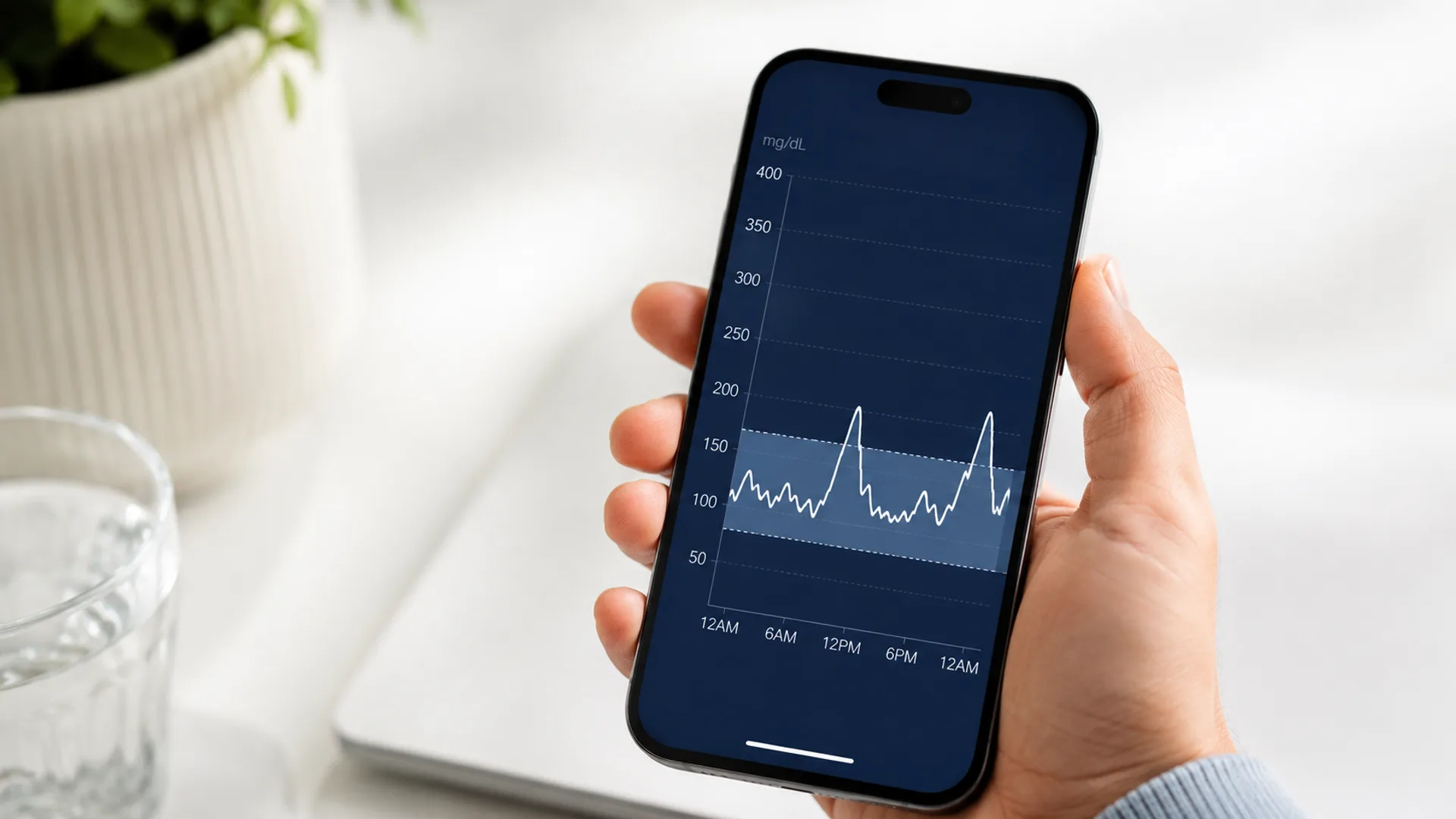
The red flag is when different measurements repeatedly tell different stories.
For example:
Your A1C suggests an estimated average glucose near:
170 mg/dL
but your CGM has measured an average around:
120 mg/dL for three months.
Or:
Your A1C looks surprisingly low...
while fasting and post-meal glucose readings are repeatedly elevated.
That doesn't automatically mean A1C is wrong.
But it gives you a reason to ask:
Why don't these numbers agree?
The 2026 ADA Standards specifically recommend evaluating for possible interference when there is consistent, substantial discordance between glucose measurements and A1C.
Get the research, without the noise.
Practical, sourced writing on blood sugar and metabolic health. One email a week.
One email a week. Unsubscribe any time. See our privacy policy.
What can be used instead?
When A1C is unreliable, clinicians have other ways to assess glucose.
Depending on the situation, these may include:
Direct blood glucose
- fasting plasma glucose
- glucose tolerance testing
- home glucose measurements
Continuous glucose monitoring
CGM can provide:
- average glucose
- Time in Range
- Time Above Range
- Time Below Range
- glucose variability
Fructosamine
Fructosamine measures glycated proteins in the blood and generally reflects a much shorter period — roughly the previous 2–3 weeks.
Glycated albumin
This specifically measures glucose attached to albumin and can also provide a shorter-term picture of glucose exposure.
Because these tests do not depend on red blood cells in the same way A1C does, they can sometimes be useful when red-cell biology makes A1C difficult to interpret.
None is automatically better.
They answer somewhat different questions.
Don't throw out A1C
After reading all of this, it would be easy to conclude:
"So A1C is useless."
That's the wrong lesson.
A1C is extraordinarily useful.
It:
- reflects months rather than one moment
- does not require fasting
- varies less from day to day than fasting glucose
- is standardized
- has decades of clinical outcome data behind it
For most people, it remains one of the best tools available for tracking diabetes.
The important point is simply:
No laboratory test exists outside the biology it measures.
Understanding that biology helps you know when to trust the number — and when to look deeper.
The Health Facts takeaway
A1C looks incredibly precise:
5.6%
6.2%
7.1%
One decimal place can make it feel almost absolute.
But the test depends on two things:
How much glucose your red blood cells encountered
and
how those red blood cells behaved during their lifespan.
Most of the time, those two pieces work together beautifully.
Sometimes they don't.
That's why an A1C should always make sense in context.
If your A1C, fasting glucose, post-meal readings, or CGM data all tell roughly the same story, that's reassuring.
If they tell very different stories, don't simply choose the number you like better.
Investigate the mismatch.
Sometimes the most valuable information isn't the number itself.
It's realizing that two numbers that should agree don't.
Sources
- 1. American Diabetes Association Professional Practice Committee. Diagnosis and Classification of Diabetes: Standards of Care in Diabetes—2026. Diabetes Care, 2026.
- 2. American Diabetes Association Professional Practice Committee. Glycemic Goals, Hypoglycemia, and Hyperglycemic Crises: Standards of Care in Diabetes—2026. Diabetes Care, 2026.
- 3. Factors That Interfere With HbA1c Test Results. National Glycohemoglobin Standardization Program, 2026.
- 4. HbA1c Assay Interferences. National Glycohemoglobin Standardization Program, 2026.
- 5. Interpreting A1C: Diabetes and Hemoglobin Variants. National Institute of Diabetes and Digestive and Kidney Diseases.
- 6. Pregnancy if You Have Diabetes. National Institute of Diabetes and Digestive and Kidney Diseases.
Comments
No comments yet.
Leave a comment
Comments are moderated. Be kind and stay on topic.